






 Portuguese
  Spanish
 3 min of reading


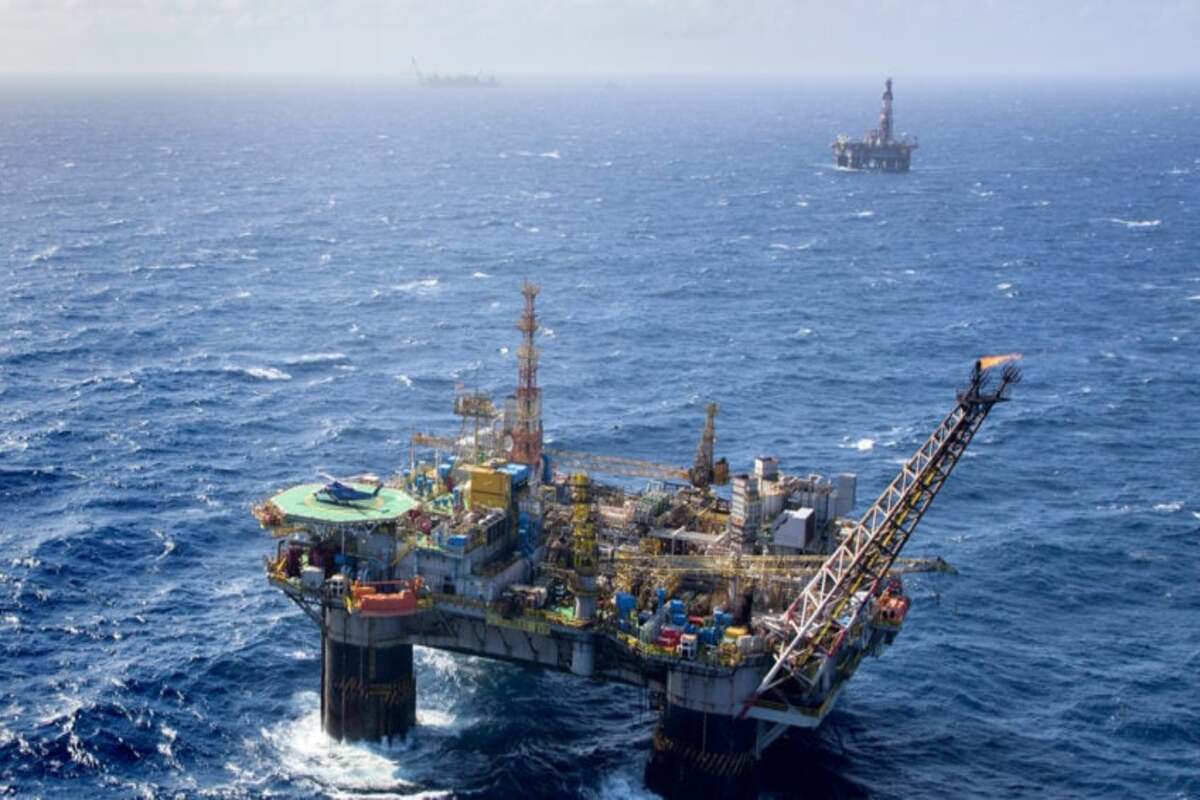
Petrobras (Petr4) Plans Many Changes on Its Horizon, Highlighting the Change of Command at the Company: Jean Paul Prates Joins and Caio Paes Andrade Leaves. There Are Still Concerns About This Change, But As Far as the State-Owned Company Is Concerned, The Balances Will Be Positive.
Recently, production data for 2022 was released. As indicated to the market back in January of the previous year, it met all its operational targets, with an even greater emphasis on production metrics.
In total, 2.684 million barrels of oil were produced, which averages out to about one per day, a number that exceeded the target of 2.6 million boe. Even so, the final result for 2022 was standard, within the error margins disclosed by Petrobras, which was around 4%.
This was a similar situation with other production metrics, such as commercial metrics, which totaled 2.3 million boe, 2.7% above the target of 2.3 million. Meanwhile, oil production was 2.154 million barrels per day (bpd), 2.6% higher than the estimated 2.1 million.
-
Oil production grows in Rio, but reserve replacement raises a warning sign

-
Petrobras is expected to complete the drilling of the Morpho well in the Foz do Amazonas in August 2026, the first well in the Equatorial Margin, an oil frontier that the ANP estimates at more than 30 billion barrels and could redraw the map of Brazil.

-
Oil returns to the center of concerns with tension between the US and Iran

-
IEA reduces forecast for global oil demand in 2026 after impacts of the Middle East crisis



Petrobras: New Platforms
The Petrobras (Petr4) saw two more platforms begin operation throughout the previous year, the FPSO Guanabara – a vessel that explores, offloads oil and natural gas, and stores – this was the first fixed unit of the Mero field, located in the pre-salt of the Santos basin (SP), which began operations in April.
By December, it was the turn of the P-71, which commenced operations in the Itaipu field, located in the pre-salt of the Campos basin (RJ) – This platform was not expected to start operations until this current year of 2023, but it began a bit earlier.
Moreover, Petrobras reported that, throughout the previous year, the maximum oil production capacity was achieved, coming from the P-68 platforms, in the Berbigão and Sururu fields, and the FPSO Carioca, in the Sépia field – all these facilities are located in the pre-salt of the Santos basin.
At FPSO Carioca, a new monthly production record for a pre-salt platform was set: 174 thousand bps in November. Another record was also achieved at the P-70 platform, where a single well produced around 56.5 thousand bpd also in November.
“The records demonstrate excellent operational performance in world-class assets in deep and ultra-deep waters, where Petrobras possesses internationally recognized technical knowledge,” the state-owned company stated in a release.
The Renewal of the Santos Basin
Another important operational highlight from Petrobras (Petr4) this year concerns the renewal of the Campos basin, achieved through the start of operations of 10 new producing wells and four additional injection wells, further enhancing the production potential of the area to 94 thousand bpd.
“These results reinforce Petrobras’ commitment to investors and Brazilian society and were only possible thanks to the efforts of the entire exploration and production segment chain and the active management of Petrobras’ project portfolio,” the company stated.





Be the first to react!