Portuguese
  Spanish



Several Months After Launching Its First Solar-Powered Car, Dutch Company Announces Bankruptcy. The First Electric Car Powered by Solar Energy Delivers Great Performance and Costs R$ 1.2 Million.
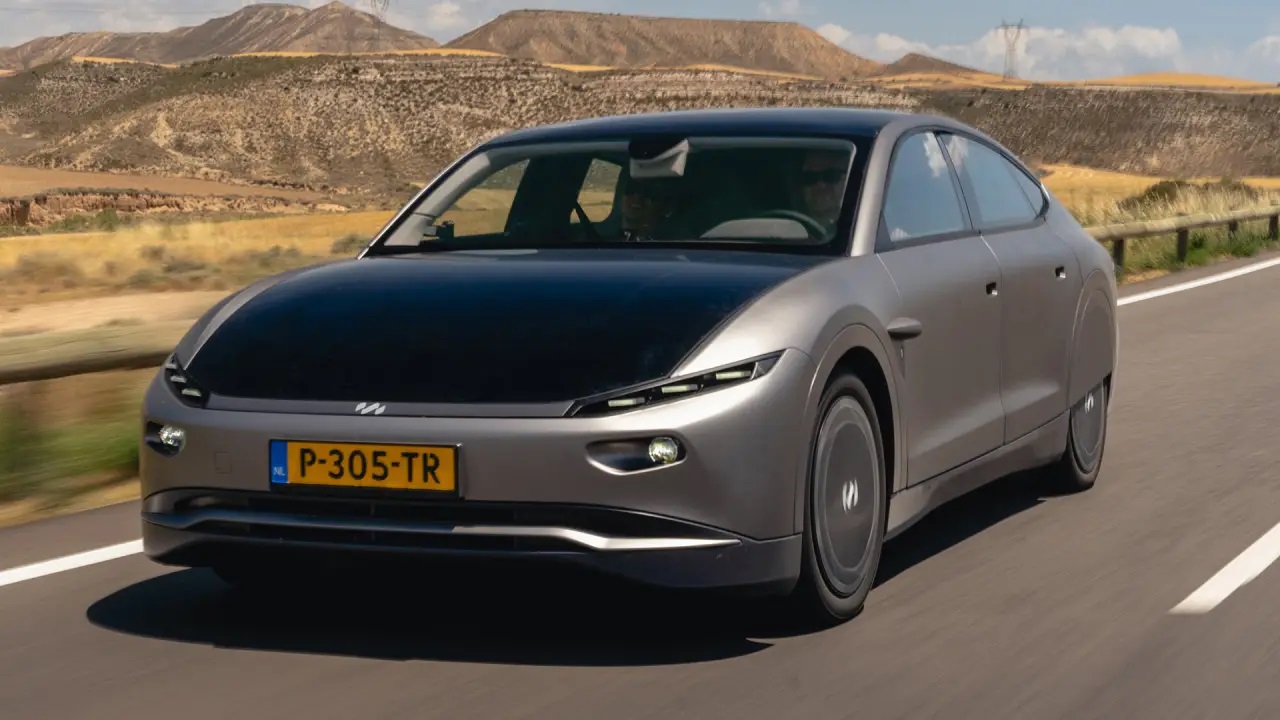
Although it seems like a good idea, installing solar energy panels on a vehicle and making a solar-powered car is somewhat complex, considering that, in reality, this is not very feasible due to factors such as the efficiency of solar panels, the cost of the technology, and also the car’s viability in less sunny locations. Thus, brands ranging from Toyota to Lightyear have been investing in this idea, but recently Lightyear has just declared bankruptcy.
Solar-Powered Car by Lightyear Costs R$ 1.2 Million
The Dutch automaker announced on its official website the bankruptcy request of its subsidiary Atlas Technologies, which is basically responsible for producing its only car, called Lightyear 0, launched a few months ago.
According to the company in a statement, Lightyear regrets having to make this announcement to all employees, investors, customers, and suppliers. A total of 600 employees were impacted, not counting those at the factory producing the solar-powered car in Finland.
-
End of an era in Brazil: beloved sedan by Brazilians is discontinued despite having a 2.0 engine with 151 hp, CVT transmission, 466-liter trunk, and up to 650 km of range.

-
New Law Proposal in Brazil Could Heavily Penalize Drivers: Dangerous Overtaking May Become a Serious Offense with Fines Increased Tenfold and a 12-Month License Suspension; Update on 2026 Progress

-
Electric Revolution: Watts W125 Motorcycle Offers 160 km Range, 90 km/h Speed, and Affordable Price Starting at $3,000
-
General Motors Replaces Over a Thousand Workers with 50 Cobots at Electric Vehicle Plant, UAW Union Criticizes Move Amid Industry’s Automation Push




Being sold for just a few months, the Lightyear 0 already showed its complexity in price, at approximately US$ 250,000, which in direct conversion equals R$ 1.2 million. Manufactured at a rate of about one car per week, it used 5m² of solar panels on its roof and hood to supplement the 60 kWh battery.
According to the company, this combination was sufficient for the solar-powered car to deliver 625 km of range in WLTP cycle. Even more impressive was the announcement that, at 110 km/h, the highway range would be 560 km, with 70 of those coming from solar energy.
Solar-Powered Car Has 170 Horsepower
Other complicated promises included the ability to add 300 km of range just by plugging the car into a household outlet. The Lightyear 0 features all-wheel drive, totaling 170 horsepower and an incredible torque of 175.4 kgfm.
Other high-performance components of the electric car include an extremely aerodynamic body with carbon fiber panels and a heat pump, about three times more efficient than a conventional heater.
Among the next steps of the bankruptcy request, care must be taken with the dismissal of employees and deciding the future of the patents developed for the electric car. Even so, those responsible for this project believe that the Lightyear 2, which so far is just a small project, may survive and come to fruition in the near future. The challenge in this case is even greater, considering that the model was priced to be a more affordable option, with a price under US$ 50,000.
Toyota Launches Electric Car That Uses Solar Energy Panels
In November of last year, Toyota unveiled the fifth generation of its hybrid car Prius. This new version of the model features a new exterior look and new interior features. With nearly 30 years in the market, the Toyota Prius has become a benchmark in the hybrid car market.
The new model features an innovative system, with a solar energy panel that promises to extend the range by up to 1,250 km annually.
The Japanese automaker emphasizes that the model’s system uses solar radiation captured by a solar panel mounted on the roof to convert it into electricity for the batteries while the model is parked.