Portuguese
  Spanish


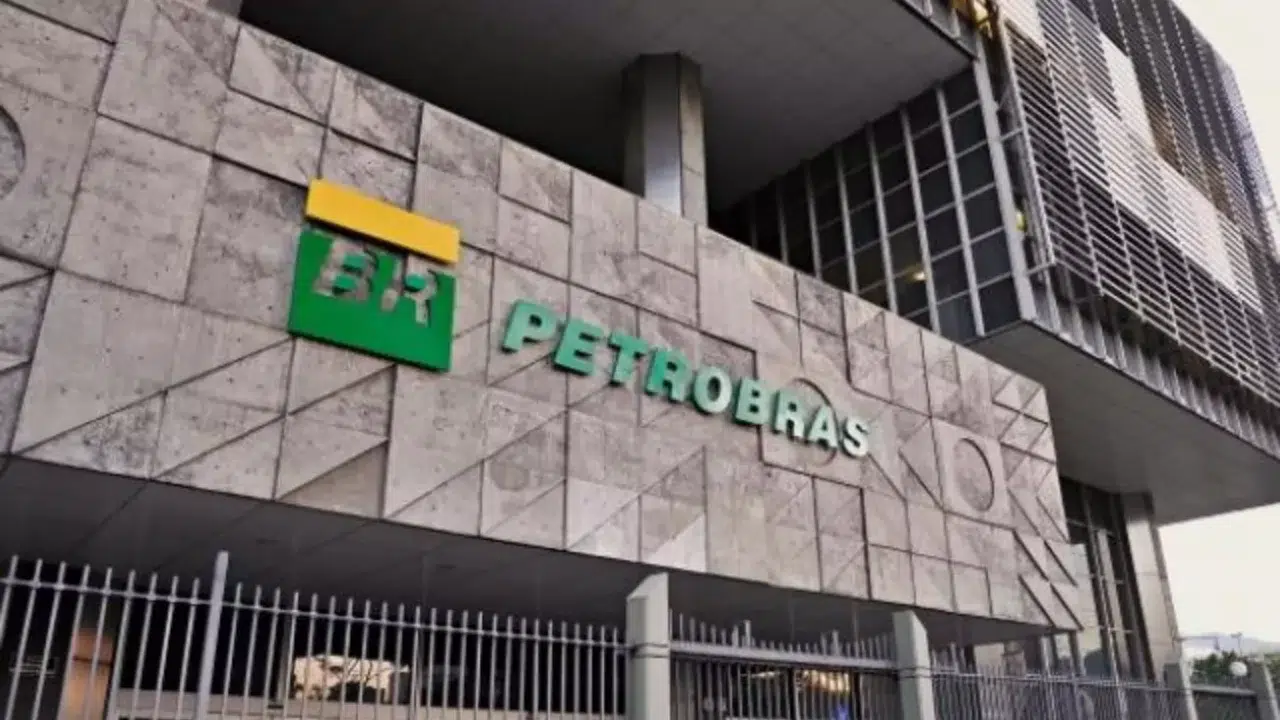

The Union’s Proposal to Amend the Company’s Statute Is Subject to TCU Approval Before It Comes into Effect.
Today, changes to the Petrobras statute were approved, which include the creation of a capital reserve for dividend payments. This change aims to ensure that the company can maintain payments to shareholders in situations of imbalance between net profit and the company’s cash flow. The Chief Financial Officer and Investor Relations Officer, Sérgio Caetano Leite, explained that this reserve is a common practice among large companies listed on B3, marking a modernization of the company’s governance.
With the decision in the hands of the assembly, with a majority from the Union, the counselors appointed by Lula were all named, which triggered criticism about the weakening of the company’s governance. Similar decisions were made during Jair Bolsonaro’s government.
The action may be definitively judged next week and is under the responsibility of Cristiano Zanin, former lawyer of Lula who took office this year in the court.
-
Oil production grows in Rio, but reserve replacement raises a warning sign

-
Petrobras is expected to complete the drilling of the Morpho well in the Foz do Amazonas in August 2026, the first well in the Equatorial Margin, an oil frontier that the ANP estimates at more than 30 billion barrels and could redraw the map of Brazil.

-
Oil returns to the center of concerns with tension between the US and Iran

-
IEA reduces forecast for global oil demand in 2026 after impacts of the Middle East crisis



Interim Decision of the STF on the State-Owned Companies Law
Efrain da Cruz, responsible for the executive coordination of the Ministry of Mines and Energy (MME), and Sergio Machado Rezende, former minister and previous leader of PSB, were affected by the provisional decision. In this situation, the prohibition would be legal.
The determination by the Supreme Federal Court made this year in a lawsuit filed by PCdoB invalidated parts of the State-Owned Companies Law. Internally, the legal department of Petrobras argued earlier this year that, since it is a provisional measure, internal committees should consider what was established in the statute, which was a sort of copy of the law. **
A similar situation occurred with Pietro Mendes, now during Lula’s government. The secretary would be responsible for “having strategic information and proposing public policies that have a direct influence on the activities carried out by the company.”
The restrictions were suggested without unanimity, due to diverse interpretations of the internal governance of Petrobras. **However, Petrobras decided to maintain its veto on party leaders, despite the STF’s contrary decision.**
According to the company, the changes aim to “keep the Social Statute of Petrobras updated, regardless of judicial decisions on the subject.”
During Jair Bolsonaro’s government, the Union appointed Jonathas de Castro and Ricardo Soriano de Alencar, who had been deemed ineligible by the company’s internal committees.
Castro served as executive secretary of the Civil House under Ciro Nogueira (PP). While Soriano held the position of Attorney General of the National Treasury (PGFN), an agency of the Attorney General’s Office (AGU) linked to the former Ministry of Economy, under Paulo Guedes.
The Brazilian Securities and Exchange Commission (CVM) has initiated two investigations this year related to the misuse of voting power by the Union, but so far has not reached a conclusion.
The proposal to amend the statute was presented by the board of directors in October, which generated negative reactions in the market. In light of this, the company clarified that there would be no reduction in requirements in accordance with the State-Owned Companies Law.
Text Adjustments of the Company for Conflict of Interest Evaluation
“It became clear that the wording proposed by the company was a bit confusing. With the aim of making it evident that it is necessary to examine possible conflicts of material interests, the Union is reviewing the text to be discussed,” said Timbó. With this measure, the government aims to obtain the approval of the TCU.
In relation to the original proposal, which established that “the company will only consider situations of formal conflicts of interest in cases expressly defined by law,” the “situations of material conflict of interest” have been included, covering both options (formal and material) that should be considered in the selection of company administrators.
It was noted by Minister Jorge Oliveira that Petrobras suggested changes without appropriate backing – “lacking legal opinions or analyses from the company’s technical area to support this proposal,” according to the report. The internal process “evidences the company’s haste and deficiency in the formal evaluation procedure,” he said.
During the Extraordinary General Assembly, the Union, represented by the Attorney General Ivo Timbó, proposed an amendment to the new statute to clarify that the company considers material cases as conflicts of interest, in addition to the formal cases expressively provided by law.
The proposals were approved with a favorable vote of 54.98% from the shareholders present at the AGE, with the majority of votes from the Union. 31.96% of shareholders opposed the modifications and 13.06% abstained. In total, 93.27% of shareholders attended the assembly.
The statute of Petrobras had adopted the State-Owned Companies Law, which establishes a 36-month quarantine for party leaders. This affected councilor Sérgio Rezende, a former minister who left PSB at the end of the year. In addition, the new rule prohibited the accumulation of executive positions in government and the board by agents without permanent ties to public administration, as in the case of the executive secretary of the Ministry of Mines and Energy (MME), Efrain da Cruz.
The second modification, unrelated to the STF, involves the Corporations Law and addresses conflicts of interest, which impacted the lack of consensus in the appointment of Pietro Mendes, chairman of the board and secretary of Oil and Gas at MME.
The precautionary measure of the TCU removed the issue that depends on the STF but considers that there are possible irregularities in the application of conflict of interest hypotheses, with a risk of “undue interference in the interpretation of the legal concept.”
In addition to concerns raised by the Federal Court of Accounts (TCU), which will still have to confirm the approved modifications.
As for the appointment of council members with political involvement, nothing changes. If the prohibition is reinstated by the STF, it will come back into effect. Regardless of the statute, the company is subject to legislation.
Another approved change was the end of civil liability insurance coverage for directors in cases of intentional or negligent acts. And also the establishment of a capital reserve for the payment of dividends.
Approval of the Appointment of Counselors and Administrators of Petrobras
The Union approved in a special extraordinary meeting (AGE), on Thursday afternoon (30/11), the proposals for the appointment of counselors and administrators of Petrobras.
President Lula’s government is hopeful that this will be able to resolve an internal dispute involving restrictions due to conflicts of interest, especially concerning public agents appointed to the Board of Directors (CA) of the company.
Minority shareholders attempted to delay the decision due to pending matters in the Supreme Federal Court (STF), which annulled parts of the State-Owned Companies Law through a provisional decision by former minister Ricardo Lewandowski.
Source: EPBR