






 Portuguese
  Spanish


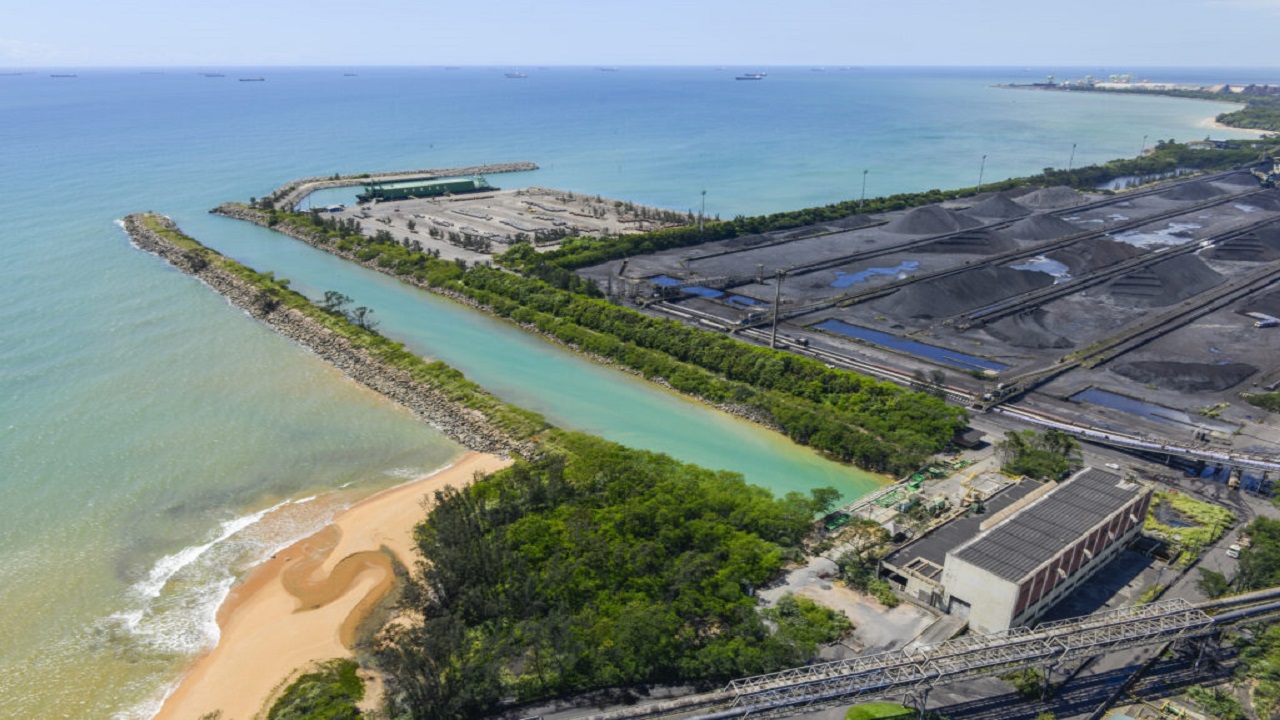

ArcelorMittal Tubarão Will Have The Largest Desalinator In The Brazilian Market Capable Of Supplying 80 Thousand People Per Day
The largest seawater desalinator in Brazil will begin operations at ArcelorMittal Tubarão this September. The system, which is the most advanced on the market, is the result of million-dollar investments and has an initial capacity to desalinate 500 m³ of water per hour, ensuring greater water security for the company and the state of Espírito Santo.
Also Read
President Of ArcelorMittal Comments On The Completion Of The Desalination Plant Works


According to Benjamin Baptista Filho, CEO of ArcelorMittal Flat Steel in South America and president of ArcelorMittal Brasil, despite challenges posed by the pandemic, the works were completed on schedule.
The construction of the desalinator generated 220 new job vacancies. A large number of professionals collaborated with the company teams to execute the entire process under strict safety controls to ensure the health and integrity of everyone involved.
-
Couple Transforms Suffolk’s Last 1891 Windmill into Luxurious Four-Story Home with Zinc Observation Room in England

-
Father and Son Build 97 cm Thick Circular Stone House in Brazil, Inspired by Scottish Architecture, Creating a New Agrotourism Hub
-
Sweden Removes 200-Ton Concrete Gallery to Restore Pjältån River’s Natural Flow in Europe’s Largest Aquatic Restoration Project

-
Key Infrastructure Projects for Brazil’s Next President: Expanding Railways to Cut Transport Costs, Reduce Truck Traffic, Create Jobs, and Boost Industries Nationwide


According to the executive, the production of the desalinator is aligned with the company’s strategy due to future water crisis scenarios. The water from the investments of R$ 50 million will be directed for industrial uses, replacing part of what is currently consumed from the Rio Santa Maria da Vitória, thereby increasing resource availability for society.
ArcelorMittal Desalinator Will Use Reverse Osmosis Technology
The company executive stated that the plant will utilize reverse osmosis technology, widely used in countries such as Spain, Israel, the United States, and others, to source the water.
According to Benjamin, the teams conducted studies over two years, including assessments of various technological alternatives for desalination, technical discussions with suppliers from around the world, water quality analyses, laboratory tests, and even visits to other plants in Argentina and the United States. All this to ensure that the investments were tailored to a reality closer to our country.
First Phase Of The Project Will Be Able To Supply 80 Thousand People Per Day
The desalinator was constructed over an area of approximately 6,000 m² and will consume around 3 MW of energy, which equates to 1% of the energy generated by ArcelorMittal Tubarão itself. One of the key features of the plant is its modular configuration.
The first module will be capable of desalinating 500 m³ of seawater per hour, which is sufficient to supply a community of 80 thousand people per day. It is worth noting that additional modules can be added in the future. The entire process will not impact the environment in any way.
The saline solution resulting from the process, known as brine, will be returned to the sea through an existing discharge channel at the desalinator. ArcelorMittal has the lowest industrial freshwater consumption rate in Brazil.
96% of the water currently used by the company comes from the sea and is used for cooling the equipment that produces steel. The other 4% is sourced from the Rio Santa Maria da Vitória, and ArcelorMittal is making further investments to continually reduce this consumption. Currently, the company’s freshwater recirculation level exceeds 97%.


