






 Portuguese
  Spanish


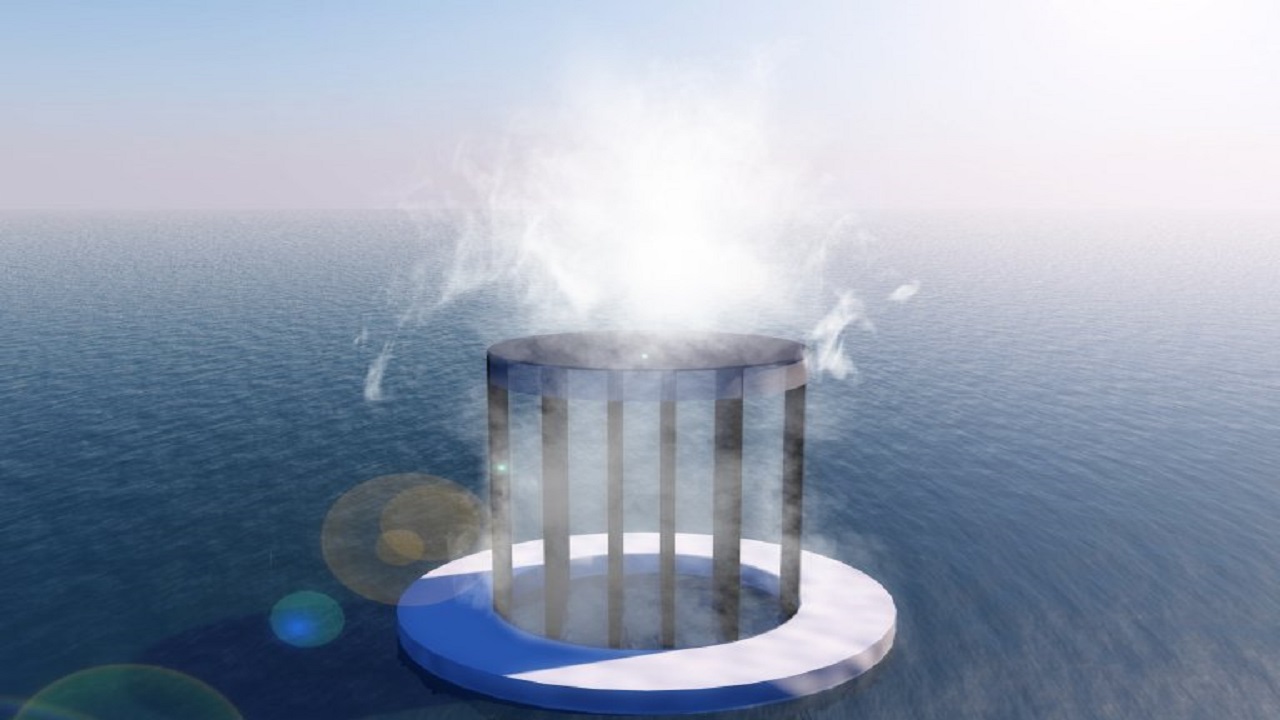

Engineers From Australia Created a Device That Promises to Innovate the Solar Energy and Potable Water Market. The Idea Is a Desalination Device That Uses Solar Energy to Generate Potable Water From Seawater
Engineers from Australia developed a desalination device that uses solar energy to extract clean and potable water from saltwater. The engineers conducted some demonstrations, proving that the desalination device can provide fresh water from seawater, brackish water, and, most impressively, contaminated water.
Read Also
Engineers Create Desalination Device That Promises to Change the Solar Energy Market
Each desalination device is capable of providing enough clean water for a family of four, using only one square meter of water source per day.
According to Haolan Xu, a professor at the University of South Australia and also one of the engineers responsible for the project, all previous techniques were focused on the use of evaporation with solar energy to produce clean and potable water; however, these techniques were insufficient to be practical.
-
Giant Batteries Take Center Stage in Chile Auction as Company Offers 960 GWh of Solar Energy for Nighttime Use, Aiming to Stabilize Solar Power Supply

-
After a Year of Success in Switzerland, Solar Railway Attracts Italy’s Interest for Clean Energy Transformation
-
Robots Clean Solar Panels in Desert Power Plants Without Water, Preventing Energy Losses
-
Brazil’s Offshore Wind Energy Potential Worth $1 Trillion Stalled by Long-Delayed Agreement




He states that the Australian project that promises to change the market has overcome all previous inefficiencies, and its technology can provide enough clean water to meet many practical needs.
Understand How the Solar-Powered Desalination Device Works
The base of the desalination device system is a structure that generates heat from solar energy, highly efficient, which is mounted on the surface of a water source. The device converts sunlight into heat, causing the energy to concentrate precisely on the surface so that the upper part of the liquid evaporates more quickly.
Although it seems like a very easy and simple process, other attempts resembling this did not have as much efficiency due to energy loss, as the heat from the solar energy dissipated into the air while passing through the collector to the water source. According to the engineers, older solar energy evaporators were basically two-dimensional, meaning they were just a flat surface and could lose 10% to 20% of the solar energy to the water that would be evaporated.
The Australian engineers developed a technique that not only avoids the loss of solar energy but also extracts additional energy from the surrounding environment and the volume of water, making the device operate at 100% efficiency so that solar energy enters and consumes another 170% of energy from the water itself and the surrounding environment.
Desalination Device Tests Show Good Results
During the tests, the device’s rods were placed inside a glass bell jar, which was exposed to the sun, without using any type of concentrator or lens.
As a result, the excess heat is kept away from the upper surfaces of the evaporator, distributing heat to the rod’s surface and promoting the evaporation of water, causing the device to achieve zero loss during evaporation.







