Portuguese
  Spanish




Acquisition Marks New Phase of Military Cooperation With Deliveries Scheduled Until 2026
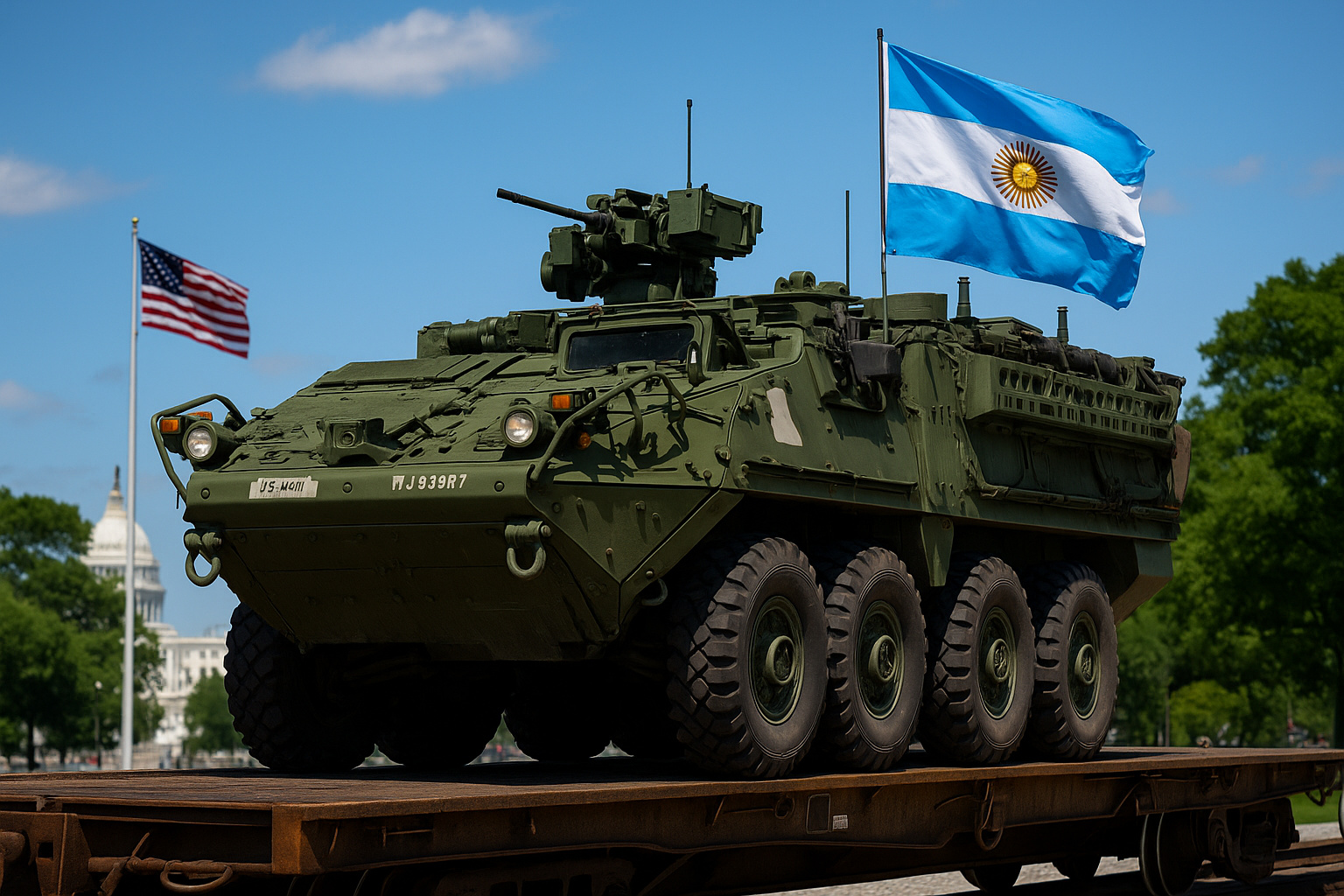
On July 2, 2025, in Washington, the Argentine Minister of Defense, Luis Petri, consolidated an important step for the Argentine Army.
He was accompanied by the United States Secretary of Defense, Pete Hegseth, to formalize the agreement.
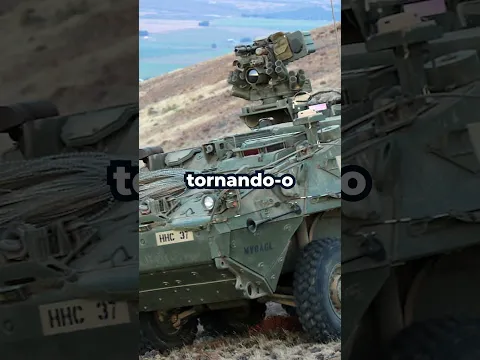
During the visit, the authorities signed the acceptance letter for the acquisition of M1126 Stryker 8X8 armored vehicles.
The armored vehicles were recently produced and reinforce the commitment to strengthen defense as a pillar of sovereignty and peace.
First Phase of Modernization
Structurally, the acquisition represents only the first of three phases already planned by the Argentine government.
Initially, the agreement covers a batch of eight armored vehicles.
According to the Argentine Ministry of Defense, the first two units are expected to be delivered by the end of 2025.
If necessary, they may arrive by early 2026, ensuring the established schedule.
Two additional batches will be included in further contracts to continue the modernization process.
These new contracts should ensure deliveries in the following years.

Strengthened Strategic Alliance
In addition to the purchase of the armored vehicles, the meeting reinforced a solid strategic alliance between Argentina and the United States.
The authorities highlighted that national defense needs to be understood as a foundation for freedom and stability.
The agreement opens avenues for new fronts of bilateral collaboration.
These fronts encompass cyber defense, land border protection, military interoperability, and the provision of strategic equipment.
To this end, the U.S. Garden Support model will serve as inspiration for effective solutions in various areas.
-
Australia to Deploy Up to 8 Nuclear-Powered Submarines in Indo-Pacific, Establishes Billion-Dollar Naval Chain Through AUKUS, Joining Elite Group Capable of Extended Underwater Missions

-
Indonesia Begins Construction of 2,000-Ton Scorpène Stealth Submarines with Advanced Weaponry and French Steel

-
Brazil’s Largest Navy Ship, NAM Atlântico, Transforms into Field Hospital During National Crises

-
Brazilian Navy Demonstrates Strength in Naval Exercise with Over 20 Nations, Deploys Frigate Independência in Anti-Submarine and Air Defense Scenarios, and Joins Historic Formation with 26 Ships from 14 Allied Navies off the U.S. Coast



New Challenges and Global Context
During the negotiations, both sides also acknowledged that the geopolitical landscape is becoming increasingly complex and, therefore, challenging for all countries.
Furthermore, they stated that the world is facing a phase of hybrid threats and, consequently, the expansion of authoritarian regimes in various regions.
Therefore, they emphasized that Argentina needs to reclaim its prominent role in the Western Hemisphere to maintain stability.
The modernization of the Armed Forces, thus, strengthens internal defense and also ensures greater prominence in regional security.
In addition, it expands participation in joint missions and, consequently, multilateral operations, which is strategic for the country.
Expectations and Continuity
With the signing made this Tuesday, Argentina thus begins an important journey for its operational capacity in the coming years.
Moreover, to ensure transparency, the governments are articulating stringent editorial review protocols.
In this way, these protocols ensure that each phase of the schedule is fulfilled as promised.
Each delivery represents, therefore, more than tactical reinforcement for the Argentine Army.
Thus, it symbolizes a firm step towards strategic integration with the United States.
Consequently, this integration aligns the country with contemporary global defense challenges.