Portuguese
  Spanish


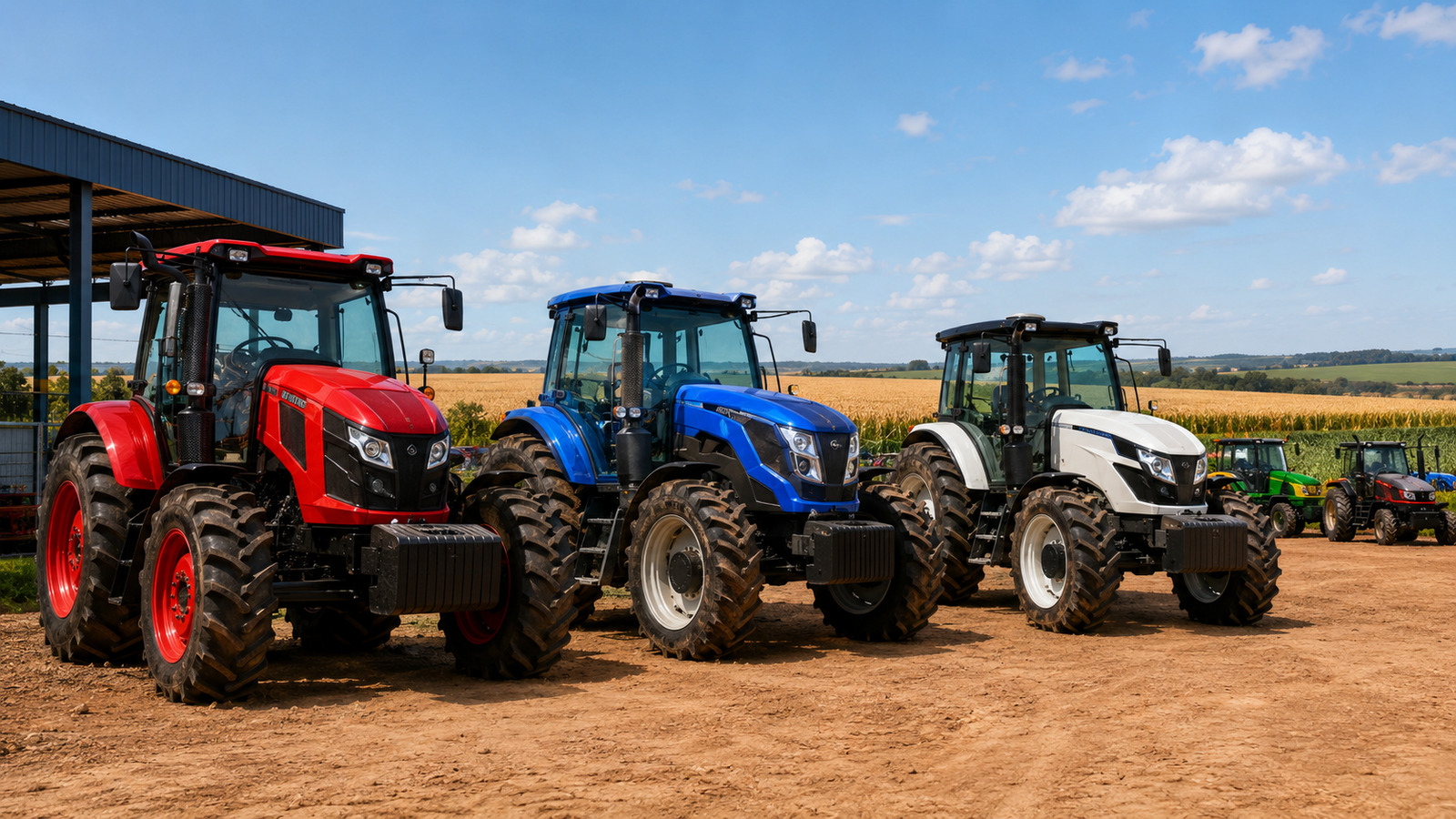


With record imports, Chinese and Indian brands expand presence in Brazil with cheaper tractors, competitive financing, and a focus on small and medium producers, pressuring traditional manufacturers in a restricted credit market
According to data from the Compre Rural portal, more than 11,000 agricultural machines were imported by Brazil in 2025, and the advance of Asian tractors gained strength at Agrishow 2026, with Chinese and Indian brands targeting smaller producers.


Record imports change the landscape
The Brazilian agricultural machinery market is undergoing a silent transformation at fairs and dealerships.
While traditional manufacturers face credit retraction, companies from China and India are expanding their presence.
-
India’s Sugar Export Cuts and Ethanol Shift Amid El Niño Threat Could Impact Global Prices and Stocks

-
Quarantine Pest Threatening Palm Trees Puts Brazilian Authorities on Alert, Prompts Monitoring at University of Taubaté and Potential Control Measures Across São Paulo
-
Global Alert: Report Finds 159 Pesticides in Coffee Beans Sold in Europe, Posing Serious Risks to Millions of Farm Workers
-
Low-Demand Brazilian Beef Offal Gains Popularity Abroad: Indonesia Purchases $19.5 Million, Boosting Revenue and Reducing Waste



At Agrishow 2026, Asian manufacturers launched models, increased their exposure, and showed that they do not intend to act merely as supporting players in Brazilian agribusiness.
In 2025, Brazil imported more than 11,000 agricultural machines, a 17% increase year-on-year. India led with approximately 6,000 units.
China followed, with 3,900 machines sold to Brazil and growth of 85.7%. In 2026, the pace became even stronger.
Imports grew 48.4% in the first quarter, indicating that the Asian advance has ceased to be a punctual trend and has become a structural change.
Asian tractors leave old image behind
For many years, Chinese and Indian tractors were seen in Brazil as low-reliability equipment, aimed at simple operations or price-sensitive producers.
This scenario has changed. Today, Asian manufacturers arrive in the country with more efficient engines, embedded electronics, large-scale production, and lower operating costs.
The strategy combines aggressive commercial policy, competitive financing, and a focus on family farming and medium-sized rural properties, where the entry price is a significant factor.
India targets smaller properties
The main Indian representative in Brazil is Mahindra, one of the largest tractor manufacturers in the world. At Agrishow 2026, it reinforced its offensive with models between 25 and 110 hp.
The focus is on family farming, horticulture, coffee farming, and dairy cattle, segments in which producers seek cheaper and simpler mechanization without sacrificing technology.
Among the highlights was the OJA 3140, developed in partnership between India and Japan for compact and multifunctional operations.
Mahindra’s strategy is to occupy niches with machines aimed at producers who need to reduce costs, maintain productivity, and find alternatives in a restricted credit environment.
China expands operations in various categories
If India is advancing in the compact segment, China is growing in practically all categories. Among the Chinese brands present in Brazil are YTO, Zoomlion, Lovol, and XCMG.
YTO participated in Agrishow 2026 through the distributor BDG Máquinas, highlighting its position as one of the largest tractor manufacturers in China.
Zoomlion officially debuted at the fair with hybrid tractors and high-power machines. The hybrid DV3504 drew attention as a solution linked to low-carbon agriculture and energy efficiency.
XCMG, known for its yellow line machines, also expanded its operations in agribusiness and presented electric equipment and solutions aimed at the field.
The most strategic move could come from Lovol. The Chinese manufacturer already has an engine factory in Goiás and is negotiating to install a tractor unit in Brazil.
In February 2026, Lovol representatives met with the Ministry of Agrarian Development to discuss agricultural mechanization and technologies for family farming.
Cost-benefit pressures traditional industry
The entry of Asian tractors occurs at a delicate moment for the national sector. Agrishow 2026 generated R$ 11.4 billion in business intentions, a 22% drop from the previous year.
Abimaq recognized a retraction in domestic sales, pressured by high interest rates, exchange rates, and commodity prices. In this environment, Chinese and Indians gain competitiveness with lower entry prices.
Simplified maintenance, lower production costs, and state support in the countries of origin also weigh in. For some producers, especially the smaller ones, the math became straightforward.
An Asian tractor can cost significantly less than a traditional European or North American model, becoming an alternative in a scenario of restricted credit for the Brazilian producer.
Market still belongs to the giants
The Brazilian market continues to be dominated by John Deere, New Holland, Massey Ferguson, and Valtra, especially in the high-power, precision agriculture, and large agricultural group segments.
Once seen as a distant threat, Asian manufacturers have begun to occupy real space at fairs, dealerships, and on the producer’s radar.
The expansion of Asian tractors does not yet mean absolute dominance, but it has altered the competitive balance of agricultural mechanization in Brazil.
With information from Compre Rural.