Portuguese
  Spanish



Mysterious Red Lights Were Sighted By An Astronaut During A Rare Atmospheric Phenomenon That Intrigues Scientists
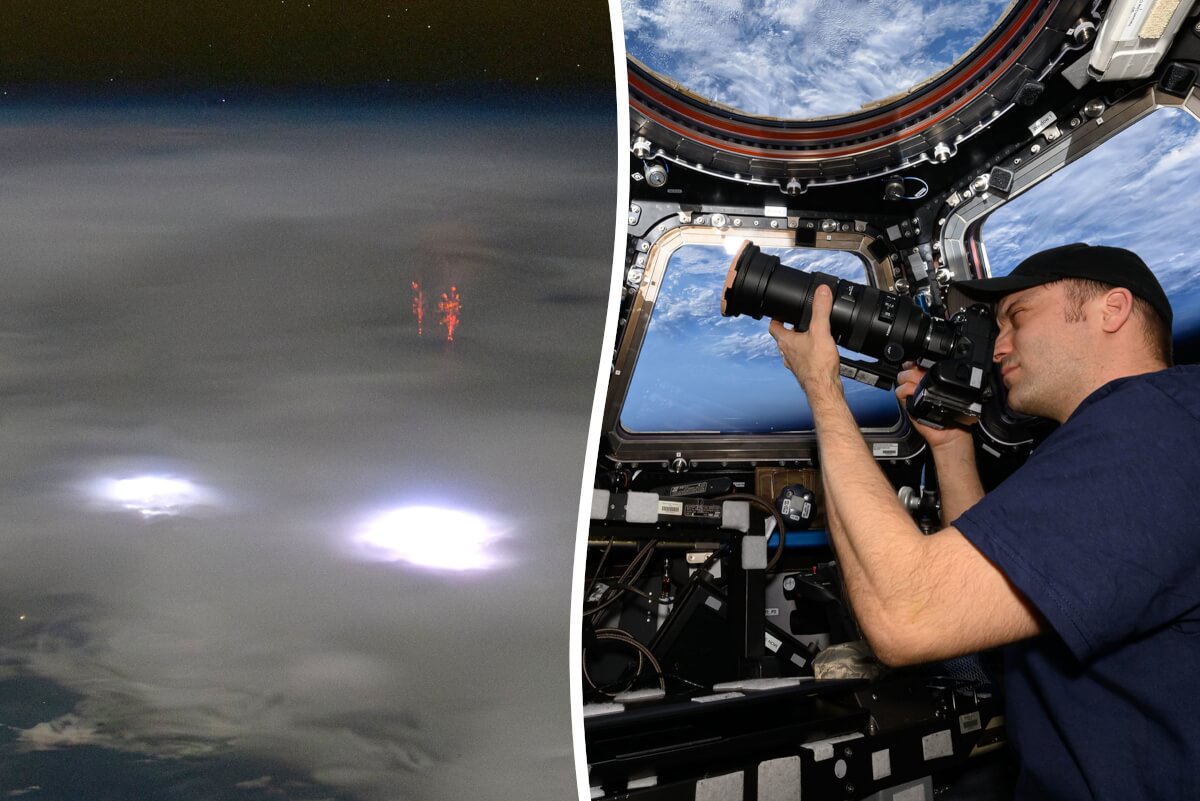
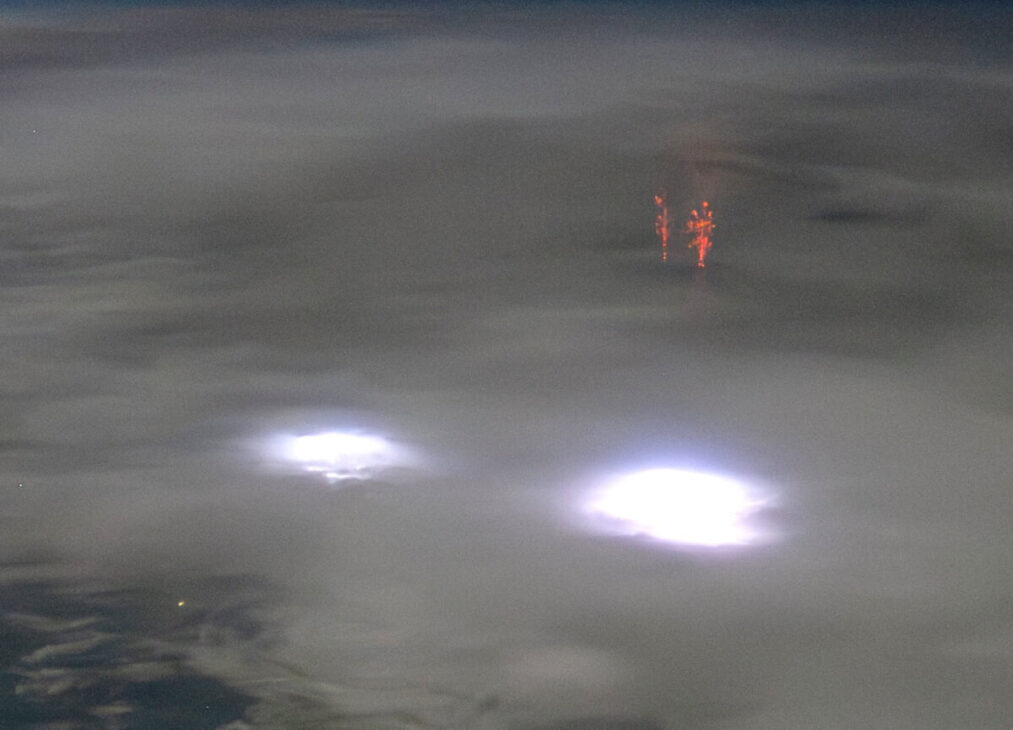
Onboard the International Space Station (ISS), NASA astronaut Matthew Dominick had a spectacular view, something that few humans have seen: a rare “red sprite”, an atmospheric electrical discharge that resembles a luminous dance above intense storms. The atmospheric phenomenon quickly went viral on social media.
This mysterious phenomenon, known as Transient Luminous Event (TLE), was recorded while Dominick was preparing to photograph Cairo.
In a post on X, the astronaut described the experience: “A red sprite shoots out above a lightning strike over Central Africa. Near Africa, there were a lot of lightning strikes. Out of around 800 images, there was a red sprite!”
-
Brazil Constructs First Japanese SABO Barrier in Nova Friburgo to Prevent Landslides, a $3 Million Concrete Trap for Rocks, Logs, and Mud

-
Brazilian Navy’s Technology Plays Strategic Role in Future of Small Modular Reactors, Boosting Nuclear Energy Capacity with Innovative Solutions for Power Generation and Industrial Applications

-
China Surpasses U.S. and Russia Combined in Submarine Production
-
Xiaomi Unveils Smart Glasses in Brazil with 12MP Camera, 4K Video, and AI Features, Challenging Ray-Ban Meta


What Is A Transient Luminous Event
For those who have never heard of such features, “red sprites” are ephemeral and colorful flashes of energy that occur between 40 and 80 kilometers above the ground, in the mesosphere.
Measuring up to 26 kilometers in extent, they arise as a result of lightning activity below storms. Although they are a visual spectacle, these events are poorly understood even by specialized scientists.
The scene captured by Dominick is not only a milestone for science but also a reminder of the unexplored beauty of our atmosphere. Imagine looking at Earth from space and encountering explosions of light dancing like cosmic fireworks!
It is the kind of vision that makes us reflect on how little we know about what happens above our heads.
Dominick and his fellow astronauts – Michael Barratt, Jeanette Epps, and Alexander Grebenkin – returned to Earth a few days later, safely landing in Florida on October 25th. But for the astronaut, this unique view will be an eternal reminder of how science and poetry meet in space.
This capture inspires us to look at the sky with more curiosity, knowing that there is still much to be discovered. After all, our planet is full of mysteries waiting to be unraveled, and space exploration continues to offer us new perspectives on the world we call home.
Atmospheric Phenomena
Atmospheric phenomena are natural manifestations resulting from the interaction between elements of the atmosphere, such as temperature, pressure, humidity, and winds.
They include events like rain, storms, tornadoes, hurricanes, and fog, which play fundamental roles in climate balance and the natural cycles of the planet.
Additionally, these phenomena can be influenced by geographical factors, such as proximity to oceans and the presence of mountain ranges, directly affecting human life and activities.
Some atmospheric phenomena, like polar auroras and rainbows, offer a visual spectacle that delights observers, while others, like cyclones and hailstorms, can have significant impacts on infrastructure and safety.
With advancements in technology, forecasting and monitoring these events have become more accurate, allowing for damage mitigation and the protection of communities in vulnerable areas. These manifestations continue to be the subject of study for scientists interested in understanding the workings of the Earth’s atmosphere and its complex interactions.