Portuguese
  Spanish


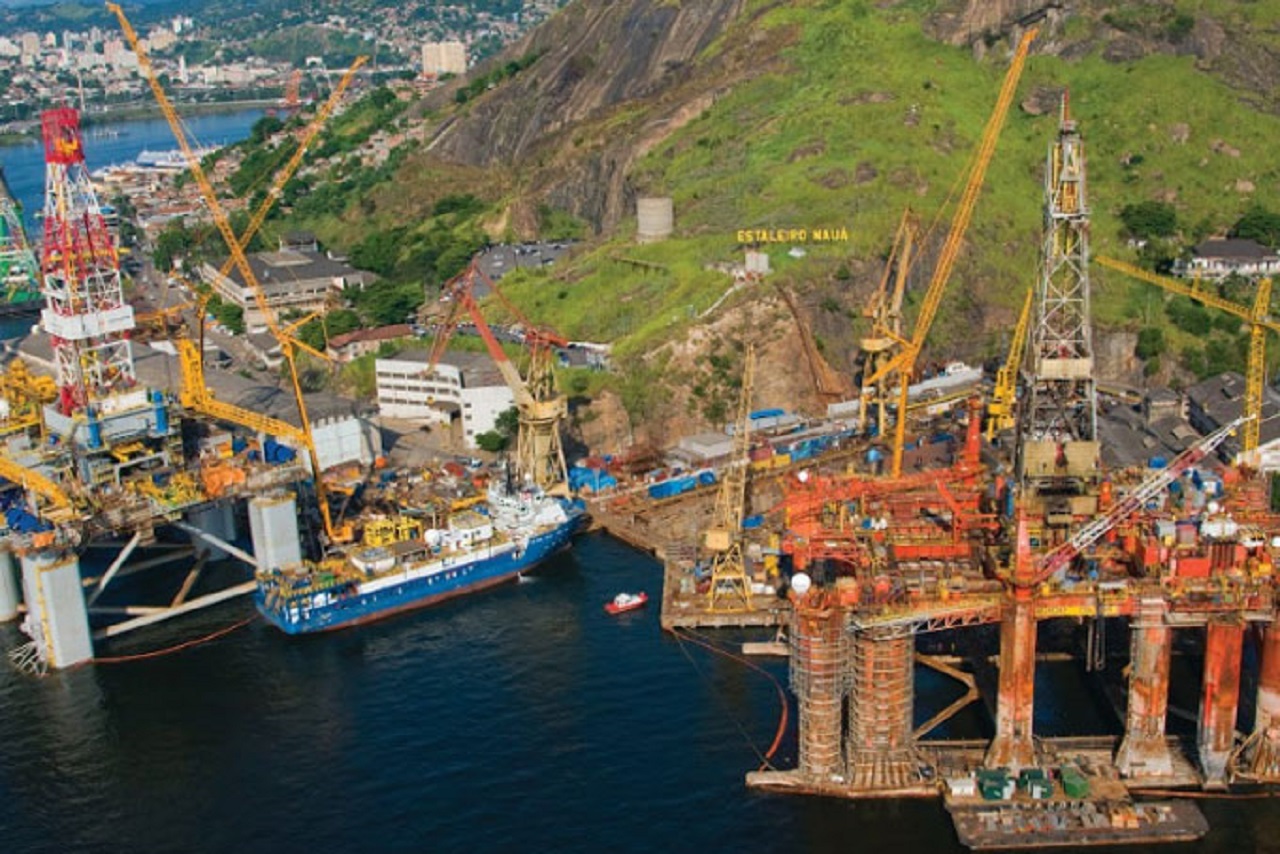

The State of RJ Wants to Strengthen Its Participation in This Trillion-Dollar Global Market by 2030 and, Through Alerj, Representatives and Specialists from the Naval Industry Debate the Best Directions Brazil Can Take to Achieve This Goal
At a public hearing held this Monday (21), the Commissions for Naval Industry, Offshore, and the Oil and Gas Sector, and Science and Technology of the Legislative Assembly of the State of Rio de Janeiro (Alerj), discussed the creation of a maritime cluster (technology hub) with representatives from public universities and scientific institutions in the state. During the meeting, the CEO of the Gerencial Projetos Navais Company (Emgepron), Admiral Edésio, pointed out that the Brazilian naval sector can generate hundreds of direct jobs by 2030.
“Rio de Janeiro has everything to become one of the main global centers for ocean economy development. There is no other place in the world with such potential. It is expected that by 2030, the ocean economy will contribute an added value of three trillion dollars, which represents about 5% to 6% of the global economy. In addition, the expectation is to generate hundreds of direct jobs, as well as indirect jobs,” said the admiral.
Edésio also enumerated the potential points of Rio to solidify a maritime cluster. “We have a natural maritime vocation, as well as geographical, social, institutional, cultural, and technological proximities among various economic agents. This is not only in relation to the industrial-commercial segment but also to public and private institutions, and especially to the academic environment. We have more than 50 universities and major research centers, such as Petrobras, COPPE/UFRJ, and the Technological Center of the Navy of Rio de Janeiro,” he explained.
-
Helsinki Residents Receive Water That Travels 120 Kilometers Through a Hidden Rock Tunnel from a Lake Before Treatment

-
SENAI Launches $36 Million Innovation Round to Boost Brazilian Manufacturing Productivity and Reduce Business Risks with R&D Projects by 2026
-
Indonesia Plans to Build 5,000 Suspension Bridges by 2026 to Connect Rural Communities to Schools, Health Centers, and Markets
-
U.S. Invests $75 Million in Projects to Extract Rare Earths, Gallium, Germanium, and Aluminum from Coal Waste




The director of Emgepron also suggested the creation of an “Authority for the Development of the Ocean Economy.” According to him, the agency could be established within the structure of the State Secretary of Industrial Development, with the goal of leading, in an integrated and coordinated manner, the issues related to exploring the maritime potential of the state of Rio de Janeiro.
As the committee president, Deputy Célia Jordão (Patriota) highlighted the effort to seek dialogue with the Executive and other bodies for the formation of a collaborative governance to boost the sector:
“We are broadening discussions on investments in infrastructure and market qualification, aiming to promote a great unity in favor of the recovery of the naval sector’s growth. We will schedule a meeting with Governor Cláudio Castro to discuss development measures for the naval and offshore industry sector,” stated Célia Jordão.
The economist and director of Alerj’s Fiscal Advisory, Mauro Osório, emphasized the importance of establishing an organization to identify opportunities for the economic development of Rio.
“We need to work systematically. The armed forces have a very strong presence in the state, and there is practically no interaction between state leaderships and the armed forces. Today, 80% of Petrobras’s suppliers are outside of Rio, so we need to see great opportunities for the economy. We still have the State Sovereign Fund, which was created precisely with this objective, and we will discuss how we can use these resources to structure the economy of Fluminense,” he commented.
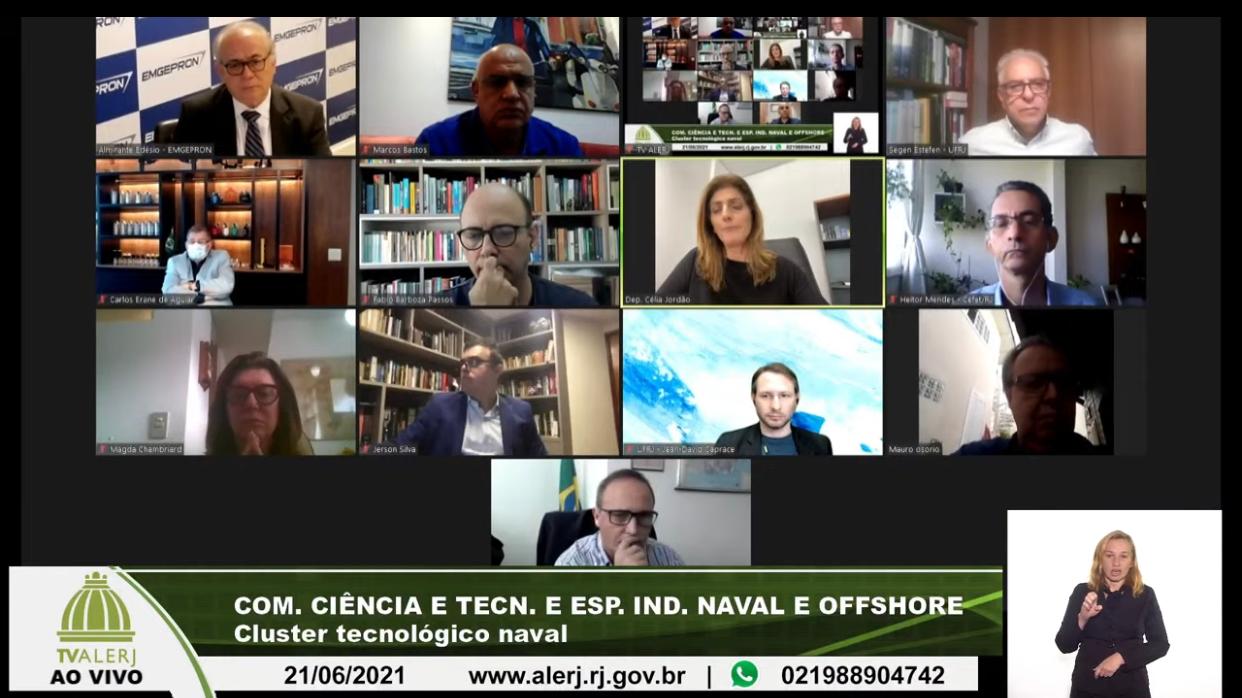
Ports of Rio de Janeiro and Itaguai Receive Visits from Representatives of MInfra and MRS
Representatives from the National Secretariat for Ground Transport of the Ministry of Infrastructure (SNTT/MInfra) and the logistics operator MRS, which manages a railway network in the states of Rio de Janeiro, Minas Gerais, and São Paulo, visited the Ports of Rio de Janeiro and Itaguai on the last days of the 14th and 15th, respectively. The objective was to discuss, with the directors and managers of the Companhia Docas do Rio de Janeiro (CDRJ), and the representatives of SNTT/MInfra, improvements in the railway infrastructure for accessing the ports. Understand All the Objectives of the Visit in the Article from June 21, 2021.
Source: Communication