






 Portuguese
  Spanish


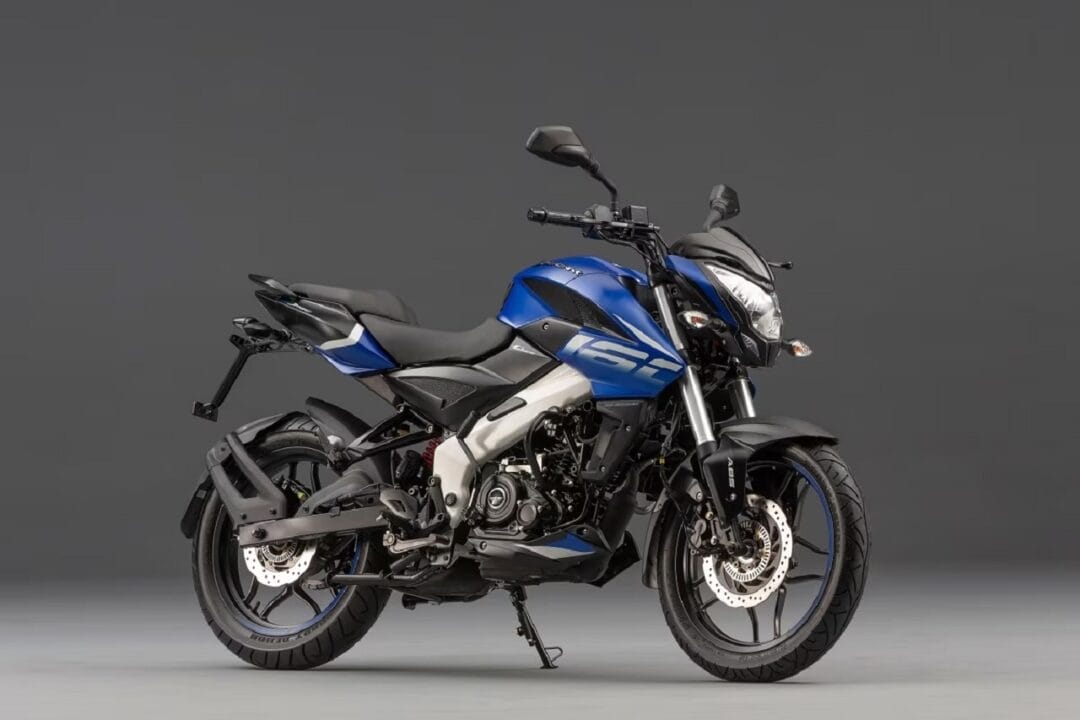
Tired Of Paying A Lot For Gas? The New Bajaj Gas-Powered Motorcycle Is The Solution! Drive More For Less And Enjoy The Savings.
India will have the world’s first mass-production motorcycle powered by Compressed Natural Gas (CNG), a gaseous fuel that has never found its place in two-wheeled vehicles, despite being very popular among cars. Bajaj Auto, a company based in Chakan and one of the largest motorcycle exporters in the country, which is also present in Brazil, will present a new CNG-powered motorcycle next quarter.
Check Out All The Relevant Information About Bajaj’s New CNG Motorcycle

According to the Indian press, the brand’s focus is to gradually expand the range of vehicles in the CNG segment, thus enabling the use of a cleaner and cheaper fuel than gasoline.
Rajiv Bajaj, the company’s managing director, emphasized that Bajaj is actually bringing the launch of the CNG-powered motorcycle forward to the next quarter and explained that he believes a CNG motorcycle from Bajaj should appeal to consumers in displacement points such as 100cc, 125cc, and 150-160cc, giving the opportunity to develop a portfolio rather than just one motorcycle.
-
Volkswagen to Cut Production by 1 Million Cars by 2030, Reducing Jobs and Platforms, Focusing on More Profitable Models

-
Toyota Launches First 100% Electric Car in Brazil: bZ4X with 343 HP, All-Wheel Drive, 361 km Range, Priced at $419,990 BRL, Limited to 99 Units

-
Chinese SUV Achieves 24.4 km/l, Outperforms Toyota Yaris Cross in Real-World Tests with 224 hp Hybrid System, Offers 51-Liter Tank for Greater Range, and Costs Up to R$ 5,000 Less.
-
Uber Black Revamps Fleet, Drops Ten Car Models and Sets Deadline for Electric BYD Dolphin


Adding a high-pressure cylinder to a motorcycle is something unprecedented, as there is no usable space to do so with the common types of cylinders used by larger vehicles.
In this case, the Indian brand will need to develop a new type of high-pressure gas compartment that can be added to the CNG-powered motorcycle in place of the common tank or, if it is a scooter, the same could be used in the compartment under the seat. With a proper refueling system, in the latter case, it would be possible to use both CNG and gasoline, ensuring flexibility in fuel usage.
Bajaj CNG-Powered Motorcycle Sighted In Tests
The CNG-powered motorcycle from the brand has been seen in tests, revealing notable data. It is worth mentioning that Bajaj recently registered three names: Freedom, Trekker, and Glider, and one of these could be used for this motorcycle.
As expected, the new spy image shows a motorcycle with a minimalist style. The fuel tank appears small in size under which the CNG tank can be mounted, and the front end features a circular headlight.
It is more likely that the lighting units are halogen all around, and a vertical handlebar can also be seen in the image. The CNG-powered motorcycle will focus on volume-based buyers in the affordable segment and may try to capture a large market share as the first of its kind. It could attract customers in rural areas, cities, and suburbs looking for high fuel economy.
Advantages Of Compressed Natural Gas (CNG)
The ANP claims that CNG is the best available solution for sustainable transportation. This is because it offers a reduction in greenhouse gas emissions just by converting existing cars. Besides sustainability, the most highlighted reason for CNG installation is the fuel price, which is considerably cheaper than gasoline.
Another advantage is the greater durability of the oil, which remains cleaner, and the exhaust, where there is no water accumulation.
On the other hand, a vehicle with CNG has two important characteristics. The first is the loss of power, which averages about 4% less than the original power. The second is the loss of space, as a traditional cylinder takes up almost one-third of the space.


Be the first to react!