





 Portuguese
  English
  Spanish
  3 min of reading


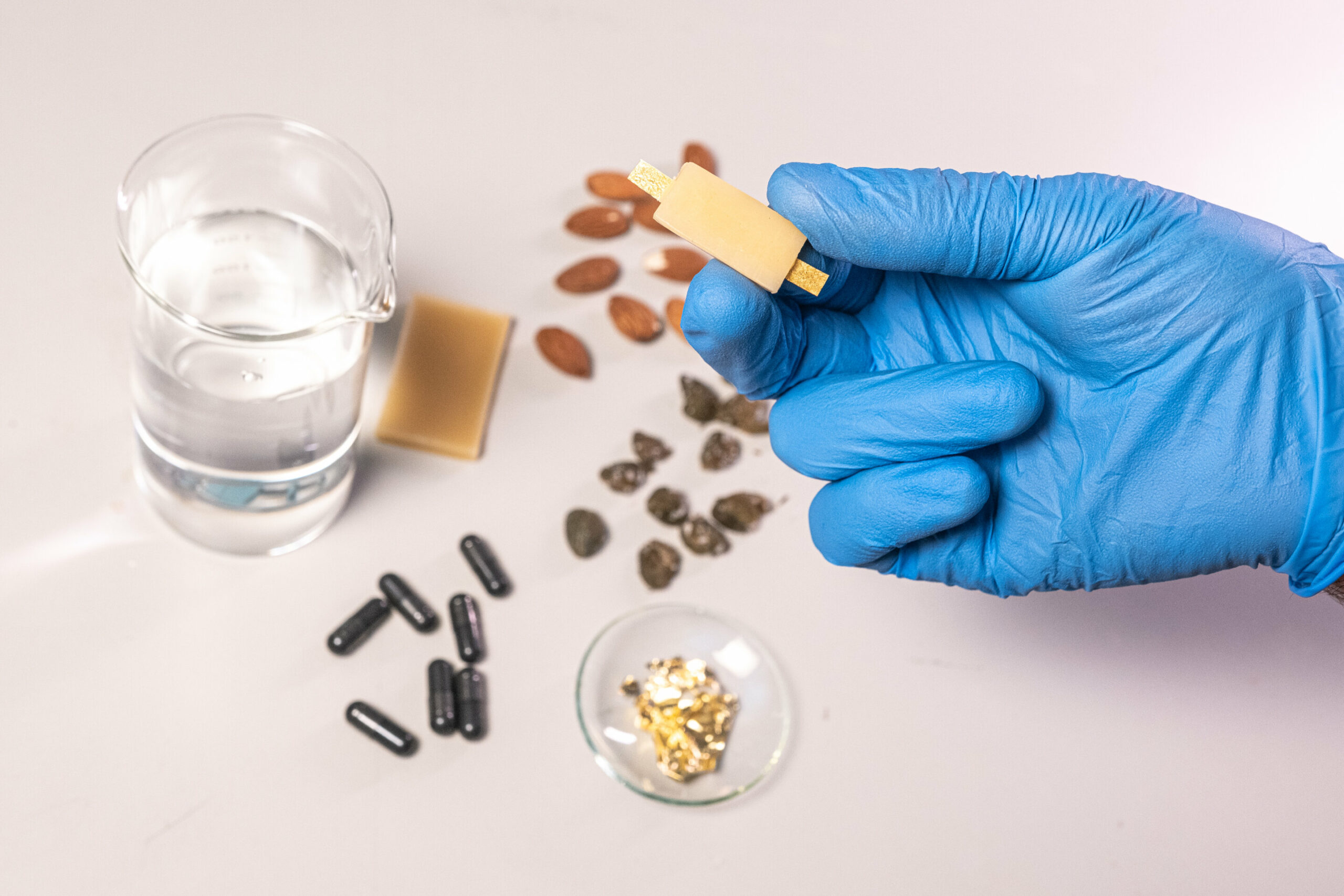
Scientists Develop Food-Based Battery That Could Revolutionize The Market. The New Technology Can Generate 0.65V And New Prototypes Are Being Developed.
Various scientists have considered completely solving the problem of recycling batteries, and now one alternative will literally be to “eat the components” that do not work or can no longer be recharged. It is still a remote possibility, but it has proven effective thanks to the work of Ivan Ilic and his colleagues at the Italian Institute of Technology.
New Technology Uses Ingredients Found In The Kitchen
The researcher developed a comestible rechargeable battery, using only materials that can be consumed as part of our daily diet. Although it is not expected that a user will eat the food-based battery in their phone in case of sudden hunger, these components may be useful in sensors for health diagnostics, soft robotics, and food quality monitoring. Edible batteries have been developed before; however, none were composed solely of ingredients that can be found in the kitchen.
The team developed the technology inspired by redox biochemical reactions that occur in all living beings, creating a battery that uses riboflavin (vitamin B2) as anode and quercetin, a supplement and food ingredient found in capers for example, as cathode.
-
Comet 3I/ATLAS has departed, but it left behind a chemical enigma: James Webb found methane, CO2, and water vapor in unusual proportions, reinforcing that the interstellar visitor came from a place very far from the Solar System.

-
Second cyclone of the week is already scheduled to arrive in Brazil and bring rain to 10 states.

-
‘Better alone than in bad company’: science reaches a conclusion on the statement after following 12,000 people for years; results challenge popular beliefs about relationships, happiness, emotional well-being and reveal significant differences between men and women.
-
NASA unveils mysteries of the interstellar comet 3I/Atlas and finds unexpected clues in only the third visitor from outside the Solar System, an object that traveled billions of years and mobilized James Webb, Hubble, and ALMA.




Activated carbon was used to enhance electrical conductivity, all completed with a water-based electrolyte. The separator needed in all batteries to prevent short circuits was developed with nori seaweed, typically found in sushi. Shortly thereafter, electrodes were encapsulated in beeswax, from which two edible gold contacts emerge in a support made from cellulose.
The food-based battery generates 0.65V, much lower than common batteries; however, it is a low enough voltage that does not create problems for the human body when ingested.
Future Use Of The New Technology Involving The Food-Based Battery
The prototype of the technology generated a current of 48 μA for 12 minutes, or some microamperes for over an hour, enough to generate electricity for small electronic devices used in medical exams or even to power low-power LEDs.
According to Mario Caironi, the project coordinator, future uses range from edible circuits and sensors that can monitor health conditions to supplying energy for sensors to monitor food storage conditions.
Additionally, given the safety level of these batteries, they could be used in children’s toys, where there is a high risk of ingestion. In fact, scientists are already developing a food-based battery with greater capacities and reducing the overall size. These developments will also be tested in the future for powering edible soft robots.
Food-Based Battery Project Started In 2019
The project began 4 years ago when the team received funding from the European Research Council to manufacture edible electronics, not exactly to replace traditional food, but because devices made from food are meant for use in the human body.
Edible electronics is a recently growing field due to the significant potential impact on the diagnosis and treatment of gastrointestinal diseases, as well as in food quality monitoring.
One of the most interesting challenges in advancing future ingestible electronic systems was the development of power sources, which must also meet the same criteria of using only edible raw materials.
According to Ilic, this new technology is also interesting for the electricity storage community. Developing safer batteries without using toxic materials is a challenge faced as the demand for batteries expands.






Be the first to react!