Portuguese
  Spanish


Millions of liters of sewage leave the domestic routine and pass through industrial structures that reduce pollutants, protect urban rivers, and reuse waste in reuse, biogas, and energy generation processes in the Metropolitan Region of Belo Horizonte.
Belo Horizonte relies on two treatment plants to receive, every day, a sewage load exceeding 350 million liters, a volume that comes from homes, businesses, and collector networks before returning to the environment with a lower pollutant load.
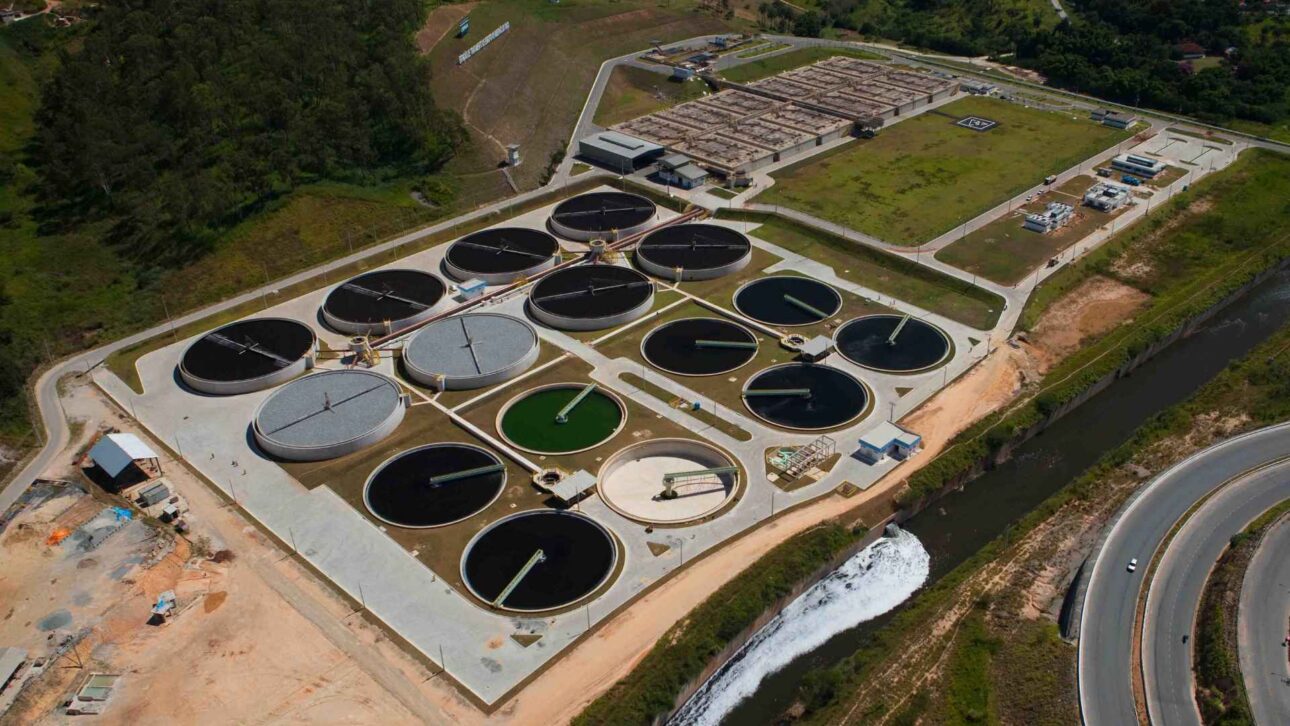
The total considers the flows associated with ETE Arrudas, on the border of the capital with Sabará, and ETE Onça, located in Belo Horizonte, both operated by Copasa.
This volume shows part of the urban infrastructure that remains out of sight for most of the population and operates continuously.
-
Five-Year-Old Turns Crayon Drawings of Colorful Socks into a Brand, Raising $200,000 to Aid Vulnerable Children

-
California Teacher Converts Moving Truck into Spacious, Light-Filled Mobile Home to Overcome Zoning Restrictions and Cut Costs

-
Daughter of a Construction Worker and a Baker, Bruna Achieves Dream of Studying Medicine at Brazil’s Prestigious USP at 21

-
City Provides Disposable Cameras to Residents to Capture Downtown, Uncovering Hidden Value Beyond Appearances



After leaving showers, toilets, sinks, tanks, and kitchens, the sewage travels through underground networks, reaches the treatment units, undergoes physical and biological processes, and continues to watercourses within environmental parameters.
ETE Arrudas and ETE Onça treat millions of liters per day
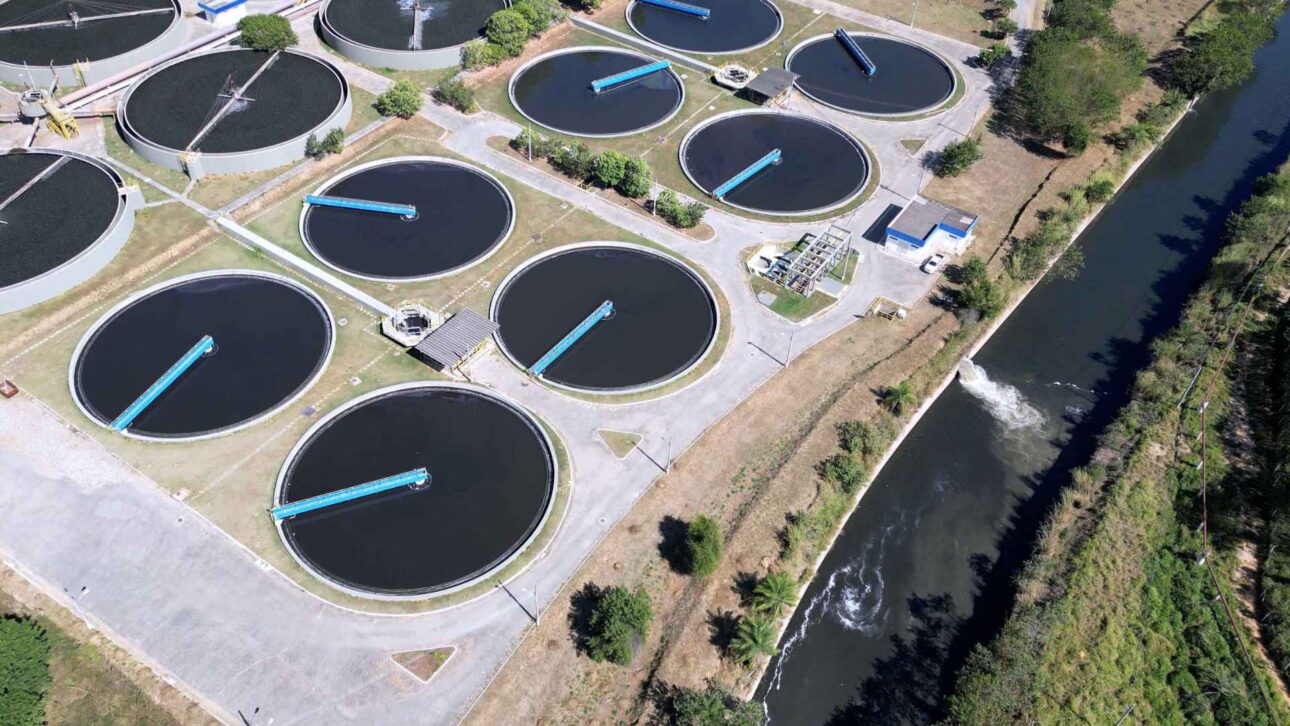
At ETE Arrudas, the associated capacity is 2,300 liters per second of treated effluent, equivalent to almost 199 million liters per day when the flow is converted to 24 hours.
The station returns the treated effluent to the Arrudas River, a watercourse that integrates the water dynamics of the Metropolitan Region of Belo Horizonte and connects to the Rio das Velhas basin.
Meanwhile, ETE Onça has a current flow reported by Copasa of 1,800 liters per second, a number that corresponds to approximately 155 million liters per day.
When considered together, the two structures reach about 354 million liters daily, a volume treated by a system that involves collection, operational stages, quality control, and the release of treated effluent.
Treatment reduces impact on urban rivers
Sewage treatment does not transform the material received by the collection network into drinking water.
At the stations, the purpose is to reduce solids, organic matter, and other polluting components before releasing the treated effluent into water bodies, preventing raw sewage from being directly discharged into rivers.
This distinction helps explain the role of WWTPs within urban sanitation.
Instead of producing water for human consumption, the units reduce impacts on rivers, odor, public health, aquatic fauna, and urban land use, especially in basins with high population density.
According to Copasa, the Onça WWTP serves 50% of the population of Belo Horizonte and a little over 50% of Contagem.
The station is linked to the improvement of the water quality of the Ribeirão do Onça and Rio das Velhas, one of the main watercourses in Minas Gerais.
At the Arrudas WWTP, the operation also serves part of the urban basin of the capital of Minas Gerais.
Installed between Belo Horizonte and Sabará, the unit receives a portion of the sewage generated in the region and applies pollutant load removal processes before returning the effluent to the Arrudas River.
Onça WWTP will have expansion and tertiary treatment
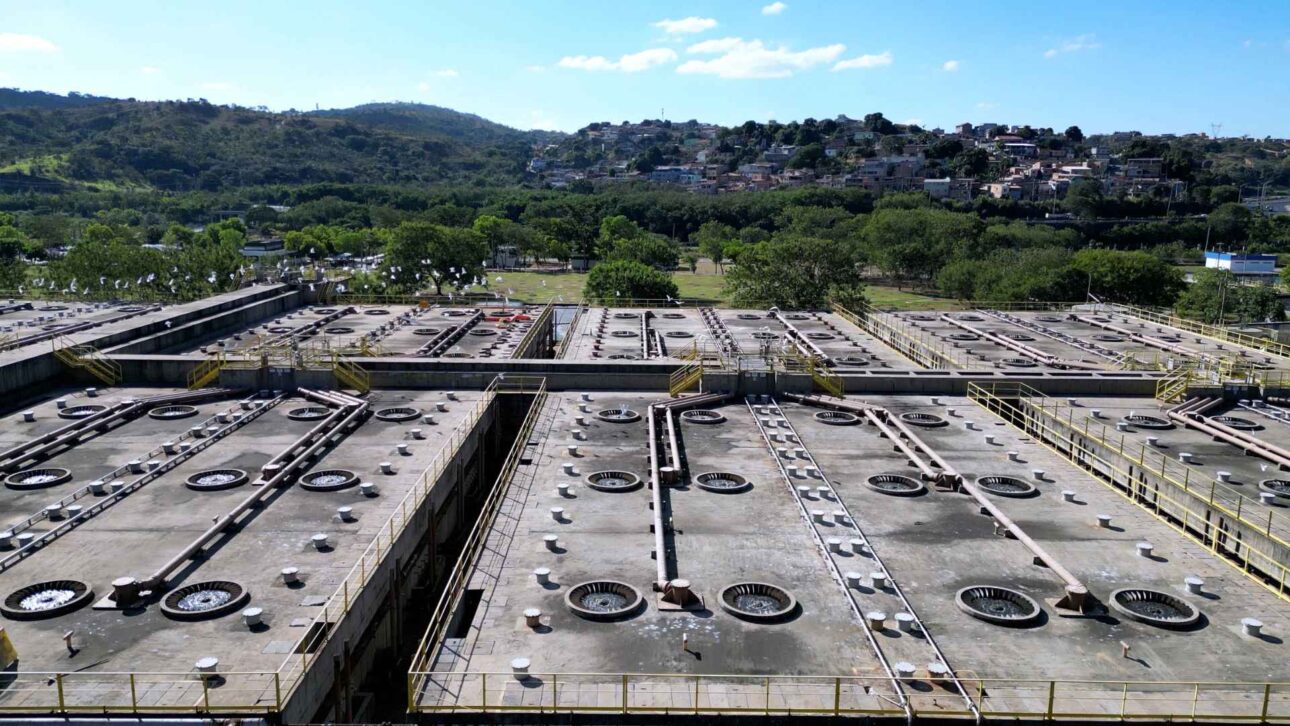
Copasa announced a project to expand and modernize the Onça WWTP, increasing the treatment capacity from 1,800 to 2,700 liters per second.
The intervention, estimated at R$ 1 billion, includes the implementation of tertiary treatment, a stage focused on nutrient removal and effluent disinfection by ultraviolet radiation.
The removal of nutrients such as nitrogen and phosphorus is one of the functions planned for this treatment stage.
When these substances remain in excess in the effluent, they can interfere with the balance of rivers and reservoirs, according to technical parameters used in the environmental control of water systems.
According to the company, the project also includes odor control units, reuse of treated effluent within the station itself, and real-time monitoring.
The works were planned to update existing processes and expand service capacity in a metropolitan area with continuous demand for sanitation infrastructure.
The expansion of the Onça WWTP was presented by Copasa as the company’s largest individual investment in works.
The planned execution is 72 months, with expected impacts on sewage treatment and water quality in the Velhas Basin, as reported by the company.
Sludge undergoes technical management and can generate energy
In addition to the liquid part, the treatment generates sludge, a material with a high concentration of organic matter that requires its own management within the units.
In stations of this size, the residue goes through stages such as stabilization, dehydration, transportation, and disposal in compliance with environmental standards and operational procedures.
At the Arrudas WWTP, the energy utilization of biogas is among the projects associated with sewage treatment.
The Ministry of Cities pointed out the station as one of the first to advance in the use of biogas for energy generation, with an installed capacity of 2.4 megawatts through microturbines.
Biogas is produced from the decomposition of organic matter under controlled conditions.
When captured and used, this gas can be employed in the operation of the station itself, utilizing the energy contained in part of the residue generated in the treatment process.
At the Onça WWTP, the planned modernization includes two sludge treatment centers and anaerobic biodigesters.
According to Copasa, these structures are associated with the future utilization of biogas and sludge, as well as the disposal of treatment by-products.
Reuse water reduces potable consumption at stations
The reuse of treated water within the WWTPs themselves is also part of the sanitation system operation in the Metropolitan Region of Belo Horizonte.
Copasa completed, in June 2025, works at six stations in the region to expand reuse systems, with an estimated saving of about 66 million liters of potable water per year.
In this model, the water that has already undergone sewage treatment is captured and directed to internal processes.
Among the uses are sludge dehydration stages, mixing with polymers, and operational cleaning, activities that previously depended on potable water consumption.
With this substitution, the treated water for human supply is no longer used in some of the industrial tasks carried out within the stations.
The reused effluent starts to meet operational demands, while potable water remains intended for population consumption and other priority uses.
The Arrudas WWTP was included in the set of units covered by the reuse project.
Copasa reported that the expansion also included the Bandeirinhas, Justinópolis, Nova Contagem, Santa Luzia, and Vale do Sereno WWTPs, while the Onça WWTP already had a system implemented since 2013.
Sewer network requires correct separation of waste
The operation of the stations begins before the sewage reaches the treatment units.
The collector network depends on the separation between what should follow the system and what needs its own disposal, such as cooking oil, trash, plastics, diapers, cloths, and other solid waste.
When these materials enter sinks, toilets, or storm drains, they increase the risk of blockages and complicate sorting in operational structures.
The impact appears in equipment, pipelines, and preliminary treatment stages, which start to deal with materials not intended for the sewer network.
In a capital crossed by channeled streams and connected to the Rio das Velhas basin, the water used daily does not end its journey down the drain.
After collection, it goes through a continuous system of treatment, quality control, and waste management before the treated effluent returns to the environment.
The scale of the two stations indicates that metropolitan sanitation involves more than the piping installed under the streets.
After collection, treatment, quality control, sludge management, water reuse, and energy utilization come into operation, stages that are part of the routine of the system operated in the Metropolitan Region of Belo Horizonte.