Portuguese
  Spanish



Artificial Intelligence Is Already Transforming The World Of Work, And Bill Gates Believes This Impact Will Be Even Greater In The Coming Years. The Billionaire And Founder Of Microsoft Pointed Out Professions That He Claims Are Among The Most Threatened By AI
The AI is advancing at a record pace and is expected to transform the job market in less than a decade. The warning comes from Bill Gates. According to the billionaire and co-founder of Microsoft, professions that currently require high qualifications may be replaced by much more accessible intelligent systems.
Doctors And Teachers At Risk
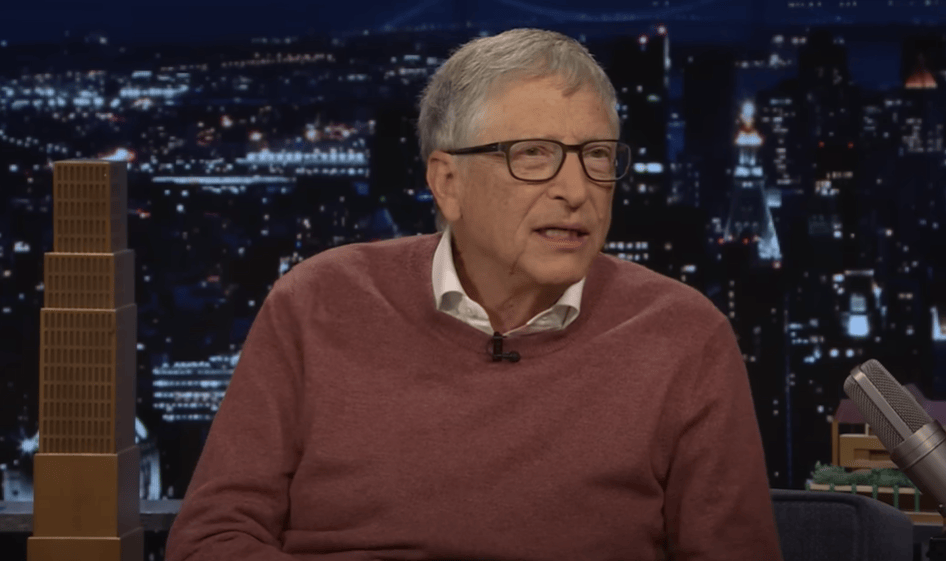
During an interview with host Jimmy Fallon in February, Gates stated that AI could take on tasks in areas such as health and education. “Expertise in fields like medicine and teaching is still a rare thing,” he said.
For this reason, he believes that high-quality medical diagnoses and educational tutoring will soon be free and widely available.
-
The ‘tsunami’ of investments directed at Artificial Intelligence (AI) and semiconductor companies, which prioritize security and more predictable profits, has been a determining factor in the declining trajectory of Bitcoin.

-
Samsung eyes strategic chip factory in South Korea and could shake up the global AI landscape with advancements in HBM memories and advanced packaging.

-
Nvidia makes agreements in South Korea for AI factories and takes data centers, advanced chips, and global cloud to another level by 2027
-
ChatGPT reveals which human job it would choose if it could really work


He refers to this new moment as the “era of free intelligence.” According to Gates, doctors and teachers will be directly impacted.
Technologies are already evolving to provide quick, detailed, and accurate responses, reducing the need for human intervention.
In the field of education, for example, AI tutors have been gaining ground and may threaten the traditional presence of teachers.
In medicine, advanced systems are capable of interpreting exams and symptoms swiftly, even in places with few professionals available.
New Opportunities But Also Challenges
The discussion about the human role in a world dominated by artificial intelligence is far from over.
While some experts see a gain in productivity and the emergence of new jobs, others worry about the mass replacement of traditional roles.
Bill Gates acknowledges this concern. He emphasizes that the progress of AI occurs without defined limits and very rapidly.
This can create insecurity and fear in various sectors. Nevertheless, he remains optimistic about the benefits that technology can bring.
Among the positive points, the businessman mentions advancements in disease treatment, solutions to environmental problems, and more democratic access to education. However, he warns that not everything will be automated.
Some Functions Will Remain Human
Not all activities are threatened. “Some things we will reserve for ourselves,” Gates said, using entertainment as an example. He believes that certain areas will continue to require human involvement, whether due to creativity, empathy, or the need for direct interaction.
On the other hand, sectors such as manufacturing, logistics, and agriculture may also undergo drastic changes. Gates did not mention specific professions in these areas, but he believes that AI will solve much of the challenges faced in these segments.
He also revealed that he is encouraging young talents at Microsoft, OpenAI, and other companies to delve deeper into the field of artificial intelligence.
According to Gates, recent advancements have exceeded his expectations. For him, artificial intelligence will define the future of work.