






 Portuguese
  Spanish
 3 min of reading


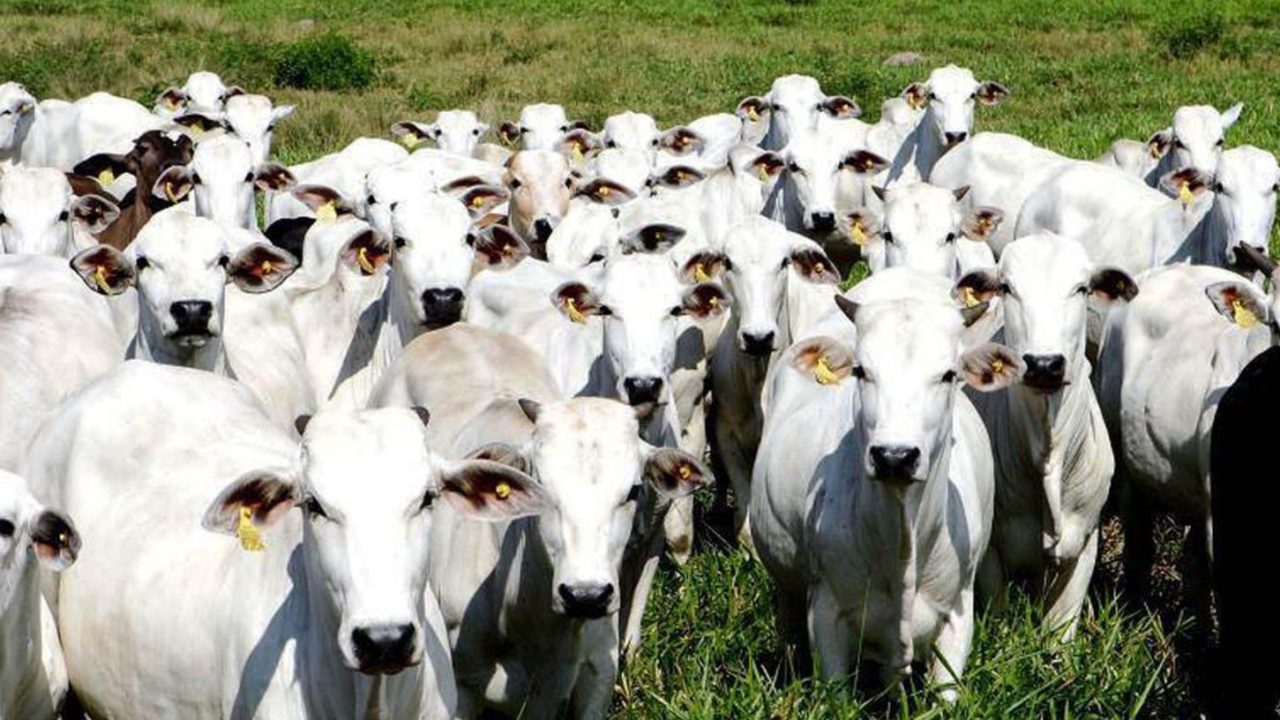
Mato Grosso Now Has Foot-and-Mouth Disease Free Status Without Vaccinations, Year After Year Establishing Itself at the Forefront of Beef Production.
The first place in the entire country is exclusively his. His production is much greater, with about 982.7 million kilograms, leading São Paulo, which has 725.9 million, and then Mato Grosso do Sul, with almost 634.6 million kilograms. However, the total beef production in Brazil is around 5.9 billion kilograms. So, just in MT, it corresponds to about 17% of national production.
MT has nearly 33.5 million head of cattle, accounting for about 15% of the national herd (Indea, 2022). Cattle are present in practically all municipalities – 144 in total. International Standard Product – The numbers were shown and presented in the “Prosa de Pecuária” on January 17. This live event is an initiative of the Institute for Livestock Development. The entity brought in veterinarian Nilton Cecílio de Mesquita Júnior, a graduate of the Federal University of Mato Grosso (UFMT), and Institutional Relations Manager of the Mato Grosso Cattle Breeders Association (Acrimat).
Currently, the volume of animals being slaughtered over 36 months corresponds to about 25% of the total. The other 75% are much younger, with an average of around 30 months. The slaughtered animals from MT can be considered the heaviest in Brazil. In 2021, the average weight of cattle was 18.87 arrobas, compared to 17.7 for the national average. It is considered the third heaviest globally. MT has already slaughtered well over 6 million head, but in recent years, it has fluctuated between 4.5 and 5 million, maintaining its expansion potential.
-
In Matopiba, soybeans have replaced rice and beans, and traditional Cerrado communities that used to grow their own food now have to buy it, while pesticides from neighboring farms reach the springs.

-
Coal mine purchased for $2 million in Wyoming, the Brook Mine holds rare earth elements and critical minerals estimated at up to $37 billion, in an asset that the US is competing for with China.
-
In the year Brazil won the World Cup, gasoline cost R$ 1.77, the cheapest car was worth R$ 13,000, there were no flex-fuel cars, SUVs were rare, and no Chinese brand sold a single vehicle in the country.
-
Neighboring Balneário Camboriú will receive a R$ 1 billion airport with 225 hangars, an area of 2.2 million m², a technology park, and an export zone that promises to transform the economy and generate thousands of jobs.


In the state, almost 25.5% of the territory is occupied by pastures, 11.9% by agriculture, and 0.6% by other activities. On the other hand, 15.4% are Indigenous lands, 5.5% conservation units, and 41.2% areas preserved by rural producers. In total, 62.1% of the lands remain untouched. With numbers like these, it makes technification a hallmark, including strong recoveries of degraded pastures and the adoption of integrated crop-livestock without or with forestry (ILP and ILPF). But they also demonstrate some models, concerning Brazil, regarding their institutional relations.
There are still a large number of them, each with its role, led by the Federation of Agriculture of Mato Grosso (Famato). “Everyone is aware of their role in seeking unity of interests, despite the distinct productive chains. There is a great willingness to understand and accept interdependencies,” explains Mesquita. In contrast to the “know-how” – Approximately 28% of the properties in MT (114,000 in total) utilize this semi-confinement regime due to the availability of good pastures. This strategy has been proving to be formidable against the practice of confinement, which ended up following the trend of the rest of the country and declined in 2022, even with so many products coming from the state’s strong agriculture.




Be the first to react!