Portuguese
  Spanish


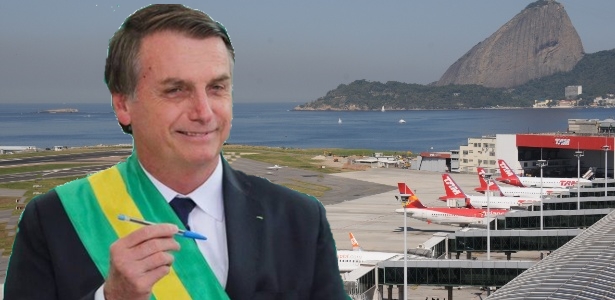

The Newly Appointed President Of Brazil Took To Twitter To Announce Plans To Privatize 12 Airports And 4 Seaports.
The right-wing nationalist Jair Bolsonaro took office as President of Brazil on Tuesday, promising, in his inaugural speech, “to create a new virtuous cycle to open markets” and “to carry out important structural reforms.” Bolsonaro’s electoral campaign included promises to transition parts of the Brazilian economy from state-owned enterprises to more private sector operations, and a tweet on Thursday seemed to “underscore a commitment to that ideology.”
We will quickly attract initial investments of around R$ 7 billion, with railway concessions, 12 airports, and 4 port terminals. With investor confidence under conditions favorable to the population, we will redeem the initial development of Brazil’s infrastructure.
— Jair M. Bolsonaro (@jairbolsonaro) January 3, 2019
ARTICLE CONTINUES BELOWSee also
Seals and Sea Lions Lose Habitat and Food as Climate Change Advances, Impacting Ice, Prey, and Coastal Communities

Brazilian Innovator Uses 3D-Printed Device to Cool Two Rooms with One Air Conditioner
China Uses 432 Robots to Move a 7,500-Ton Historic Building in Shanghai, Preserving Architecture While Creating Space for Underground Center
Dutch Initiative Swaps Cigarette Butts for Food to Clean Streets, Combat Pollution, and Turn Waste into Recycled Furniture


The president stated that the privatization of airports and ports would raise initial investments of 7 billion reais (US$ 1.85 billion).
Before his inauguration, the new leader criticized Brazil’s economy as being burdened by “hundreds of bureaucratic government agencies,” claiming that his government would aim to “unravel the mess.”
It is projected that the “sell-off” of the state will help raise over 250 billion reais in potentially ready assets.
The unemployment rate in Brazil fell to 11.6% in the three months to November 2018, down from 12.1% in the three months to August. It is the lowest unemployment rate since the three months to July 2016, but still well above a record low of 6.2% in December 2013.
Brazil recorded a government budget deficit equal to 7.8% of the country’s Gross Domestic Product (GDP) in 2017, and reducing public debt is seen as another major challenge for Bolsonaro.
An important test will be whether the new president can garner enough political support to take on the reform of Brazil’s immense government pension obligations.
Bolsonaro, 63, is the first far-right president of Brazil since the country ended military rule in 1985. One in three of his cabinet members are former military officers. Experts predict that in Bolsonaro’s first term, over US$ 180 billion in investments will flow into the country, as can be seen in the official article here.