






 Portuguese
  Spanish


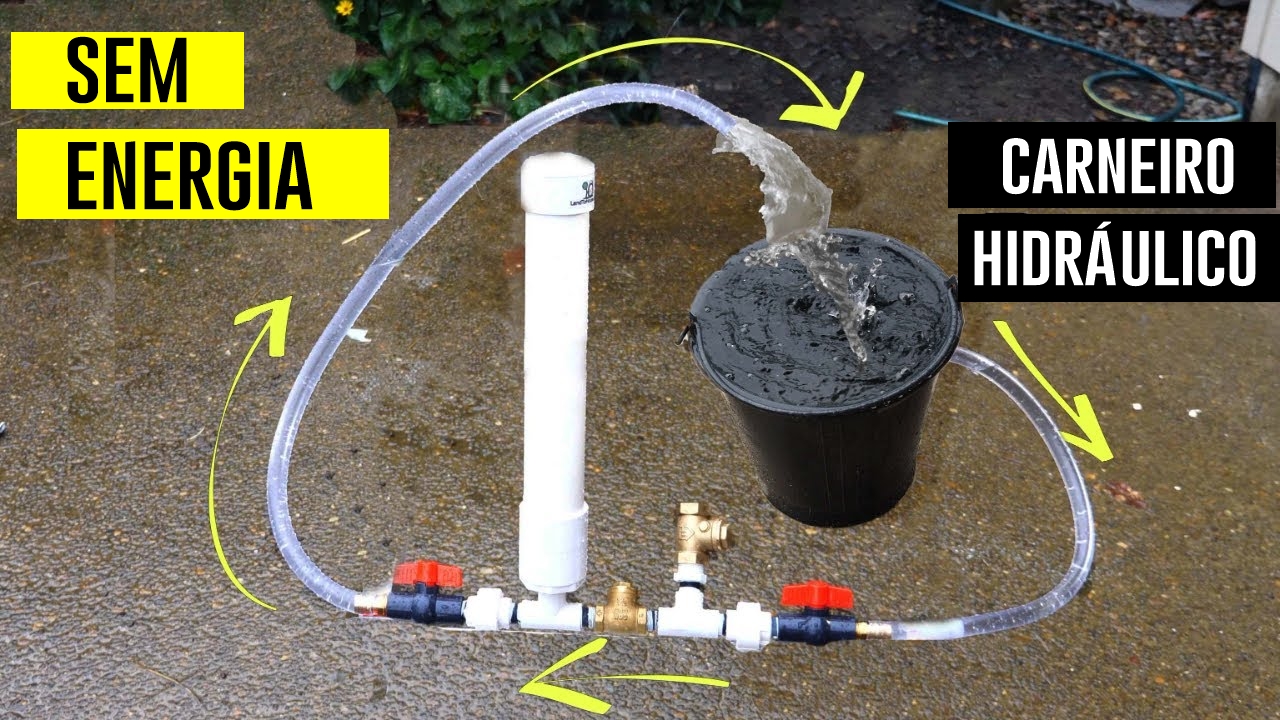


An Incredible And Sustainable Solution! The Hydraulic Ram Pump Allows You To Pump Water At No Cost And Without Electricity. Discover How It Works!
Access to water is one of the most critical challenges for rural communities and arid regions around the world. Although technological advances have provided various ways of capturing and distributing this resource, not all are accessible or sustainable. An effective and low-cost solution is the hydraulic ram pump, a mechanical device capable of pumping water without electricity or fossil fuels.
Created in the 18th century, this technology continues to be a viable alternative for irrigation and water supply in remote locations.
In this article, we explore the operation, advantages, and applications of this invention that combines efficiency and sustainability.
-
In a Degraded Atlantic Forest Area, a São Gonçalo Resident Transforms Land into a Living Eco-Museum, Now a Model for Environmental Education

-
World’s First Lithium-Sulfur Battery Factory Launches, Promising to Double Range Without Relying on China

-
AI Data Centers Now Feature Built-In Nuclear Power Plants and Have Ordered Non-Existent Reactors
-
In India, thousands earn about $2.50 an hour cooking and cleaning with a phone strapped to their heads, as every move is recorded to train humanoid robots for jobs they might one day replace.



What Is A Hydraulic Ram Pump?
The hydraulic ram pump is a device that uses the energy of flowing water to elevate part of the liquid to a higher elevation, without the need for external energy sources.
Its principle of operation is based on the water hammer effect, a hydraulic phenomenon that generates enough pressure to push the water over distances greater than the original source.
This mechanism is particularly useful in areas with natural elevation differences and continuous watercourses, allowing communities and farmers to have access to a reliable water supply without significant operational costs.
Structure And Components
The hydraulic ram pump has a simple design, consisting of a few essential elements:
- Inlet Valve: controls the entry of water into the system;
- Outlet Valve: responsible for creating the water hammer effect by closing quickly;
- Air Chamber: maintains constant pressure within the system, allowing for continuous pumping;
- Inlet Pipe: channels water from the source to the pump;
- Outlet Pipe: conducts the pumped water to the reservoir or consumption location.
The manufacturing material can vary, including cast iron, stainless steel, or PVC, depending on the desired durability and cost.
How Does It Work?
The operation of the hydraulic ram pump occurs in a continuous cycle of three stages:
- Water Entry: water naturally flows into the pump through the inlet pipe.
- Water Hammer: when the outlet valve suddenly closes, the kinetic energy of the water creates a pressure spike, pushing part of the liquid into the outlet pipe.
- Water Elevation: the air chamber maintains pressure, allowing water to continue rising to the desired reservoir.
This process automatically repeats as long as there is water flow in the source and a minimum elevation difference to generate the necessary thrust.


Advantages Of The Technology
The adoption of the hydraulic ram pump presents a series of benefits:
- Energy Self-Sufficiency: does not require electricity or fossil fuels;
- Low Operational Cost: after installation, maintenance costs are reduced;
- Sustainability: does not emit pollutants or consume non-renewable resources;
- Durability: with few moving parts, wear is minimal, ensuring a long lifespan;
- Continuous Use: can operate continuously as long as there is available water flow.
These features make the ram pump an attractive option for small-scale farmers and communities facing challenges in accessing potable water.
Practical Applications
Although initially designed for agriculture, this technology has various applications:
- Irrigation of crops in remote areas;
- Water supply for communities without electrical infrastructure;
- Water capture from rivers and streams for domestic and livestock purposes;
- Rainwater harvesting systems for sustainable use.
In many parts of the world, NGOs and governments promote the implementation of these pumps as part of water security and sustainable development projects.
Regulation And Viability
In various countries, the use of the hydraulic ram pump is subject to environmental regulations and water resource capture standards.
Depending on the location and the volume of water extracted, a permit may be required for its installation. However, many public policies encourage its adoption as a viable alternative for impoverished communities and family farmers.








Bom dia como faço para comprar um já pronta