Portuguese
  Spanish



Brazil And China Advance In Protocol To Certify Meat And Soy. Agreement Provides For Integration Of Systems, Sustainability Seals, And New Commercial Opportunities
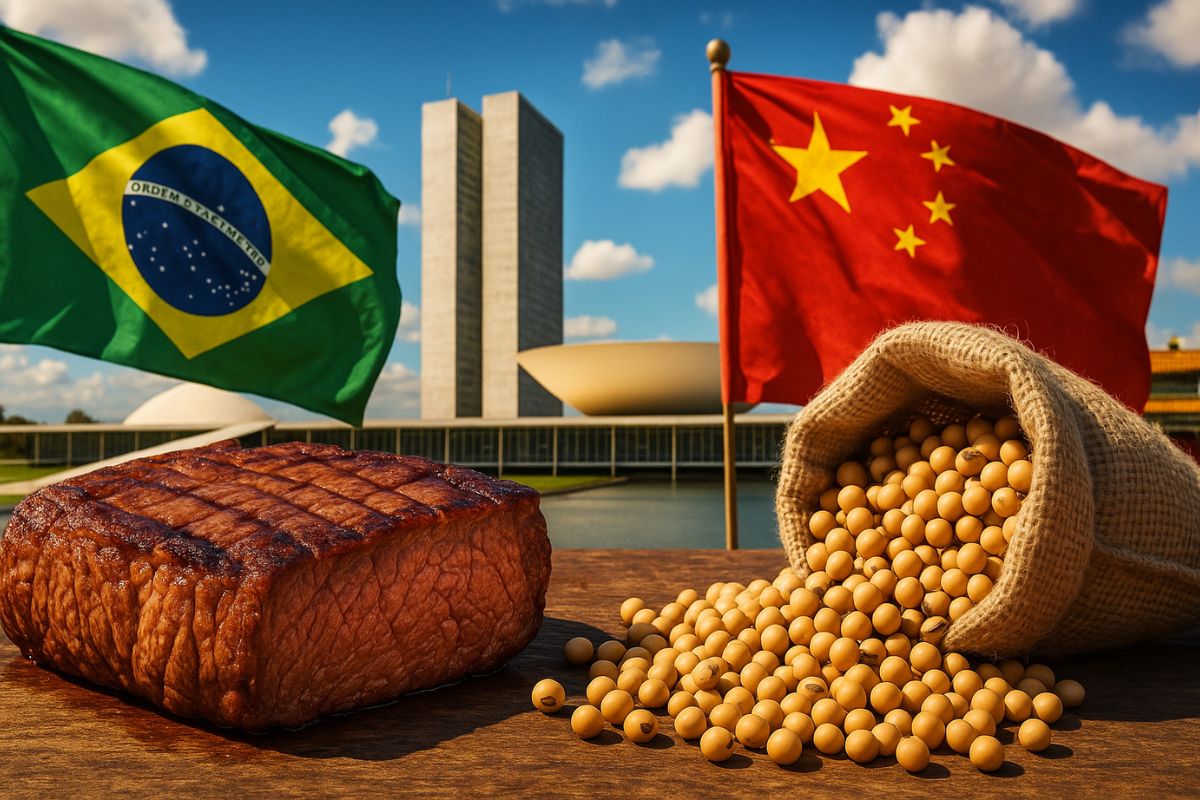
The Brazil And China are negotiating a bilateral protocol that could change the standards of Brazilian meat and soy exports. The proposal, revealed by Folha de S.Paulo, involves environmental certification and traceability, with mutual recognition between the two countries.
The measure aims to facilitate trade, add value to products, and reduce non-tariff barriers, at a time when China is tightening sustainability requirements for suppliers. The plan was discussed during an official mission of the Ministry of Agriculture and Livestock (Mapa) to the Asian country and may open space for new agreements in agribusiness.
What Is At Stake In The Bilateral Protocol
The initiative aims to align methodologies to measure emissions, land use, environmental management, and animal welfare. Brazilian certifications, such as Carbon Neutral Meat (CCN) and Low Carbon Meat (CBC), developed by Embrapa, would be officially accepted by Chinese authorities and companies.
-
Brazil’s Federal Revenue Auction: iPhone 13 for $95, PlayStation 4 for $80, and Volkswagen Jetta for $2,600 Among 232 Lots Available

-
Tech Giant Oracle Lays Off 21,000 Employees and Invests $70 Billion in Artificial Intelligence

-
Chilean Giant Acquires St. Marche, Expanding from Discount to Premium Supermarkets in São Paulo’s High-End Retail Market
-
After 60 Years of Selling Cheap Milk, Brazilian Family Invests in $4,000 Equipment to Transform Farm’s Milk into Premium Sweets, Producing 2 Tons Daily and Aiming for $6.4 Million


Soy is also at the center of discussions. Programs like ABC+ Seal and Soy Plus may be included, ensuring that grains and derivatives meet Chinese environmental criteria. The protocol also provides for the integration of digital systems, the use of QR codes with environmental data, and sharing of databases between the two countries.
Commercial Impact And Market Positioning
In 2024, China accounted for 51.3% of Brazil’s beef exports. Following the American tariff of 50% on Brazilian products, China’s share rose to 57% in July 2025, while the US fell to 4.7%.
This dependency reinforces the importance of meeting new environmental traceability requirements.
According to sources from Mapa, adherence to the protocol could enhance Brazilian competitiveness and anticipate regulatory standards that will likely become mandatory in the coming years.
For the sector, this means maintaining privileged access to the world’s largest consumer market for protein and soy.
Who Is Involved In The Negotiations
The Brazilian mission to China included representatives from Mapa, Embrapa, and ApexBrasil, as well as meetings with bodies such as the Ministry of Agriculture and Rural Affairs of China and the Chinese Academy of Agricultural Sciences. Companies like Syngenta China, Tencent, and the state-owned Cofco Meat Investment have expressed interest in supply partnerships with sustainable certification.
The next step is a technical visit by Chinese authorities to Brazil later this year, to closely evaluate technologies and traceability systems already used by producers and slaughterhouses.
Possible Impediments And Ongoing Investigations
Despite the progress, the scenario is not without risks. China has maintained a safeguard investigation on beef imports since December 2024, alleging possible harm to the local industry. The deadline was extended until November 26, 2025, and if damage is confirmed, measures such as extra tariffs or quotas may be applied.
For now, current rules remain in effect, but experts warn that any restrictive decision could impact Brazilian exports even with the bilateral protocol underway.
And you? Do you believe that this agreement between Brazil and China will strengthen agribusiness or increase dependence on the Chinese market? Share your opinion in the comments.