Portuguese
  Spanish


Country Strengthens Climate Leadership With New Sustainable Industrial Initiatives in Sectors Such as Aluminum, Aviation, Cement, and Clean Energy
In July 2024, Brazil reinforced its climate leadership role by selecting seven new decarbonization projects through the Industrial Transition Accelerator (ITA). This initiative was made in partnership with the Ministry of Development, Industry, Commerce, and Services (MDIC). Thus, the total number of supported projects reaches 11, summing a potential investment of US$ 17.5 billion across the national territory. These new projects encompass four strategic sectors—aviation, chemical products, aluminum, and cement—that are considered essential for the transition to a low-carbon economy. With ambitious goals, the projects were chosen for their potential impact. They will receive technical support from the ITA to overcome financial, regulatory, and operational challenges, as well as to mobilize the national and international value chain.
Projects Aim to Reduce Emissions and Attract Sustainable Investments
According to Faustine Delasalle, executive director of the ITA, the projects represent milestones in their areas. They aim to inspire broader and more sustainable transformations in the Brazilian industry. Additionally, Rodrigo Rollemberg, Secretary of Green Economy at the MDIC, highlighted that the partnership with the ITA signals a step forward in green neo-industrialization, being essential to achieving the country’s environmental goals. The supported projects include large companies and industrial consortia: Solatio, Acelen, Votorantim Cimentos, Mizu Cimentos, Eco Fusion, Alcoa, and Companhia Brasileira de Alumínio (CBA). Five of these projects were publicly revealed for the first time during the announcement in July 2024, further strengthening innovation in decarbonization in Brazil.
Clean Energy and Biofuels Gain Prominence in the Transition
Among the highlights is the Solatio H2 Piauí project. It combines 14 GW of renewable sources with the construction of a green ammonia and hydrogen plant. The facility will have a capacity of 3 GW and aims to reach 2.2 million tons of green ammonia per year by 2030. In addition, Acelen Renováveis is developing an integrated advanced fuels chain from the macaúba, a native plant of Brazil. The project includes a 10.5 million seedling Agripark per year, 180,000 hectares of cultivation, five milling plants, and a biorefinery. The goal is to achieve an annual production of 1 billion liters of renewable fuels, such as HVO diesel and SAF for aviation.
-
Green Roofs on Homes Gain Popularity for Reducing Heat, Noise, and Rain Impact in Brazil

-
Brazilian promises his children to save a river, creates an eco-barrier in his backyard, has already removed more than 40 tons of trash from the water, and even inspires the idea in other states of the country.

-
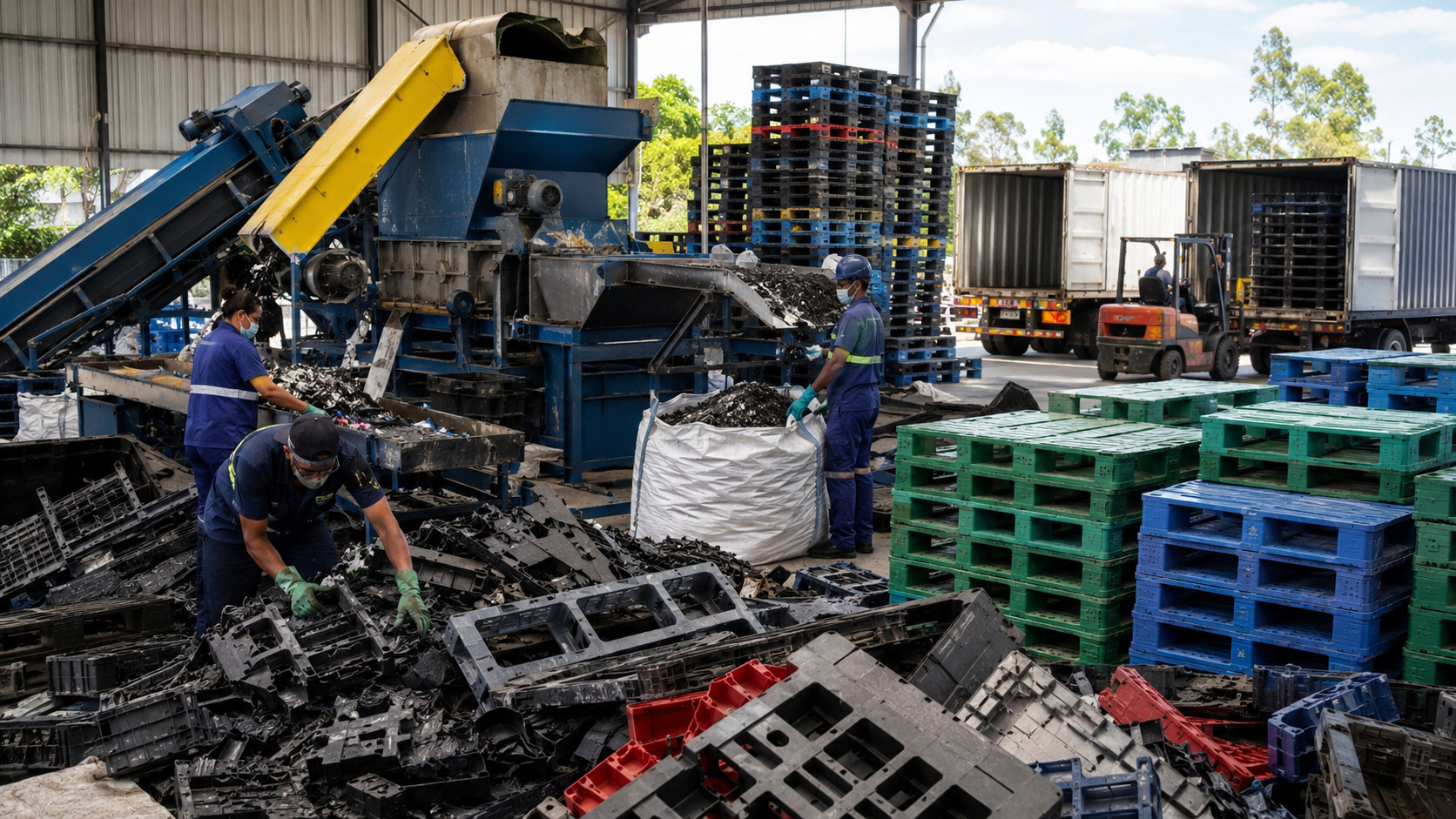
How a Brazilian company created a system that transforms broken pallets of any brand into new assets, recycles 80 tons of plastic per month, and found a profitable solution to a problem that challenges industries across the country.
-
Invasive bullfrog capable of devouring other amphibians and laying up to 20,000 eggs is found in Florianópolis, raising an alert about the threat to native fauna.



Cement Sector Invests in Technologies for Climate Neutrality
Three projects in the cement sector will seek to achieve carbon neutrality through integrated actions. Votorantim Cimentos will reactivate a calcined clay line of 0.32 Mtpa in Nobres (MT), reducing cement emissions by up to 16%. Meanwhile, Mizu Cimentos will implement pyrolysis units in Aracaju to replace fossil fuels with residual biomass. This initiative could reduce emissions by up to 32%. At the same time, the Eco Fusion consortium, formed by Argo Tech, Apodi Cimentos, CTEC, and Self Energy, will implement gasifiers at the Quixeré (CE) unit, using waste as an energy source. The initial target is to achieve a 10% reduction in emissions per ton of cement.
Aluminum Industry Focuses on Drastic Reduction of Emissions With New Technologies
Although Brazil already has one of the lowest CO₂ emissions per ton of aluminum, two projects aim to further reduce this impact. Alcoa, for instance, plans to electrify the boilers of the Alumar refinery in São Luís (MA), potentially cutting emissions to just 0.6 tCO₂ per ton. Meanwhile, CBA is developing a pioneering carbon capture and storage (CCUS) technology, applied at its 0.43 Mtpa plant in Alumínio (SP). With this, the goal is to reduce emissions to less than 2 tons per ton of liquid aluminum, thus driving the environmental efficiency of production. Additionally, the agreement signed between ITA and MDIC in July 2024 will directly benefit both projects. Thanks to this agreement, Brazil became the first partner of the international program, reinforcing its industrial leadership. Shortly afterward, the ITA established new partnerships in the Middle East and North Africa, such as in the United Arab Emirates, Bahrain, and Egypt. Consequently, the country continues to lead the green industrial transition, consolidating its role in sustainable innovation.