Portuguese
  Spanish


Amazon molly intrigues scientists by thriving for over 100,000 years through cloning. Study reveals mechanism that preserves its DNA.
The survival of the Amazon molly is attracting the attention of the scientific community following the publication of a study that helps explain one of the greatest enigmas of evolutionary biology. Composed only of females and capable of producing offspring without sexual reproduction, the species has existed for over 100,000 years, defying predictions that pointed to a much shorter lifespan.
The discovery was presented by researchers from the University of Missouri, United States, in a study published in the journal Nature. The investigation identified a mechanism called gene conversion, highlighted as an important factor in preventing the accumulation of harmful changes in the fish’s genetic material. The result helps clarify why the species remains healthy even without the typical gene exchange of sexual reproduction.
What makes the Amazon molly so unusual?
Among known vertebrates, few organisms have sparked as much scientific interest as the Amazon molly. This is because their populations are composed exclusively of females.
-
NASA’s Plan to Dump ISS Debris in Ocean Sparks Environmental Concerns Among Scientists

-
14-Year-Old Invents Eco-Friendly Water Pump Using Recycled Materials to Aid Communities Without Water Access
-
Pigeons Trained to Detect Cancerous Changes in Medical Images Astonish Scientific Community

-
Plastic Waste from Beaches and Poor Communities in Kenya Transformed into School Desks, Replacing Wood in Classrooms and Turning Marine Litter into Durable Study Tables


The origin of the species dates back to a rare crossbreeding between two different species of fish: a male Poecilia latipinna and a female Poecilia mexicana. From this event, a lineage emerged that began producing new generations through cloning.
In 1932, the species made history by being recognized as the first known vertebrate capable of reproducing asexually.
At that time, theoretical models indicated that organisms with this type of reproduction would struggle to survive for long periods. Researchers were concerned about the absence of genetic mixing promoted by sexual reproduction.
Without this process, mutations considered harmful tend to persist and accumulate over generations. Over time, this could compromise the species’ adaptation and increase the risk of extinction.
Existing projections suggested that the Amazon molly would hardly surpass the 10,000-year mark of existence. However, the reality observed was completely different. More than 100,000 years after its emergence, the species continues to thrive.
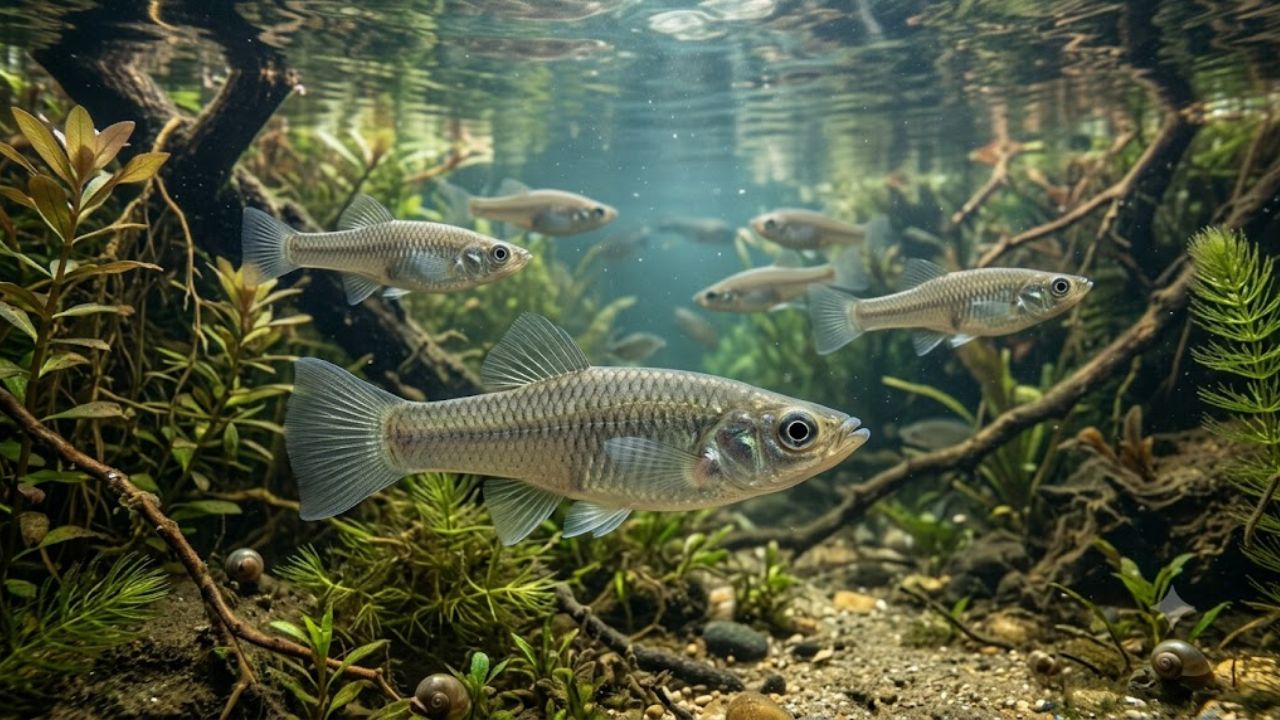
Amazon molly surprised after complete genome analysis
One of the decisive moments of this investigation occurred in 2018. In that year, researcher Wes Warren conducted the first complete genome mapping of the species. The expectation was to find clear signs of genetic deterioration after thousands of generations produced by cloning.
What appeared in the results, however, was unexpected. Instead of compromised genetic material, researchers found DNA considered healthy and with characteristics similar to those observed in species that depend on sexual reproduction. This finding led scientists to seek an explanation for the phenomenon.
Technology allowed seeing differences within the DNA
To deepen the analysis, the team used a tool known as long-read sequencing. With this technology, researchers were able to compare in detail the two sets of DNA inherited from the species’ ancestors.
The study revealed a curious behavior: the two genomes present in the cells of the Amazon molly do not accumulate genetic changes at the same speed.
While one set undergoes changes more rapidly, the other presents a different pace. The result drew so much attention that scientific reviewers requested additional proof before publication.
Computational biologist Edward Ricemeyer highlighted the unexpected nature of the discovery by stating: “Having two genomes present within the same cells of the same fish, doing two very different things in terms of mutation rates, was shocking.”
How the mechanism identified by researchers works
The explanation found by scientists involves the so-called genetic conversion. According to the study’s authors, this process acts as a kind of natural adjustment within the genome itself.

When it occurs at the right intensity, it helps eliminate unfavorable changes while favoring the permanence of beneficial characteristics.
According to the researchers, there is an important balance:
- Excessive genetic conversion can reduce genetic diversity;
- Insufficient conversion allows the accumulation of harmful mutations;
- The level observed in the species seems to favor the maintenance of genetic health;
- Advantageous genes tend to be preserved more easily.
This dynamic produces effects normally associated with sexual reproduction, even without the exchange of genetic material between individuals.
Discovery may change the understanding of evolution
The results obtained by the researchers are not limited to the Amazon molly. The team believes that other species capable of asexual reproduction may use similar mechanisms to preserve their characteristics over time.
Among the examples mentioned by the authors are Komodo dragons and whiptail lizards of New Mexico. Therefore, the discovery could significantly expand scientific understanding of different reproductive strategies existing in nature.
The conclusions obtained by the research may have applications beyond the study of evolution. The authors highlight that investigations into genome functioning already contribute to different areas related to plant and animal improvement.
Furthermore, understanding the mechanisms of DNA mutation and repair aids research related to genetic diseases and cancer.
Thus, understanding how certain species manage to preserve their genetic stability can generate useful knowledge for various scientific fronts. Commenting on the importance of these discoveries, Edward Ricemeyer emphasized that studying different forms of reproduction helps to better understand the very trajectory of life.
According to him: “Better understanding the different ways reproduction occurs helps us better understand ourselves.”
More than a century after being identified by scientists and over 100,000 years after its emergence, the Amazon molly continues to defy predictions. Now, thanks to new evidence presented by the University of Missouri, part of this mystery begins to be clarified, revealing a genetic strategy that has allowed the species to remain healthy over countless generations.
Source: Revista Galileu