Portuguese
  Spanish


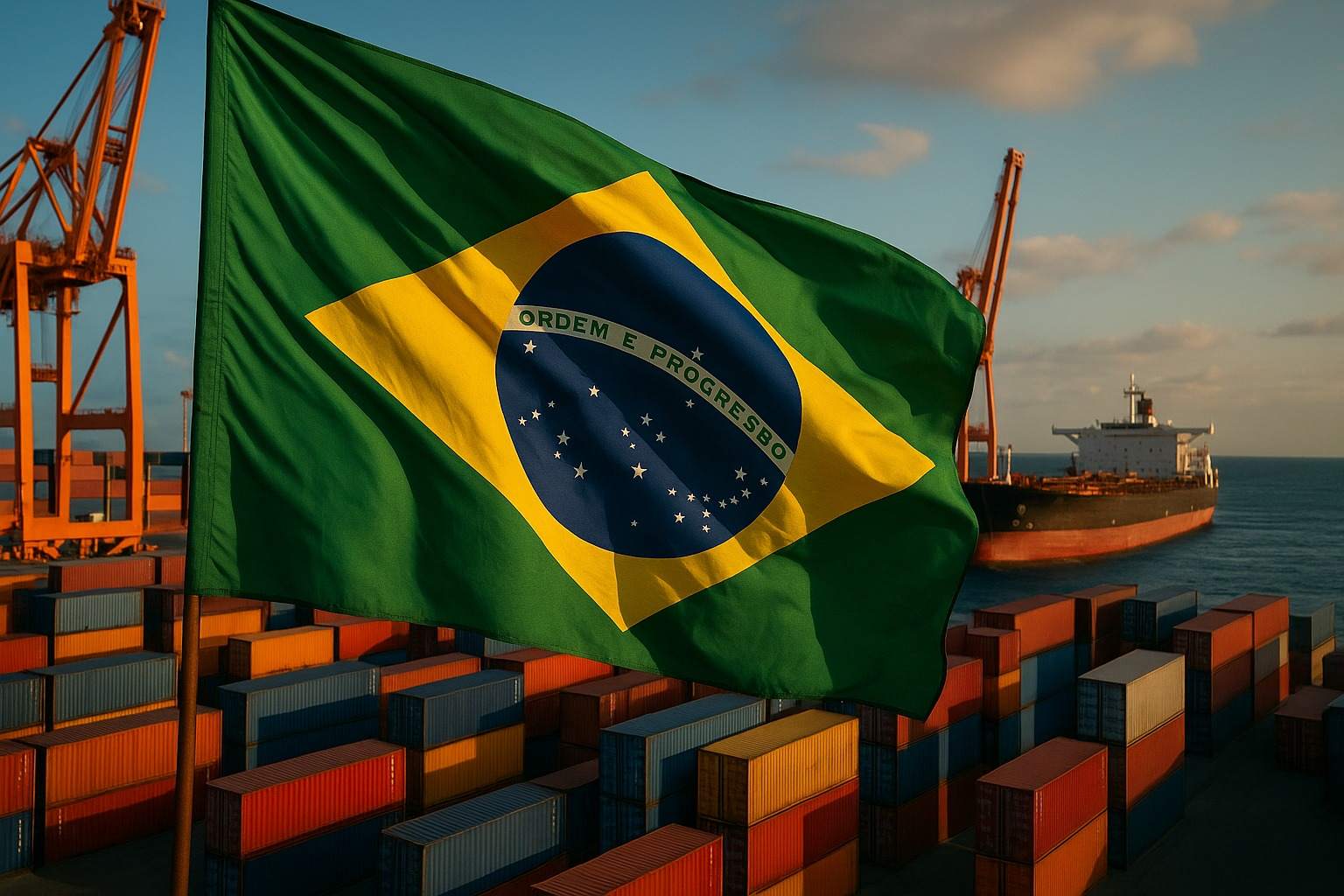


Even After The Restrictions Imposed By The United States, Brazil Expands Exports, Enters New Markets, And Registers Records In Several Segments Of Port Transportation In August
The Brazilian port sector demonstrated strength and adaptability in August, the first full month after the additional tariff imposed by the United States took effect. According to data from the Aquatic Statistics of the National Agency for Waterway Transportation (Antaq), port movement during the period exceeded the volume registered in the same month of 2024 by 7.8%.
Furthermore, the accumulated total from January to August reached a historic level: 914.8 million tons handled, which represents an increase of 2.8% compared to last year.
Rerouted Routes And New Partners
Total exports grew by 3.2% in August, a direct result of the rapid alteration of trade routes in light of American restrictions.
-
Brazilian Startup Turns Coffee Grounds into Plant-Based Leather, Cutting Water Use by Over 50 Times for High-Impact Sustainable Fashion

-
Eco Invest Auction Aims to Unlock $10 Billion in Investments, Focusing on Green Fertilizers, Critical Minerals, Batteries, and AI for Clean Industry in Brazil

-
Half of Brazilians Prefer Lower Taxes with Private Health and Education, While 44% Opt for Higher Taxes for State-Provided Services, Datafolha Survey Reveals

-
Brazil’s Most Expensive Toll Rises to R$ 40.60 on Route from São Paulo to the Coast, Nearly Matching Bus Fare to Santos



The highlight was for alternative markets, which recorded significant advances: India increased its purchases by 348%, Mexico by 97%, Argentina by 50%, and China — Brazil’s main partner — increased the volume imported by 12%.
Meanwhile, exports to the United States fell by 17%, a direct reflection of the new tariff.
The Minister of Ports and Airports, Silvio Costa Filho, celebrated the results and highlighted the positive impact on the economy. “The record in cargo movement at the country’s ports, combined with the increase in product exports, strengthens Brazil’s interest in other international markets.
We are working to further expand the volume of cargo in the waterway modal, as this reflects in the increase of jobs and income for the Brazilian people,” he stated.
Net Cargo And Ore Boost Performance
The performance in August was mainly driven by private terminals, which grew by 11%. Among public ports, the standout was Itajaí (SC), which saw its movement soar by 412% after the resumption of activities by the Federal Government. In the accumulated total for 2025, the port has already doubled the total handled in 2024, reaching 2.5 million tons.
Records were also noted in long-haul operations, cabotage, and inland transportation. By type of cargo, liquid bulk led the growth, with an increase of 25%. Only oil and derivatives accounted for 22.5 million tons — 33.4% more than in August 2024.
The report also pointed to an increase of 11.3% in iron ore exports and 3.4% in external sales of corn.