






 Portuguese
  Spanish


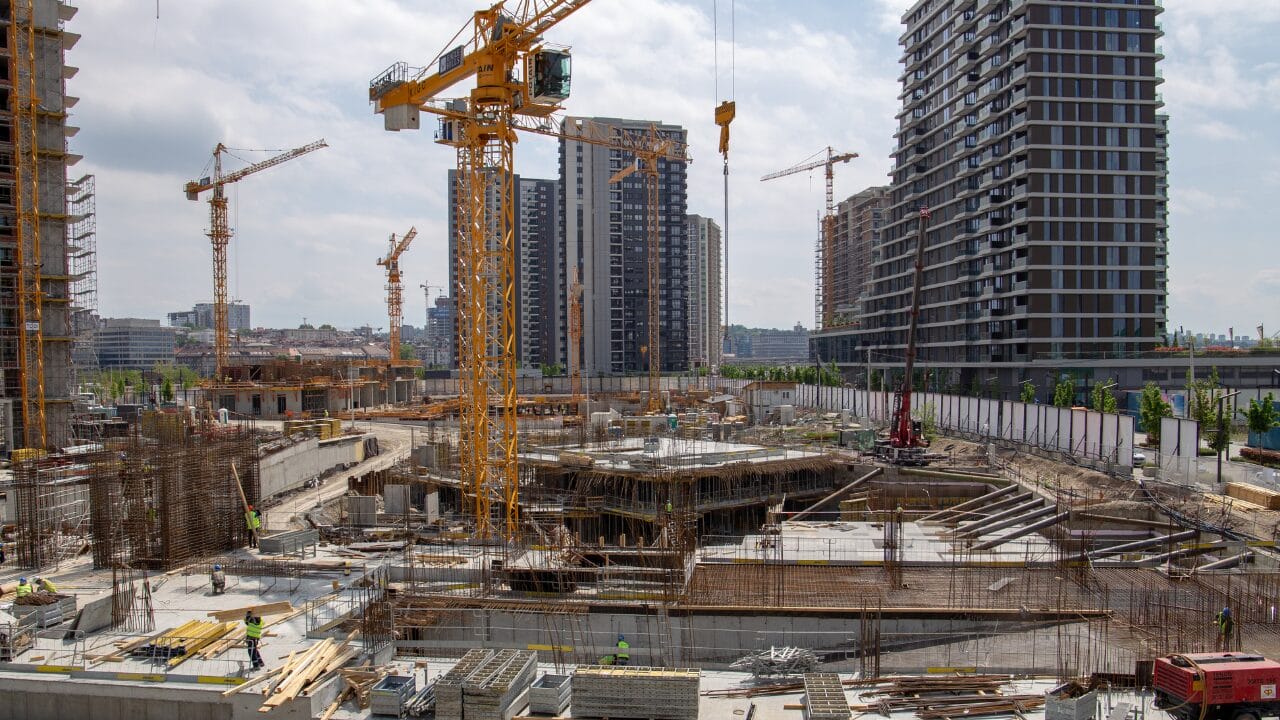

The Construction of Brasília Cost 12.3% of GDP in 1959 and Transformed the Midwest, Sparking Debates About Its Economic Impacts.
When Brasília was officially inaugurated on April 21, 1960, Brazil was experiencing a phase of optimism and boldness. The idea of building an entirely new capital in the middle of the country was not just an urban project — it was a symbol of modernization, national integration, and a vision for the future. However, behind this vision was a tremendous economic effort. The construction of Brasília demanded heavy investments and divided opinions.
How Much Did It Cost to Build Brasília?
The project took only four years, but its cost was equivalent to 12.3% of Brazil’s GDP in 1959. To put this into a more current perspective, this percentage would represent, in 2024, about R$ 1.44 trillion. This is more than the projected federal spending on social security for 2025.
Economists and scholars over the years have attempted to calculate the total impact of the construction. One of them was Eugênio Gudin, an engineer and former Minister of Finance, who in 1960 estimated the cost at US$ 1.5 billion.
-
Egypt Partners with China to Build 2 GW Wind Turbine Factory and 2,000 MW Wind Farm in Gulf of Suez, Aiming to Export Across Africa

-
Family of Six Leaves Georgia to Live in a $300,000 Cold War-Era Underground Bunker Since 2020: Unlikely 557 m² Home with 60 cm Concrete Walls
-
Self-taught Brazilian Mechanic Builds 10-Ton Aluminum Sailboat in Backyard, Now Navigates the Brazilian Coast at 50
-
Santa Catarina Launches $1.4 Billion, 145-Kilometer Highway Project with Six Lanes and Speeds Up to 120 km/h



Updating this value for U.S. inflation, the amount rises to US$ 16 billion, or R$ 94 billion in today’s values.
Construction of Brasília: An Investment Criticized at the Time
Gudin, a proponent of minimal state and economic liberalism, harshly criticized the project. According to him, Brasília was an overly ambitious project, with high costs and uncertain benefits for the population.
He was not alone. Journalist and economist Ib Teixeira, in an article published in 1996, estimated that the real cost of building the new capital, including indirect expenses and fiscal impacts over the years, reached US$ 155 billion — equivalent to R$ 1.86 trillion adjusted for inflation.
The Construction That Changed the Map of Brazil
Despite the criticisms, the construction of Brasília had profound effects on the country. Economist Carlos Eduardo de Freitas emphasizes that evaluating the project solely by its direct cost is a mistake.
According to him, the proportion of GDP used at the time illustrates how much Brazil struggled to undertake this project at a time when the country was much poorer. But the long-term benefits were considerable.
The Role of the Midwest in National Development
The transfer of the federal government seat to the Midwest transformed Brazil’s territorial and political dynamics. Several highways were built to connect Brasília to the rest of the country — such as the Belém-Brasília highway, which spans over 2,000 km.
These infrastructure projects not only facilitated access to the new capital but also paved the way for agricultural and population expansion in previously isolated regions.
Freitas also points to the creation of Embrapa in 1973 as one of the important outcomes of this geographic reorientation. The company was essential in adapting agricultural techniques to the Midwest’s conditions, helping to transform the region into one of the main hubs of the national agribusiness.
A Legacy That Goes Beyond Numbers
Far beyond the financial investment, the construction of Brasília represented a change in mindset. For the first time, Brazil turned its eyes to the interior, decentralizing power and encouraging regional development.
Designed by Lúcio Costa with monuments by Oscar Niemeyer, Brasília also became a landmark of modern architecture and urbanism. In 1987, it was recognized as a World Heritage Site by UNESCO.
Was It Worth Building Brasília?
This question still sparks debate. From a fiscal perspective, the numbers are high. But from a strategic and symbolic perspective, Brasília helped shape a new Brazil.
Today, the capital houses the main offices of the Three Branches of Government, diplomatic missions, universities, and research centers. It is also a symbol of a country that dared to move from the coast to reinvent itself in the heart of the continent.


