Portuguese
  Spanish


Braskem Announces the Brave Future Ship, with Dual-Fuel Engine Using Oil and Ethanol, to Reinforce Its Logistics Between Brazil, the US, and Mexico.
Braskem, a giant in the petrochemical industry, took another step toward sustainability and strengthening its international presence by officially presenting, on Wednesday (10), the Brave Future, its new ethane transport vessel.
The vessel, valued at around R$ 500 million, was launched at the YAMIC shipyard in China and will operate on the route between the United States, Mexico, and Brazil.
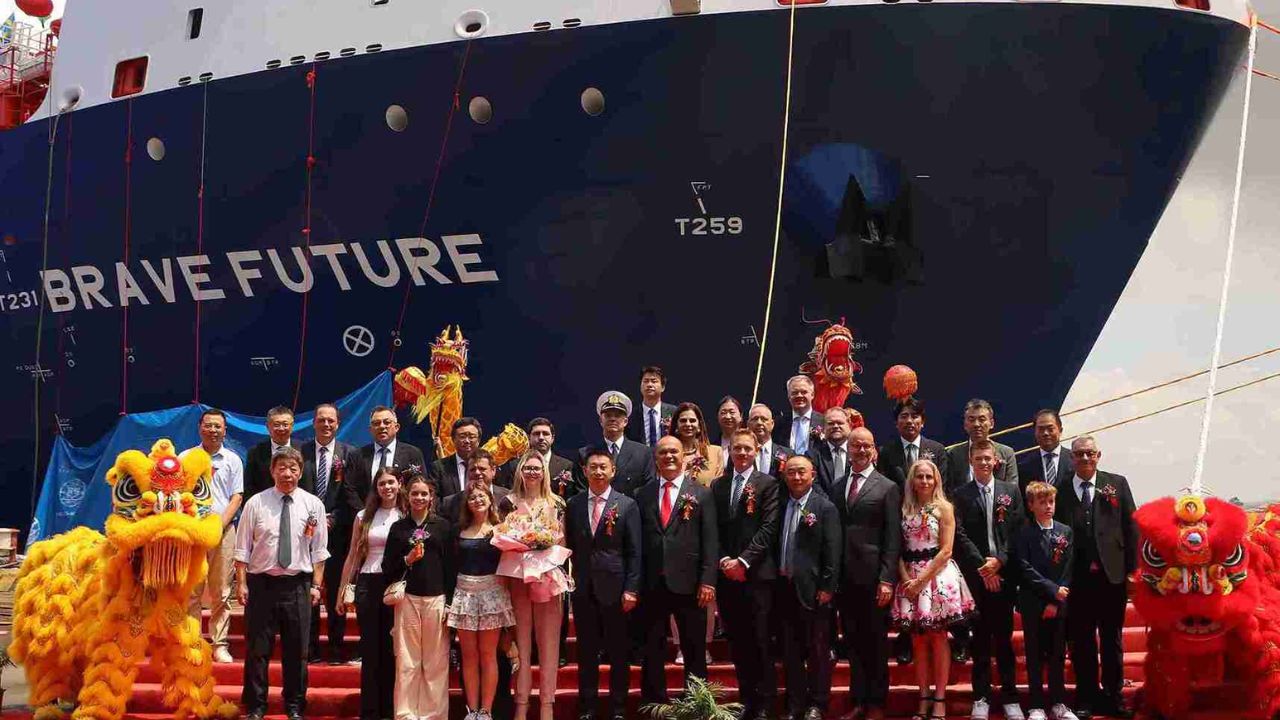
The project aims to expand the company’s logistical autonomy, reduce costs in maritime transportation, and contribute to Braskem’s global competitiveness.
-
The U.S. Navy Conducts Submarine Tests in Idaho Lake to Detect Underwater Noises Hidden by the Ocean

-
Nuclear Submarine USS Alexandria Retired After 35 Years, Having Completed Over 1 Million Miles in Missions

-
MODEC Introduces New Hull Design for FPSO Gato do Mato to Produce Up to 120,000 Barrels of Oil Per Day in Brazil’s Pre-Salt Region
-
This Massive 12-Meter, 21-Ton Underwater Drone Can Operate Autonomously for Up to Five Days


Technology and Sustainability Aboard Braskem’s New Ship
The Brave Future will be operated by the German company Hartmann Reederei, with financing from Ocean Yield.
The ship is equipped with a dual-fuel engine, which can be fueled with either bunker oil or ethane, providing greater energy efficiency and approximately 40% lower CO₂ emissions than the average of currently operating vessels.
Measuring 188 meters in length and capable of transporting 36,000 m³ of cargo, the Brave Future was specially designed for transporting ethane at extreme temperatures, capable of operating at up to -104°C.
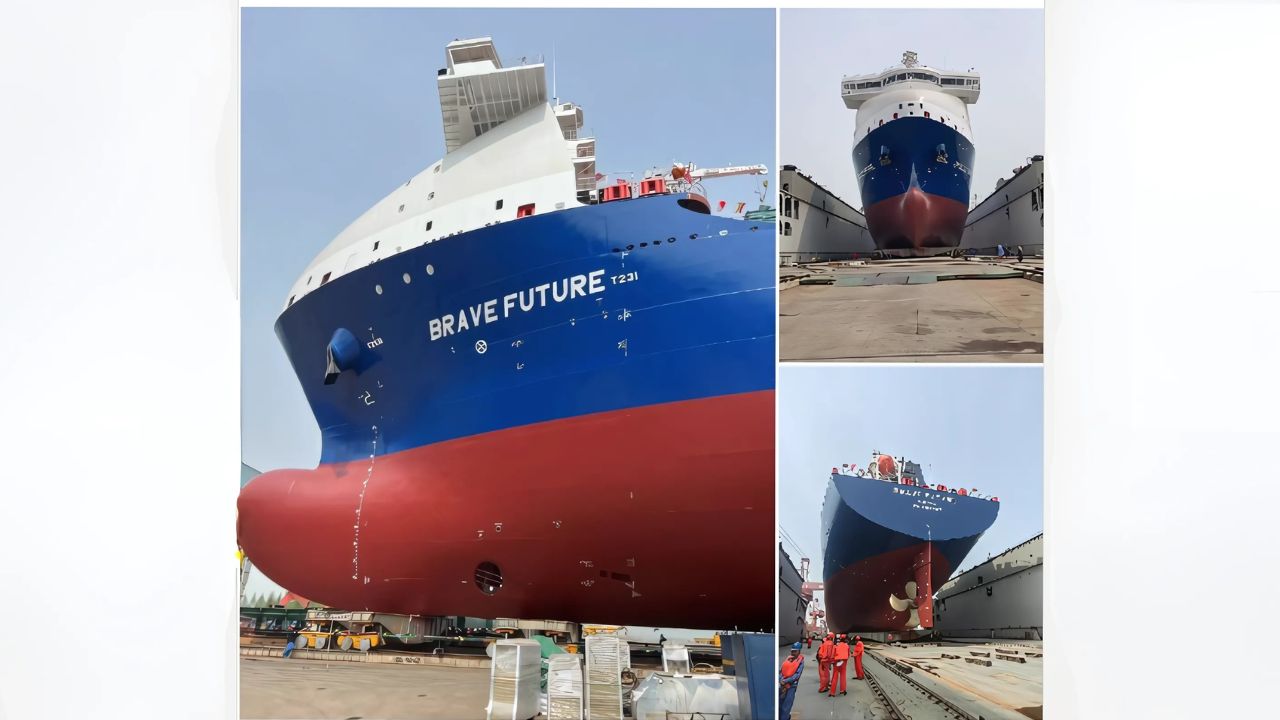
Additionally, the dual-fuel engine — which uses either bunker oil or ethanol — provides flexibility and sustainability to operations. This innovation reinforces Braskem’s commitment to logistical solutions aligned with the demands of modern and more sustainable maritime trade.
Tested at Sea Before Debuting
Before commencing commercial operations, the Brave Future underwent rigorous sea trials, a phase of testing at sea that evaluates the safety, speed, performance, and maneuverability of the vessel.
This ensures that Braskem guarantees the new ship meets the highest international standards of performance and reliability.
Logistics Strengthened with Own Fleet
The arrival of the Brave Future marks the beginning of a new phase for Braskem in the maritime transportation of ethane.
Now, the company has two of its own vessels — Brave Future and Brilliant Future — dedicated exclusively to this type of operation.
According to Hardi Schuck, director of Braskem Trading & Shipping (BT&S), “The Brave Future is a strategic asset that increases our logistical autonomy, provides greater predictability to operations, and strengthens our position as a global leader in the petrochemical industry.”
Braskem does not intend to stop here. The expectation of BT&S is that by 2026, four more ships will be added to the fleet dedicated to the transportation of ethane, consolidating the company’s position as a reference in sustainable maritime logistics.
This strategy reinforces the importance of innovation and efficiency in transporting products such as ethanol and oil, which are essential for the petrochemical chain.
Braskem remains focused on ensuring robust and sustainable logistical solutions for the future of the sector.