Portuguese
  Spanish


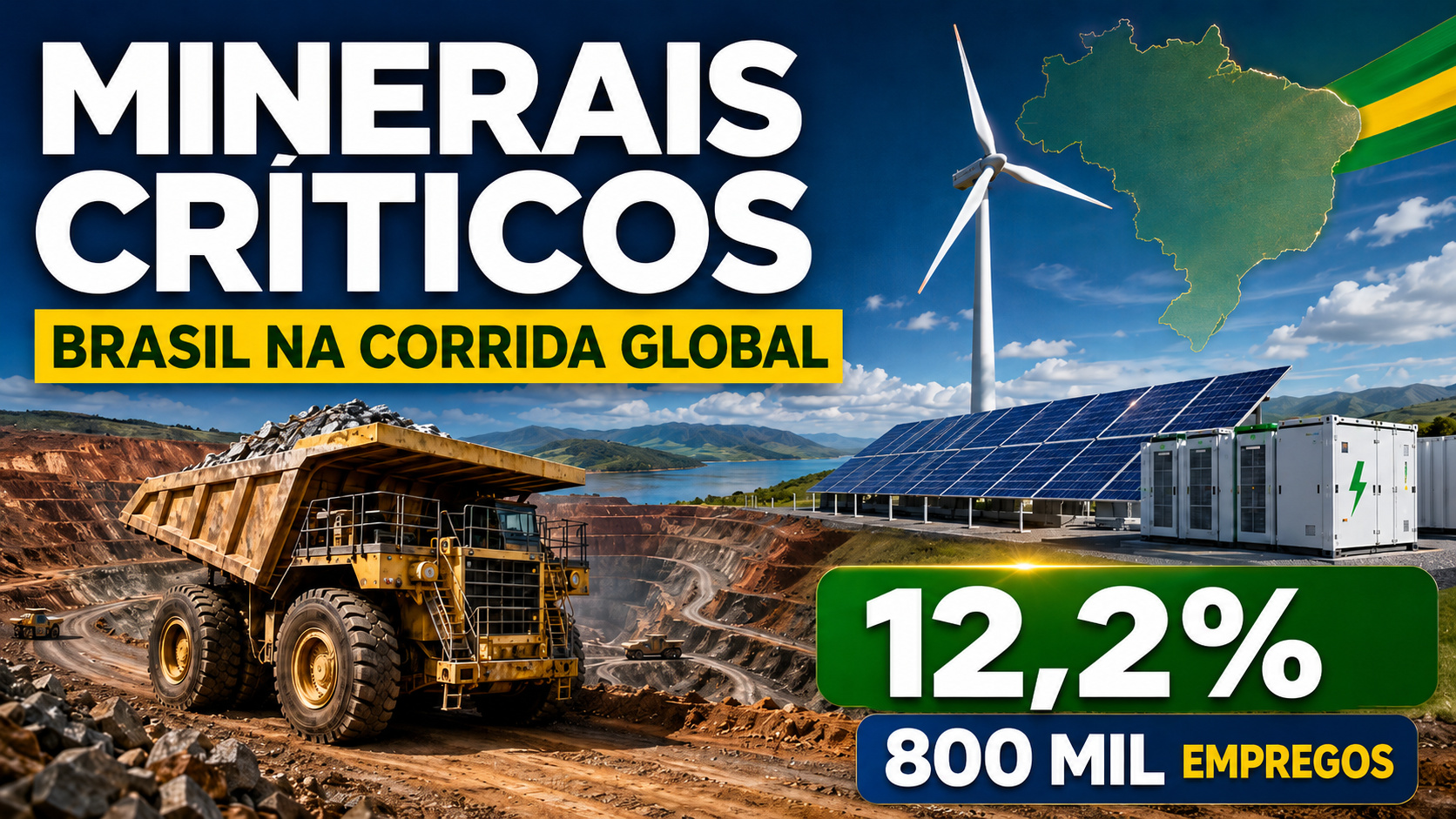

Brazil aims to expand global share in critical minerals to 12.2% and the advancement of Brazilian participation in mining promises to generate 800,000 new direct jobs by 2050 and billion-dollar investments in the sector
Brazil could increase its share from 8.3% to 12.2% of global critical mineral production by 2050, according to the National Mining Plan 2050. The projection places the country in an increasingly strategic competition, precisely at a time when batteries, clean energy, and high-tech industries depend on this type of input.
The document also targets broad changes for the mineral sector as a whole. The idea is to increase the mining sector’s contribution to GDP from 3.3% to 4.8% in 25 years, as well as boost job creation and accelerate the analysis of processes related to the activity.
The details of the PNM 2050 will be presented this Thursday (2) to the ministers participating in the CNPM meeting, the National Mineral Policy Council. According to agenciainfra.com, an official source heard by Agência iNFRA stated that new incentives for the sector, such as those provided for in the legal framework under discussion in the Senate, could further expand the production target.
-
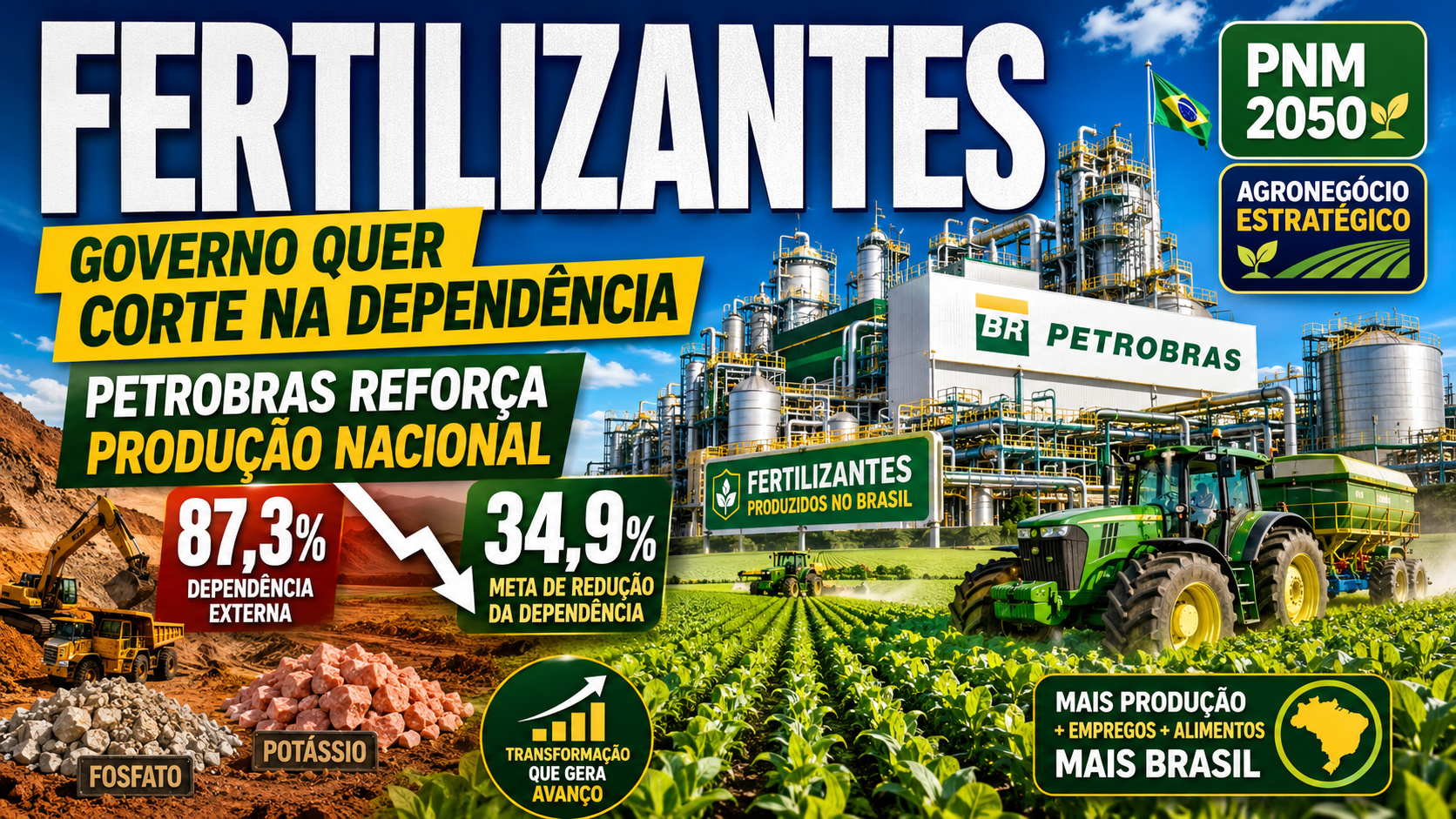
Brazil’s New National Mining Plan Aims to Transform Fertilizer Market and Reduce Foreign Dependency from 87.3% to 34.9%, Boosting Agriculture and Food Production

-
Brazilian Government Plans to Auction Over 500 Road Bridges on São Paulo Stock Exchange in 2026, Promising New Wave of Concessions
-
Brazilian Workers and Instructors to Train in China on Electric Car Technology Ahead of New Factory Opening in Brazil

-
Viral Message Claiming Government Will Deposit Money for Registering CPF as Pix Key Debunked




Critical minerals enter the center of Brazilian strategy
The projected leap for critical minerals is the most striking data in the plan. These inputs are considered essential for industrial chains linked to the energy transition, and the expansion of the Brazilian share indicates an attempt to position the country in a more competitive range of this market.
The government’s assessment, according to the released material, is that public policy can gain strength with extra incentives. The official source heard by Agência iNFRA said that this set of measures could “raise the bar” of the policy aimed at the sector and allow the country to go beyond the initial target.
Mining could gain 800,000 direct jobs by 2050
In addition to production, the plan projects a direct impact on the labor market. Mining could create an additional 800,000 direct jobs by 2050, reaching 2.8 million direct positions in the period, according to the strategic document.
This advancement reinforces the government’s bet on transforming the mineral chain into one of the engines of economic activity in the coming years. The projection is also accompanied by a change in the sector’s composition: the mineral transformation industry is expected to advance from 51.5% to 65% of the sector’s GDP contribution.
Government aims to halve the process analysis time
Another central point of the PNM 2050 is the attempt to reduce bureaucracy. The plan aims to cut more than half of the average time for analyzing mineral processes, reducing the period from 1,563 days to 780 days over the next 25 years.
In practice, the goal is to unlock stages that currently prolong the path between the request and the final decision. The government also wants to boost investments in mineral research, with private contributions increasing from R$ 1.5 billion to R$ 2.7 billion per year.
Goal plan should be released within 180 days
With the new strategy, the government intends to detail the actions in a Goals and Actions Plan, which should be published within 180 days. After that, the material will be reviewed every four years, according to the schedule provided in the document.
The design of the PNM 2050 shows an effort to combine productive expansion, more jobs, and greater investment, while the country tries to firmly establish itself in the global race for minerals considered essential. If the plan comes to fruition at the expected pace, the competition for these resources could gain new significance in the Brazilian economy.
Do you think Brazil has a real chance to become a leader in this race for critical minerals? Tell us and share the news.