Portuguese
  Spanish




Durigan said that the subsidy withdrawal begins soon and should advance in the coming months, as oil returns to pre-war levels and the debate on gasoline, diesel, and inflation returns to the center of the dispute.
The federal government will begin in the coming days to withdraw the R$ 0.44 per liter subsidy on gasoline. The announcement was made on Thursday (2) by Finance Minister Dario Durigan, and puts fuels back at the center of the pressure on drivers’ wallets.
The change comes after the drop in international oil prices, which returned to levels close to those observed before the war between the United States, Israel, and Iran in the Middle East. According to the minister, the measures created to mitigate the impact of the increase are now starting to be reversed.
Durigan also indicated that the withdrawal will not stop at gasoline. According to him, in the coming months, all fuel subsidies in the country will be eliminated, in a movement that affects different fronts of the protection policy adopted by the government during the period of international tension.
-
Brazil Aims to Boost Critical Mineral Production to 12.2% of Global Output, Targeting Battery and Tech Industries

-
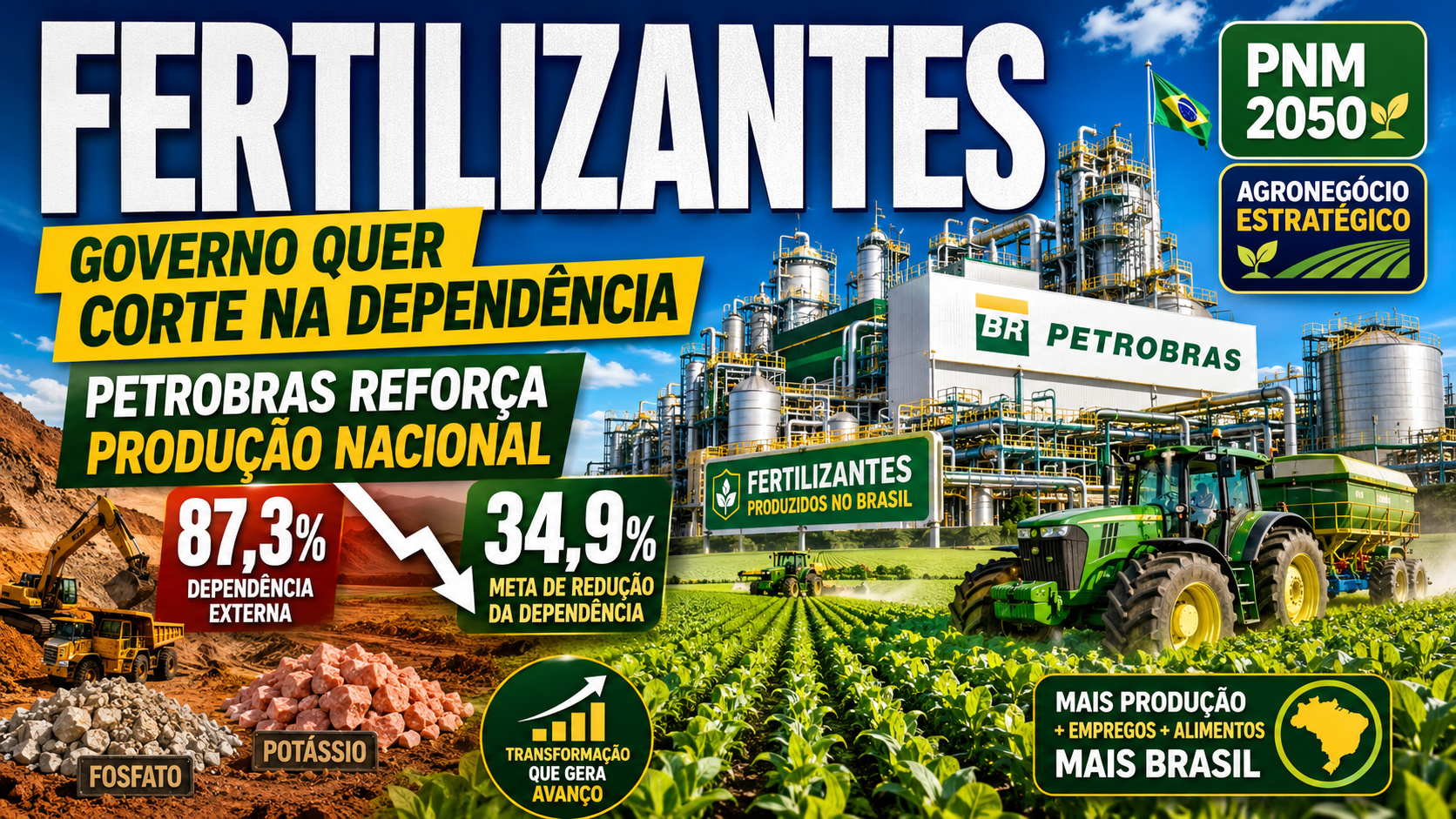
Brazil’s New National Mining Plan Aims to Transform Fertilizer Market and Reduce Foreign Dependency from 87.3% to 34.9%, Boosting Agriculture and Food Production
-
Brazilian Government Plans to Auction Over 500 Road Bridges on São Paulo Stock Exchange in 2026, Promising New Wave of Concessions
-
Brazilian Workers and Instructors to Train in China on Electric Car Technology Ahead of New Factory Opening in Brazil





Gasoline loses the relief of R$ 0.44 per liter
The R$ 0.44 per liter subsidy was implemented in May to prevent the surge in oil prices from weighing even more on the final consumer price. Now, with the barrel price falling, the government has decided to start reversing this aid.
In an interview during a new edition of the Caminhos do Brasil project, promoted by O GLOBO, Valor Econômico, and Rádio CBN, in Rio de Janeiro, Durigan stated that the withdrawal will begin with gasoline. “Starting with gasoline, which will be done in the coming days, we will review the subsidy, considering that the scenario has changed downward in relation to oil prices,” said the minister.
Oil returns to around US$ 70 and changes the government’s calculation
The Brent crude oil barrel, an international benchmark, returned to being traded this week at around US$ 70. During the most critical moments of the war, the value exceeded US$ 110, which led the government to adopt measures to cushion the impact on fuels.
In practice, the drop in international prices weakens the justification for maintaining the subsidy at the same level. It was this decline that opened the space for the review announced by the economic team, amid expectations of conflict stabilization, although uncertain, according to the minister.
Diesel also joins the queue for removal
In addition to gasoline, Durigan mentioned two other fronts that still depend on adjustment: the additional subsidy on diesel, of R$ 1.12, and the remaining aid on gasoline. According to him, a first part of R$ 0.35 per liter has already stopped being paid to distributors since July.
The minister also stated that the government no longer has the agreement with the states in which the Union subsidized ICMS on diesel imports. Furthermore, PIS-Cofins has been reimposed on the fuel, reinforcing the change in direction in the price relief policy.
Pressure on inflation and cost for drivers back on the radar
With the gradual removal of subsidies, the impact may once again be felt directly at the pumps, especially if the international market changes direction or if the pass-through to consumers gains strength. The government, for now, has not detailed timelines for the complete elimination of the subsidy but indicated that the review will be conducted in the coming months.
The announcement rekindles a discussion that weighs both on inflation and on the budgets of families who depend on cars for work. The trend now is to closely monitor the next steps of the Treasury and the response of the fuel market. If your routine depends on gasoline, it’s worth staying tuned for the next updates and sharing the news with those who may also be affected.