Portuguese
  Spanish


Under the water, a structure created to contain extreme tides changes the routine of Venice’s protection and keeps costs, maintenance, environmental impacts, and climate adaptation in debate in a historically vulnerable lagoon.
Venice uses a system of 78 movable gates installed at the bottom of the lagoon to reduce the risk of flooding caused by extreme tides.
Called Mose, an Italian acronym for Experimental Electromechanical Module, the project temporarily closes the entrances to the Venice Lagoon when forecasts indicate a significant rise in the sea level in the Adriatic, according to official information from the Mose system and the Italian Ministry of Infrastructure and Transport.
The structure is located at the three natural entrances of the lagoon, known as port mouths: Lido, Malamocco, and Chioggia.
-
China Uses 432 Robots to Move a 7,500-Ton Historic Building in Shanghai, Preserving Architecture While Creating Space for Underground Center

-
World Cup Ball Chip Uses Technology to Detect Invisible Touches, Confirms Offside, Secures Portugal’s Victory Over Croatia

-
36-Meter Hydrogen-Powered Superyacht Arrives in Brazil to Debut German Engines and Showcase Future of Clean Navigation
-
Indian Students from Jaipur Win Top Prize at World’s Largest Science Fair with EcoFog, an Affordable Mesh to Harvest Fog Water Without Energy

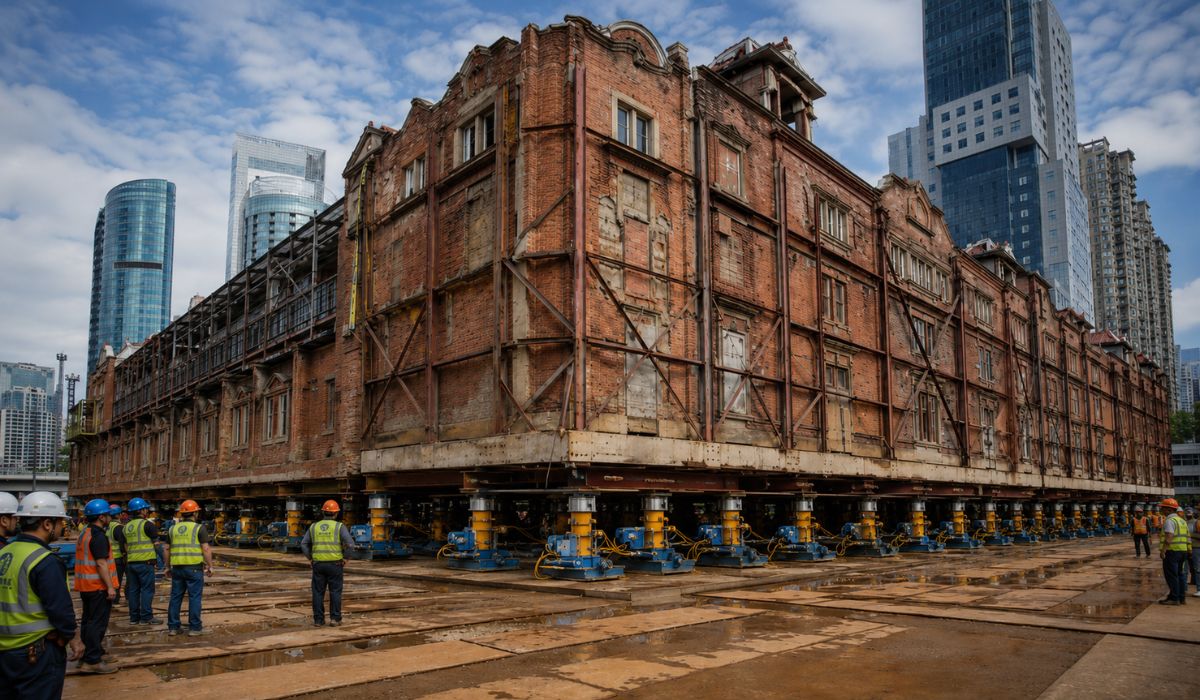



In total, there are four lines of barriers, as the Lido entrance is divided into two channels.
Under normal conditions, the gates remain laid down and submerged, fitted into structures at the bottom of the channels.
When high tide is forecasted, the system injects compressed air into the gates, which expel the water from their interior and rotate on hinges fixed in concrete structures.
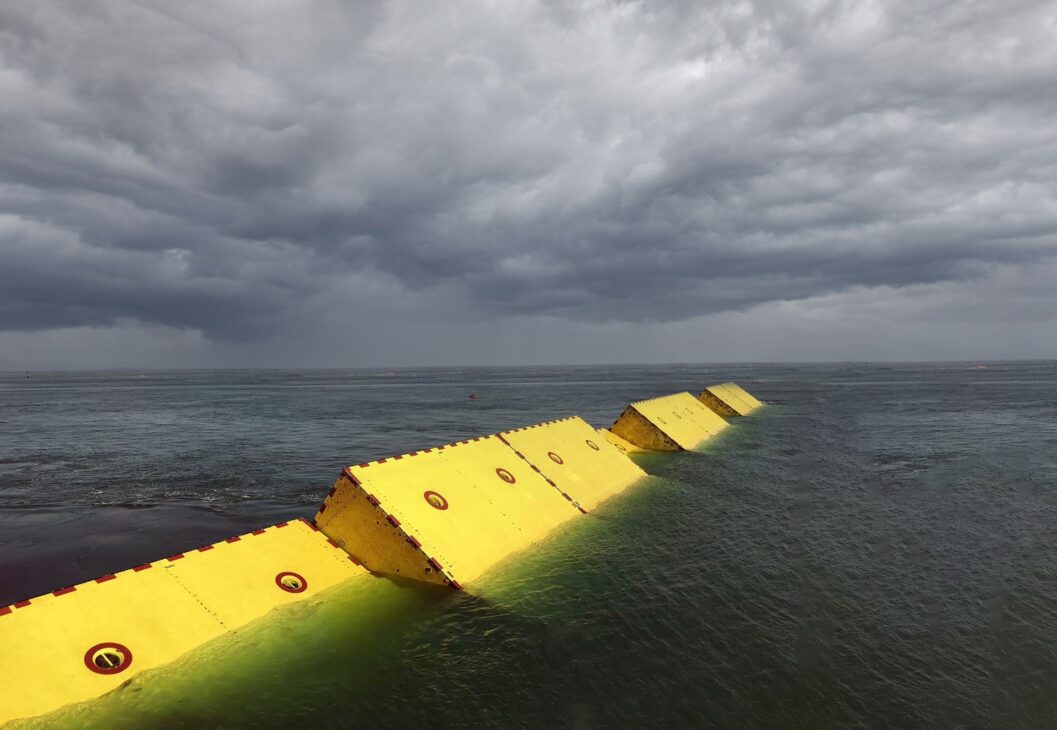
With this, they emerge and form a temporary barrier between the lagoon and the Adriatic.
After the tide reduction, the pieces return to the bottom and resume their resting position.
The project was planned to protect a city that has coexisted with water since its origin but has faced greater risk with the combination of subsidence, sea level rise, and intense meteorological events.
The largest historical record of acqua alta occurred on November 4, 1966, when the tide reached 194 centimeters.
On November 12, 2019, the level reached 187 centimeters, according to the Tide Forecast and Signaling Center of the Municipality of Venice.
How the Mose works in Venice
The Mose is not a fixed dam.
The central difference lies in the mode of operation: the gates only appear when there is a risk of high tide capable of causing significant flooding.
For the rest of the time, they remain submerged, filled with water, and housed at the bed of the lagoon’s entrance channels.
Each gate is 20 meters wide, with variable length and thickness according to the depth of the point where it was installed.
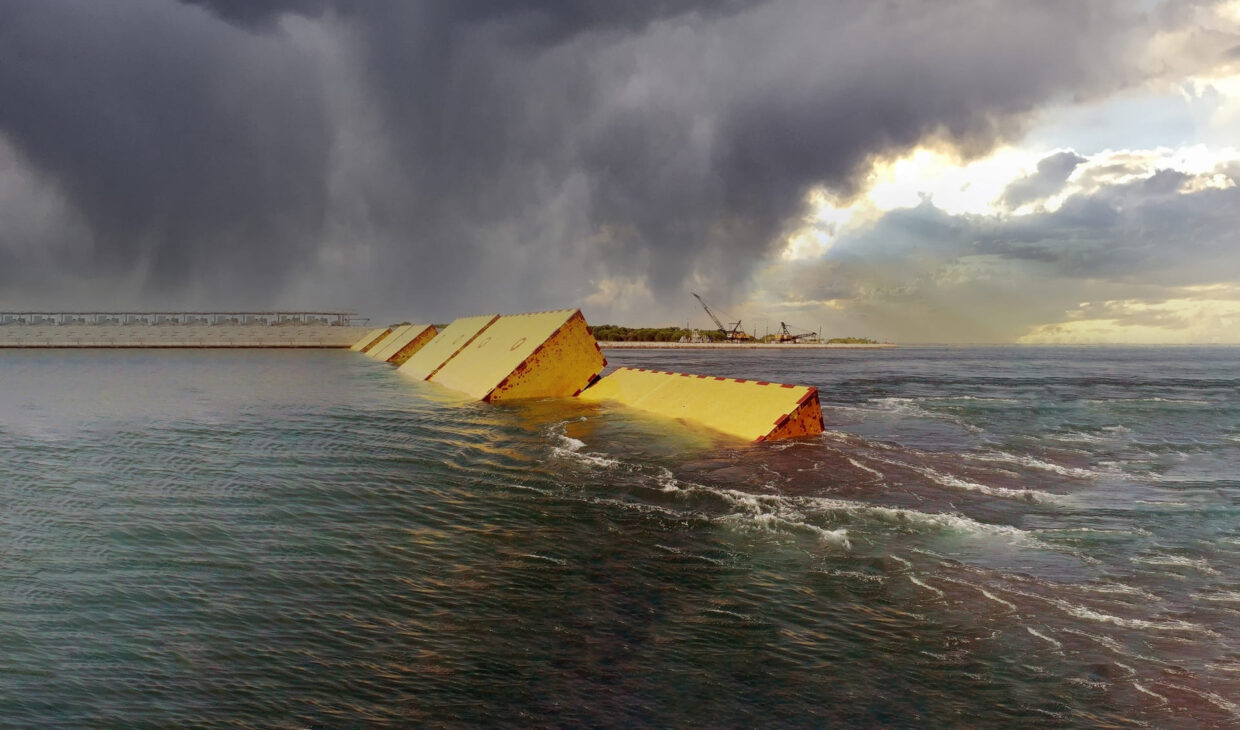
The set includes 21 gates in Lido-Treporti, 20 in Lido-San Nicolò, 19 in Malamocco, and 18 in Chioggia, according to the project’s technical division.
The operation involves calculating tide, wind, atmospheric pressure, rain, river flow, and local lagoon conditions.
It also needs to consider maritime traffic, especially in Malamocco, a channel used by port-related vessels.
For this reason, activation depends on weather forecasts and coordination between technical teams.
The reference level informed by the Italian Ministry of Infrastructure for activation is 110 centimeters relative to the Punta della Salute tide gauge.
This level guides the operation but can be adjusted by the responsible authorities according to the predicted conditions and the need to protect the historic center and other lagoon areas.
The technical execution requires corrosion control, hinge inspection, monitoring of metal structures, and maintenance of command systems.
As the gates remain submerged for long periods, the conservation of components is an essential part of the operation.
The project’s history itself shows that the maintenance phase became one of the most relevant fronts after it became operational.
Mose Project Faced Delays and Investigation
The construction of Mose began in 2003 and went through years of delays, technical revisions, cost increases, environmental questions, and judicial investigations.
Throughout the process, environmentalists and experts pointed out the risk of altering the lagoon’s balance, while authorities and project supporters argued that Venice needed a structure capable of containing extreme events.
The controversy gained new weight in 2014, when a corruption investigation affected people linked to the project.
That year, Reuters reported that the operation involved politicians, businessmen, and managers, including the then-mayor of Venice, Giorgio Orsoni, who was placed under house arrest on suspicion of corruption related to the project.
Despite the political and judicial turmoil, the Italian government maintained the completion of the system.
The justification presented by the authorities was the need to reduce the impacts of high tides on historical heritage, economic activity, and the daily life of residents and workers in the city.
The November 2019 episode reinforced the pressure for an operational response.
On that occasion, the water advanced over historical areas, reached St. Mark’s Square, and caused damage to properties, businesses, and cultural assets.
The event occurred before the full use of Mose in a real high tide situation.
The first full activation in a real condition occurred on October 3, 2020.
On that day, the gates were raised to prevent the rise of the sea in the Adriatic from propagating with the same intensity into the lagoon.
From this test, the system became part of the routine protection of the city against acqua alta.
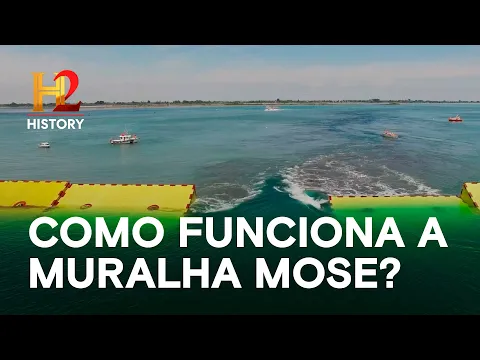

Mobile barrier has already been activated one hundred times
Since it became operational, Mose has been used several times to protect Venice from high tides.
On March 12, 2025, the Italian Ministry of Infrastructure reported that the gates had been raised for the hundredth time since 2020.
According to the agency, the hundred activations prevented estimated damages of more than 2.6 billion euros to the city.
The routine of activations changed the city’s response to tide events.
Situations that previously could cause flooding in shops, churches, museums, residences, and public areas now have a preliminary containment stage at the lagoon entrances.
The Venice Lagoon Authority maintains public records of operations, including total and partial activations, defined according to maritime and meteorological forecasts.
The frequency of use also keeps the effects of the barrier on the lagoon’s dynamics in debate.
Each closure temporarily reduces the exchange of water between the lagoon and the Adriatic, in addition to requiring coordination with port activities.
Therefore, the operation seeks to reconcile urban protection, maritime circulation, and environmental preservation.
The cost of implementation and maintenance remains a point of public monitoring in Italy.
The Webuildvalue mentions a value exceeding 6 billion euros at the end of the works, but different Italian sources address the total cost with distinct breakdowns, which may include construction, management, maintenance, and associated contracts.
To avoid inaccuracy, the information must be attributed to specific official documents when used in future updates.
Venice, acqua alta and climate adaptation
The Mose has changed the way Venice faces the acqua alta.
Before the system’s operation, the city relied mainly on alerts, temporary walkways, and protections installed on the doors of shops, public buildings, and residences.
With the gates, containment can occur before the tide significantly advances into the lagoon.

The work, however, does not eliminate all water-related risks.
The system was developed for high tides, while Venice also deals with rising sea levels, conservation of historic buildings, tourist pressure, urban maintenance, and environmental transformations of the lagoon.
These factors require permanent policies of adaptation, preservation, and territorial management.
On days without alerts, the gates remain out of sight of residents and visitors.
When the forecast indicates a risk of high tide, the submerged structure transforms into a temporary containment line.
The operation depends on technology, weather forecasting, continuous maintenance, and operational decisions made before the water reaches the historic center.
For Venice, the barrier represents a stage of the protection strategy, not an isolated solution for all the effects of climate change and sea level rise of the sea.
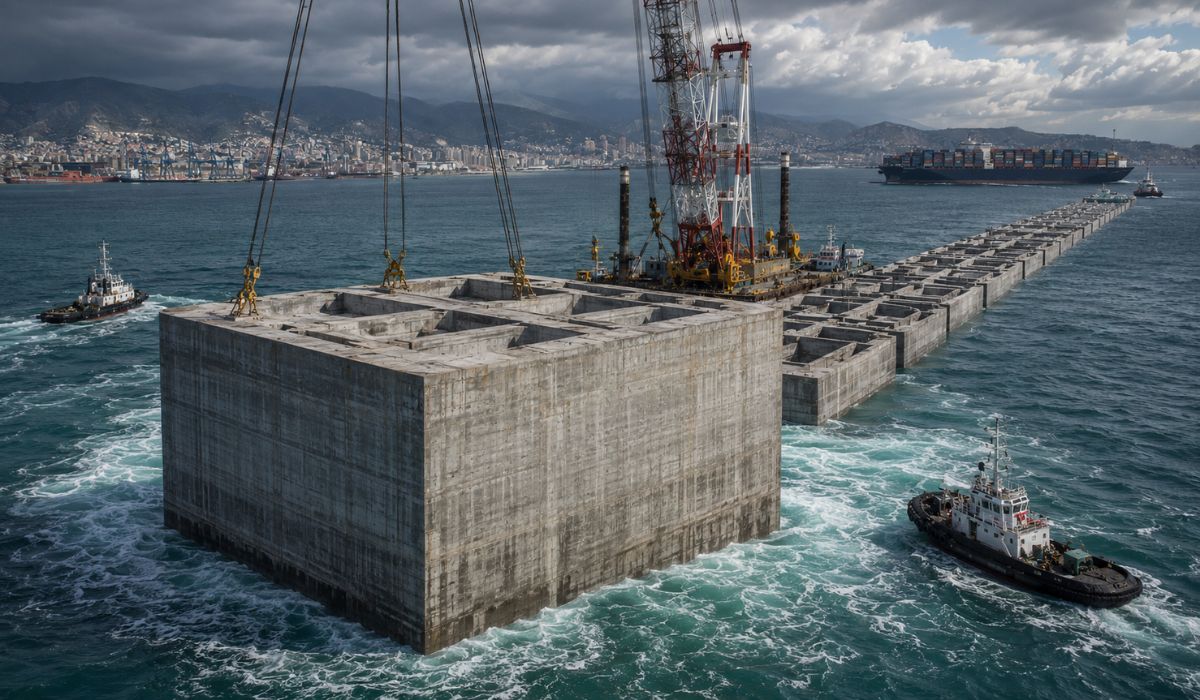
The Italian experience has also begun to be observed by experts in coastal cities, ports, and historical areas subject to flooding.
In a city built on islands, canals, and ancient foundations, water protection has come to depend on a structure that almost always remains invisible.
The challenge now is to keep the system functioning, monitor its environmental impacts, and adapt the management of the lagoon to increasingly complex tide scenarios.