






 Portuguese
  Spanish


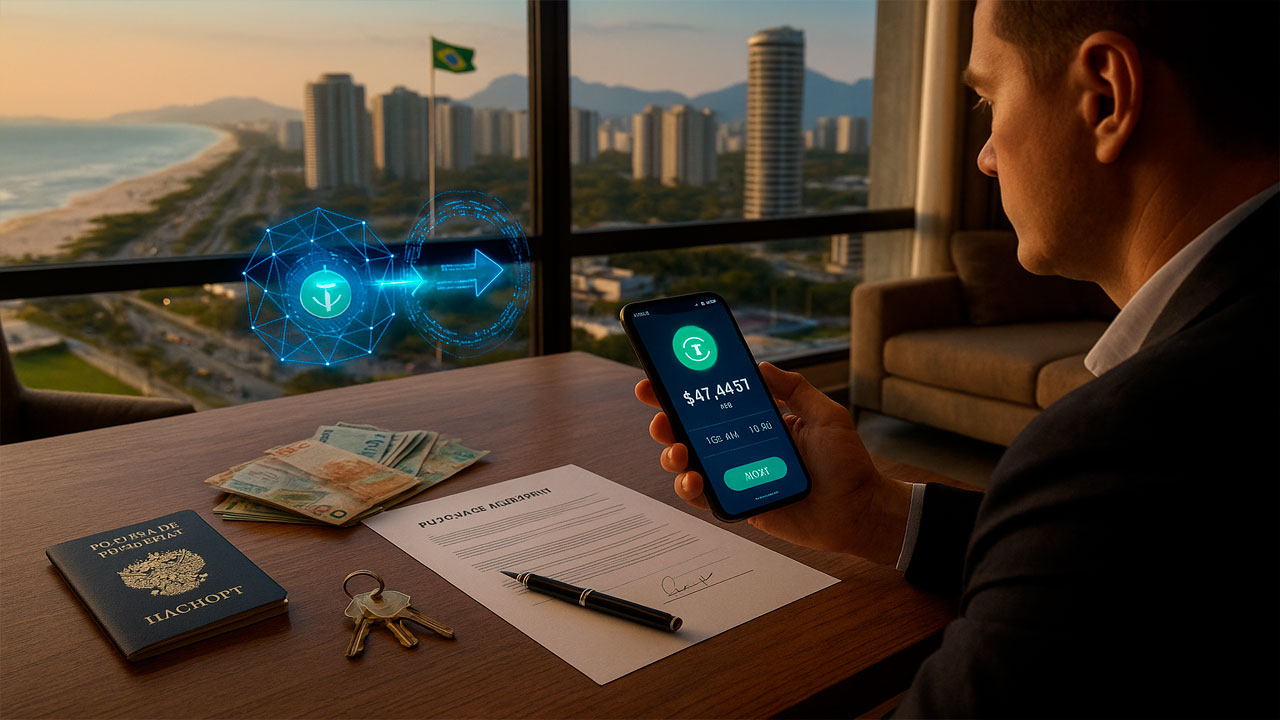

A Studio in Niemeyer 360, in Barra da Tijuca, Was Sold for R$ 740 Thousand Paid in Full in USDT (Tether), via the TokenHaus (HausBank) Platform, in an Unprecedented Operation in Brazil That Settled On-Chain and Distributed the Values Off-Chain in Reais to the Involved.
A Russian investor purchased a property in Rio using cryptocurrency from start to finish, without traditional currency conversions. The payment was made in USDT, a stablecoin pegged to the dollar, and the seller automatically received reais.
The transaction took place at Niemeyer 360 (formerly Torre H), in Barra da Tijuca, and was processed by TokenHaus of HausBank, which claims to have used a self-executing protocol to automate settlement and division among the seller, real estate agency, and service providers.
For the market, the case signals advancement of real estate tokenization and may open doors for foreign buyers who already operate with crypto, reducing costs and timelines for international transfers.
-
Brazil’s 2026 Tax Refund: Record 9.58 Million Filers in Largest Payout Ever, But a Key Detail on Priority Recipients Draws Nationwide Attention

-
Itaú Alters Hybrid Work Model, Increasing Office Days from 2028, Prompting Employees to Adjust to New Routine
-
Facing Labor Shortage, Japan Plans to Invest $34 Million to Attract Foreign Workers in Construction, Healthcare, Industry, and Commerce

-
Brazilian City Makes Remarkable Leap, Becomes 4th Wealthiest in the Country with GDP of R$ 134.1 Billion




The operation was reported by local and industry media in the week of September 9 to 18, 2025, reinforcing the pioneering nature of a full crypto purchase, with settlement on blockchain and liquidity in reais.
How The Purchase with Crypto Worked in Brazil
The payment in USDT was settled on-chain, ensuring traceability and immutable record. Subsequently, the off-chain distribution converted the amounts to reais and automatically transferred them to the seller, real estate agency, and other professionals. This design reduces manual steps and operational costs.
According to reports, the model mitigated barriers such as currency spread, international orders, and banking timelines. At the same time, it preserved the regulated environment at the end in reais, aligning technological innovation with market practices.
TokenHaus, linked to HausBank, presents itself as infrastructure for tokenized operations and industry payments. The bank, launched in 2025, claims to focus exclusively on the real estate ecosystem (brokers, developers, real estate agencies) and offers solutions for commissions, smart invoices, and payments.
The asset purchased remains in Niemeyer 360, a retrofit of the former Torre H on Avenida das Américas, featuring studios and leisure areas — a typical target for short or medium-term investor rentals.
Why The Case is Called “Unprecedented” and What Changes
In Brazil, there had been initiatives for tokenization and blockchain tests in the financial market, but the sale fully paid in crypto with on-chain settlement and distribution in reais for all participants is highlighted as an operational milestone in the residential real estate segment.
Experts consulted by industry media claim that the mechanism attracts foreign capital, accelerates timelines, and reduces frictions related to currency exchange and compliance when the on-chain audit trails are well implemented. In markets like the US, Portugal, and the United Arab Emirates, real estate transactions in crypto have already advanced, especially in luxury.
For brokers and developers, the automation of commissions and fee transfers within the payment flow can reduce errors and disputes, in addition to providing predictability in cash flow.
The movement aligns with the broader trend of asset tokenization, which has been gaining global traction to reduce costs, speed up settlements, and modernize investment infrastructure.
Risks, Regulation, and Next Steps for the Market
Despite the gain in efficiency, risks remain: volatility (mitigated in this case by the use of stablecoin), fraud, money laundering, and operational failures require robust KYC/AML, well-defined custody policies, and contractualization aligned with the Civil Code and real estate registration authorities.
On-chain execution does not eliminate tax and notarial obligations; it documents and accelerates financial steps. In parallel, interest grows in economically slicing properties via tokens (without violating condominium rules or securities values), broadening access for investors to smaller tickets.
If cases like the one in Barra multiply, banks, notaries, and regulators will need to clarify norms, standards for interoperability, and governance — a critical condition for international capital to see Brazil as a safe and efficient destination for real estate transactions in crypto.
In the short term, the expectation is for more pilots with stablecoins, integration with local payment systems, and market education for brokers and buyers about risks and best practices.
What This Case Reveals About Brazil in 2025
The sale at Niemeyer 360 places Rio de Janeiro on the global map of experiences that unite blockchain and real estate. By allowing the buyer to pay in crypto and the seller to automatically receive in reais, the model reduces friction and opens doors to new profiles — from foreign investors to digital nomads.
For HausBank/TokenHaus, the business serves as a public proof of concept that the technology works in the real world. For the market, it is a signal that tokenization has moved from discourse and begun to change processes — even without a major regulatory overhaul.
If there is scale and clear standards, Brazil can gain competitiveness to attract global savings and finance projects with lower costs and time. The challenge is to balance innovation and legal security.
Do you want to see more deals like this in Brazil or are you concerned about risk and opacity with crypto? Leave your comment: do you prefer speed and automation with blockchain or do you think the country should toughen rules before expanding the use of stablecoins in the real estate market?








