






 Portuguese
  Spanish


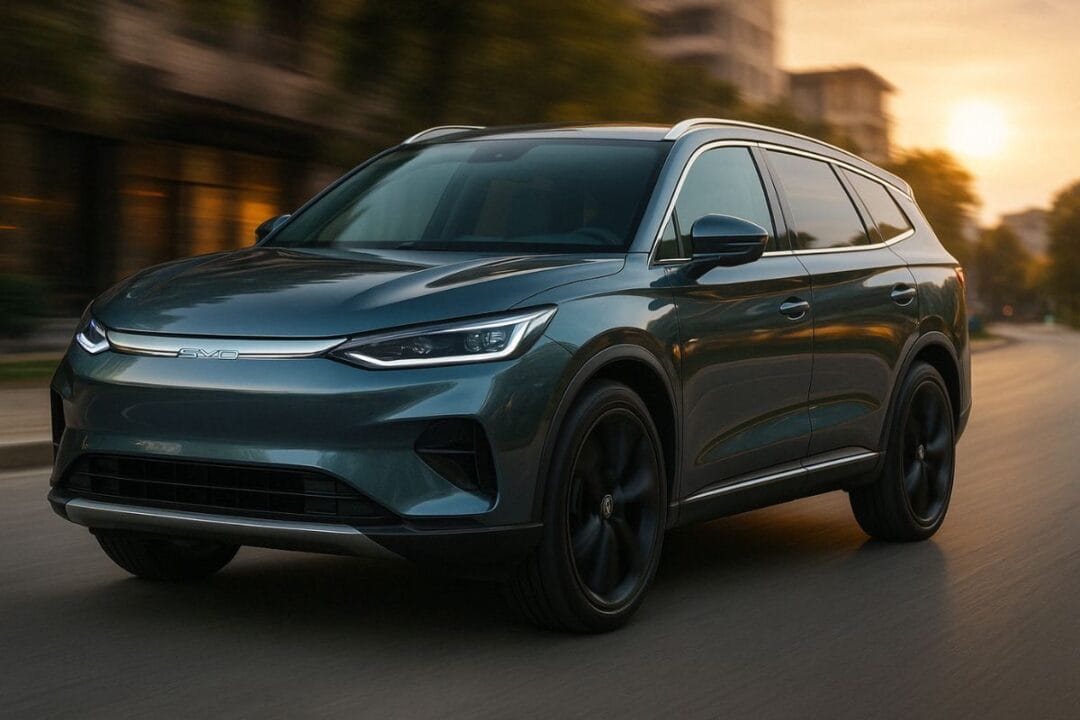

Electric SUV With 7 Seats By BYD Receives Facelift, Gains Range With Larger Battery, and Anticipates Future of Ultra-Fast Charging; Understand the News and Challenges of the Model in Brazil.
The BYD Tan 2025 arrives in the Brazilian market with important updates. This seven-seat electric SUV received a facelift and, more crucially, a larger capacity battery, now at 108.8 kWh. The combined power of its electric motors reaches 517 horsepower.
Although it represents the technological pinnacle of the brand in the country, the BYD Tan 2025 faces a paradox: low sales volume despite BYD’s dominance in the electric segment. The brand also signals a future revolution in charging, promising powers of up to 1 MW. We analyze what has changed, how it drives, and the factors behind its market performance.
Renovated Visual and Imposing Dimensions in the BYD Tan 2025
The facelift of the BYD Tan 2025 brought a visual identity more aligned with purely electric vehicles. The previous front grille, reminiscent of combustion cars, was replaced by a more closed and modern design. The full LED adaptive headlights, with integrated fog and curve functions, were retained and praised for their efficiency.
-
Toyota to Open New Factory in Brazil by November 2026 with $2.2 Billion Investment, Creating 2,000 Jobs, and Ending Corolla Production in Indaiatuba

-
Brazilian Factory Restores Truck Engines and Parts, Reducing Raw Material Use by Up to 85% After 80 Years in Business

-
British Marines Set Record by Changing Ford Escort Engine in 42 Seconds, Unbroken for 40 Years

-
BYD Owners in Brazil Raise Concerns Over Warranty After 87,000 km, Two Repairs in Three Days, and Over $500 in Costs





Redesigned bumpers increased the total length by nearly 10 cm, reaching 4.97 meters. The width is 1.95 m and the wheelbase is 2.82 m, giving the BYD Tan 2025 dimensions comparable to European premium SUVs. The 22-inch wheels (model 24/25, may change to 21″ in the 25/25) with 265/40 tires and Brembo brake calipers complete the visual and performance package.
Updated Powertrain: More Battery, More Torque in the BYD Tan 2025


The most significant change is under the floor. The battery of the BYD Tan 2025 grew from 86.4 kWh to 108.8 kWh (LFP technology – lithium iron phosphate). This increase added 141 kg to the vehicle, which now weighs 2,630 kg.
The power remains at 517 hp, but the torque increased to 71.4 kgfm (previously around 69 kgfm), distributed between the two motors (one on each axle), ensuring all-wheel drive (AWD). In tests, the acceleration from 0 to 100 km/h was recorded at 5.0 seconds, a remarkable time for its weight.
Range and the Promise of Ultra-Fast Charging
With the new battery, the BYD Tan 2025 homologated 430 km of range in the Inmetro cycle (PBEV), which corresponds to an efficiency of approximately 3.95 km/kWh. Tests under real conditions indicated averages of 4.27 km/kWh on the highway (about 465 km of range) and close to 5 km/kWh in the city (over 500 km).
In charging, the BYD Tan 2025 accepts:
- Alternating Current (AC): Up to 11 kW, taking about 10 hours for a full charge (0-100%).
- Direct Current (DC): Up to 170 kW (CCS2 standard).
BYD recently announced its next-generation charging technology, capable of reaching 1 MW (1000 kW). This would allow adding about 2 km of range per second, enabling substantial charges (e.g., 10-80%) in just 4 to 5 minutes for batteries like the one in the Tan. Important: this 1 MW technology is not present in the current 2025 model, being a promise for future generations and dependent on compatible charger infrastructure.
The cost of fast charging (DC) can be a point of concern. In a cited example, charging 44 kWh cost R$ 146 (at R$ 3.30/kWh), adding about 180 km of range. This amount would be enough to buy approximately 24 liters of gasoline, which would yield more kilometers in an efficient combustion car.
Luxurious and Technological Interior
The interior finish of the BYD Tan 2025 aims for the premium segment, with high-quality materials such as leather (available in “sweet milk” color), suede, soft-touch, and black piano details. The space is ample for five occupants, with the third row being more suitable for children or short trips.
Highlights include the panoramic sunroof, the multimedia center with a 15.6-inch rotating screen (with wireless Android Auto and Apple CarPlay), Head-Up Display (HUD), premium sound system by Dinaudio, and a complete package of driver assistance features (ADAS), including adaptive cruise control, lane-keeping assist, and automatic emergency braking.
Market Positioning
Although it is the “showcase car” for BYD in Brazil, showcasing the maximum of its technology and luxury, the BYD Tan 2025 (current price R$ 536,800) does not replicate the sales success of its more accessible siblings, such as Dolphin and Song Plus.
Fewer than 500 units have been sold since its launch in 2022. Factors include the high price, the brand’s perception still being built in the Brazilian premium segment and the high initial depreciation, common in luxury EVs. It serves more as a “piranha bait,” attracting customers to the brand and demonstrating technological capability, who then opt for lower-value models.


