






 Portuguese
  Spanish



There Are Common Habits in Charging Your Phone That Affect Battery Health. Understanding Internal Processes and Ideal Conditions Can Prolong Device Performance and Prevent Premature Wear.
Charging your phone is a daily routine for most users, but some common habits may be harming the device’s battery without the user realizing it.
Although it seems simple, the way you charge your smartphone directly affects battery longevity, especially in current models that use lithium-ion technology.
Understanding the most frequent mistakes and how to avoid them can prolong the device’s lifespan, as well as optimize performance.
-
China Develops Custom 140-Ton Electric Mining Truck with 770 kWh Swappable Battery, Deploys 290 Units in Xinjiang’s Largest Zinc Mine

-
Meta to Launch Arena, a New Prediction App Targeting 3.56 Billion Users, Competing with Polymarket and Kalshi

-
Scientist Challenges Famous Human Evolution Theory, Argues Homo Sapiens Evolved Gradually Over Thousands of Years
-
15-Year-Old American Builds Ocean Generator with PVC Pipe and 3D-Printed Propeller for $12, Wins National Prize, Presents at White House, and Makes Forbes 30 Under 30 List




Does Charging to 100% Really Harm the Battery?
Many experts claim that frequently charging your phone to 100% can accelerate battery wear.
The explanation lies in the internal chemistry of lithium-ion batteries, which perform best when kept in a charge range between 20% and 80%.
According to recent research, fully charging the device increases chemical stress during the charging cycle, which reduces the total battery capacity over time.
Additionally, keeping the device plugged in after reaching maximum charge can generate heat, another factor that compromises the internal components of the battery.
While modern systems have mechanisms to stop charging when they reach 100%, the accumulated heat remains a problem.
Is Charging Your Phone Overnight Harmful?
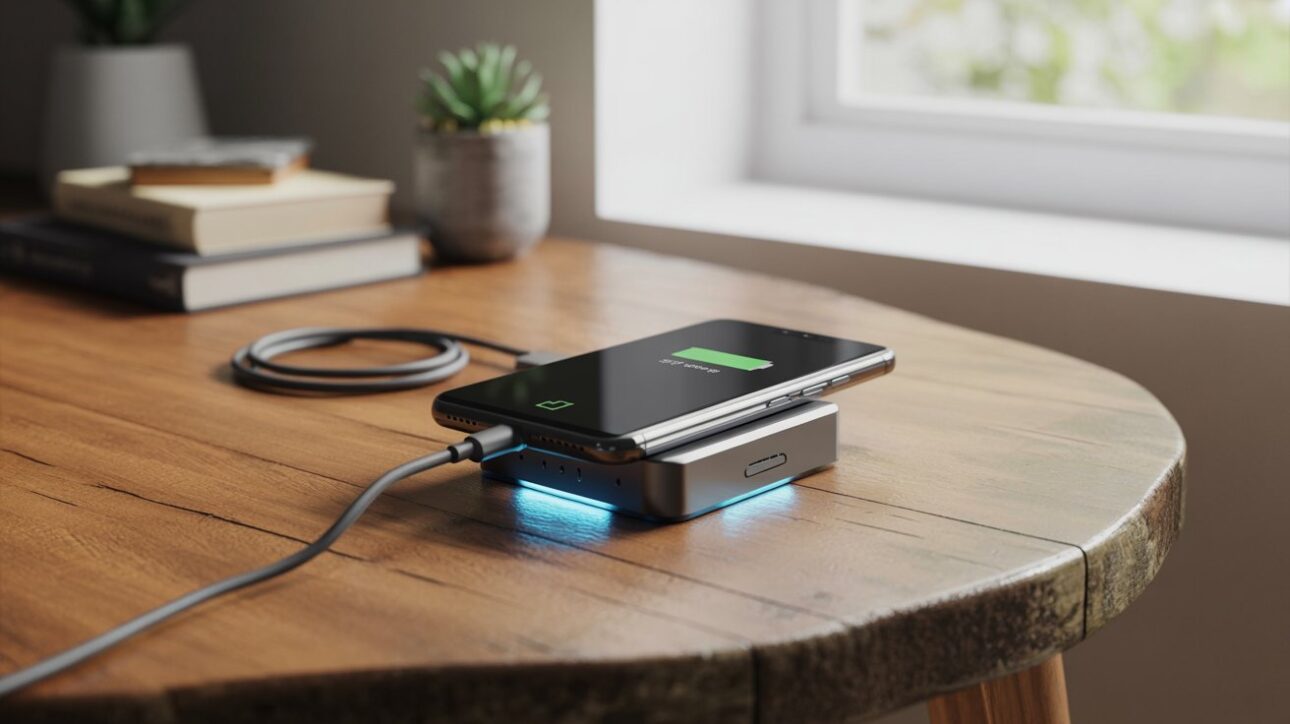
Charging your phone all night is a common habit, but is it harmful?
Experts explain that, nowadays, smartphones have smart systems that interrupt charging upon reaching a full battery.
This prevents the device from continuously charging after reaching 100%.
However, the heat generated during the process, especially if the phone is in poorly ventilated environments, can accelerate battery degradation.
To avoid this, it is advisable to charge your smartphone in cool and ventilated locations, never under pillows, blankets, or other materials that retain heat.
Can Using Generic Chargers Harm Your Phone?
Another practice that can compromise the battery is using generic or non-certified chargers by the manufacturer.
Low-quality chargers may provide inadequate voltage and current, causing overheating and even permanent battery damage.
According to recommendations from manufacturers like Apple, Samsung, and Xiaomi, the ideal is to always use original or certified chargers that meet the device’s technical specifications.
Additionally, regularly checking the condition of cables and adapters helps avoid risks and ensures efficient charging.
Does Closing Apps Help Save Battery?
Many users believe that closing background apps helps extend battery life, but this idea is not always true.
Modern operating systems, like Android and iOS, automatically manage resource usage by apps, putting them in low-consumption mode when they are not active.
Opening and closing apps frequently can, in fact, consume more energy than leaving them in standby.
What really makes a difference in battery consumption are actions like disabling unnecessary functions such as Bluetooth, GPS, and notifications, as well as adjusting screen brightness, which is one of the biggest energy consumers.
How to Avoid Excessive Heating?
Heat is one of the biggest enemies of the phone battery.
Exposing the device to sunlight, leaving the smartphone inside a car on hot days, or charging on surfaces that retain heat speeds up the chemical degradation of the battery, reducing its storage capacity.
Experts recommend keeping the phone at temperatures between 15°C and 35°C to ensure optimal battery performance.
On hot days, avoiding continuous use of the device while charging can help minimize risks.
Does Avoiding Complete Battery Discharge Make a Difference?
Deep discharges, that is, letting the battery reach 0%, also harm the component’s durability.
Lithium-ion batteries perform better when they are not frequently fully discharged, as charge cycles that include total discharges increase chemical stress.
Therefore, manufacturers recommend keeping the charge level between 20% and 80%, performing more frequent charges and avoiding letting the phone turn off due to low battery.
This care helps extend the device’s lifespan.

Practical Tips to Preserve Your Phone’s Battery
Based on the most common technical errors, experts suggest some simple actions to increase battery longevity:
- Charge your phone between 20% and 80%, avoiding frequent full charges.
- Use original or manufacturer-certified chargers.
- Charge the device in cool and ventilated environments, avoiding places that favor heat retention.
- Disable features such as Bluetooth, GPS, and Wi-Fi when not in use.
- Adjust screen brightness to comfortable levels that consume less energy.
- Avoid completely discharging the battery frequently.
- Activate the power-saving mode offered by the operating system, which helps control consumption.
These practices, when adopted consistently, can result in a battery that maintains its original capacity for a longer time, avoiding premature replacements and ensuring the smartphone operates well.
Curiosities About Lithium-Ion Batteries
The lithium-ion technology, predominant in smartphones since the mid-2000s, revolutionized the market by offering high energy density and low weight.
However, it also has inherent limitations, such as natural degradation over time and sensitivity to high temperatures.
Recent research indicates that battery wear can be significantly reduced if the user manages charging patterns and environmental conditions.
Therefore, major brands invest in features like optimized charging, which adjusts speed and charge limit to protect the battery throughout the day.
Did you know that frequently charging your phone to 100% can reduce battery life? What other practices do you adopt to preserve your device? Share your experience and tips in the comments.





