






 Portuguese
  Spanish
  3 min of reading
  0 comments


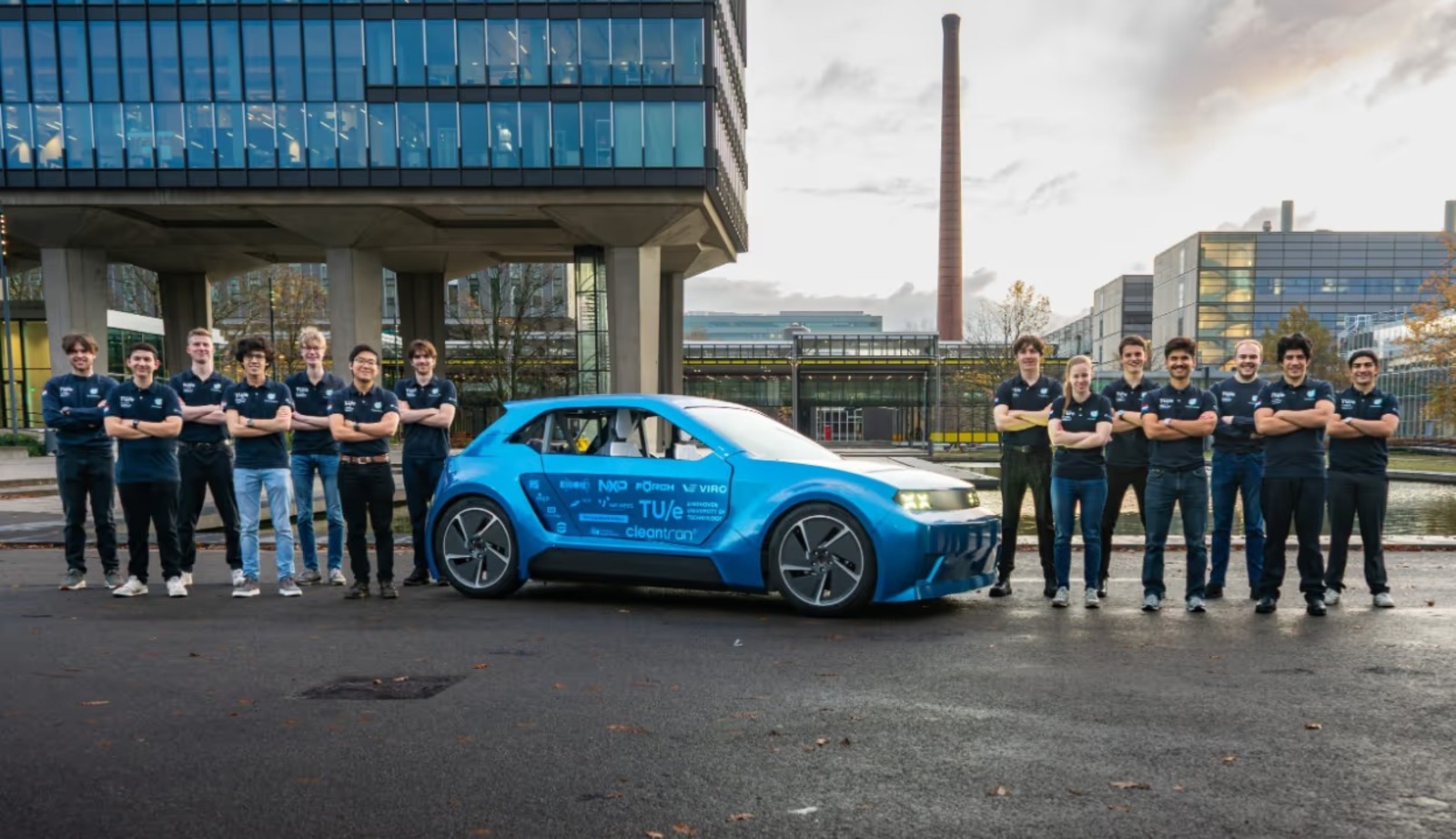
Modular Electric Vehicle ARIA with 90 km/h, 220 km Range and 12.96 kWh in Six Modules Highlights Repairability with Basic Tools in University Prototype Developed in About a Year
The development of ARIA, a modular electric vehicle created by students at Eindhoven University of Technology, demonstrates a car with a maximum speed of 90 km/h, an approximate range of 220 km, and a focus on repairability, proposing cost reduction, longer lifespan, and easier access to electric mobility.
General Concept and Origin of the ARIA Project
The ARIA was developed by students at Eindhoven University of Technology and conceived as an academic prototype built in about a year, prioritizing construction simplicity, ease of repair, and reducing the typical complexity of current electric vehicles.
The main feature of ARIA, which stands for Anyone Repairs It Anywhere, is the modularity of batteries, body panels, and electronic modules, allowing independent removal of each component without the use of specialized industrial equipment.
-
Astronomers find a “fossil” of the Milky Way that survived for 12.5 billion years, remained hidden near the center of the galaxy, and now reveals four different generations of stars.

-
Researchers develop a revolutionary solution capable of cooling chips with up to 10 times greater efficiency, overcoming thermal limits that hindered the advancement of modern computing and enabling faster, more compact, and energy-efficient equipment.

-
Scientists pumped seawater to the surface of the Arctic during the third warmest winter ever recorded in the region and thickened the ice by up to 32 centimeters in the tested areas, a gain comparable to the thickness lost in 50 years.

-
At the age of 3, little Eduardo Amaral became the first Brazilian diagnosed with an ultra-rare genetic disease that affects fewer than 100 people worldwide, and he has just returned from the United States with news that seemed impossible.




Technical Performance Focused on Accessibility and Durability
With a maximum speed of around 90 km/h and an approximate range of 220 km, ARIA uses six battery modules that total about 12.96 kWh, prioritizing accessibility, repairability, and durability over sports performance or luxury.
Unlike electric vehicles with a single battery pack, ARIA allows for the replacement of only the degraded module, reducing maintenance costs, preventing premature disposal, and keeping functional cars in use for longer.
Simplified Repairs and Less Dependence on Workshops
The same modular logic applies to the body and electronics, allowing selective replacement of damaged panels and specific electronic modules, with common tools, reducing dependence on specialized workshops and operational costs over time.
ARIA was conceived in alignment with the Right to Repair movement, advocating for durable and repairable products, highlighting that passenger electric cars are still little covered by European rules aimed at repairability and prolonged use.
Implications for Design and Automotive Legislation
By demonstrating university assembly in about a year, the prototype reinforces that vehicle complexity results from design choices, pointing to the need to integrate repairability from the design stage and bringing automotive legislation closer to the right to repair.
Even without plans for commercialization until 2025, ARIA points to pathways for vehicles designed for maintenance, easier access to parts and manuals, and training technicians in low and high voltage modular systems.
Technical Limitations and Experimental Character of the Prototype
Despite its potential, ARIA remains an academic prototype, lacking robust data on durability over long distances, uneven roads, or extreme climates, requiring validation of sealing, mechanical resistance, and long-term safety.
Projects like XBUS and Kia PV5 indicate exploration of modularity for other purposes, but ARIA highlights user reparability, suggesting that a modular, accessible, and durable electric vehicle is technically feasible and may influence future industry decisions.
With information from O Antagonista.


Be the first to react!