






 Portuguese
  Spanish



Startup Announces New Electric Flying Car and Registers Over 3,000 Orders. Discover Key Details of the Flying Car That Will Be Manufactured in 2025 and Promises to Revolutionize Mobility.
Alef Aeronautics is making the dream of flying cars a reality by securing an agreement for the mass production of aviation parts. Founded in 2015, the company has developed an innovative electric car, the “Model A,” which combines the functionality of a traditional car with the ability to take off vertically, thus becoming an electric flying car.
Orders for the Flying Car Already Reach US$ 750 Million
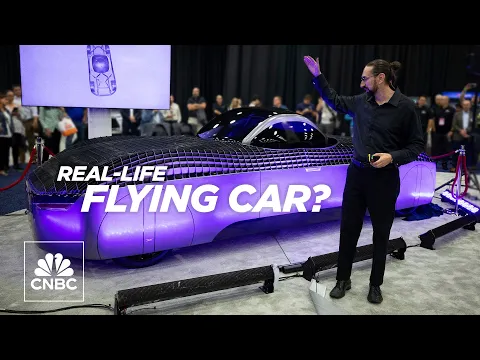

With a range of up to 200 miles, about 322 km on highways and 110 miles, equivalent to 177 km in flight, the Model A is priced at US$ 300,000. Since it began accepting reservations in October 2022, the electric flying car has already received over 3,000 orders, resulting in an impressive potential revenue of up to US$ 750 million.
The company made history by becoming the first to secure orders for a flying car through a car dealership in California, a significant milestone that bridges the automotive and aviation industries.
-
Toyota Launches First 100% Electric Car in Brazil: bZ4X with 343 HP, All-Wheel Drive, 361 km Range, Priced at $419,990 BRL, Limited to 99 Units

-
Chinese SUV Achieves 24.4 km/l, Outperforms Toyota Yaris Cross in Real-World Tests with 224 hp Hybrid System, Offers 51-Liter Tank for Greater Range, and Costs Up to R$ 5,000 Less.

-
Uber Black Revamps Fleet, Drops Ten Car Models and Sets Deadline for Electric BYD Dolphin
-
Chinese Giant Uses Metal Structures and Cranes to Deliver Over 700 Electric Cars to Brazil


It is important to note that recently, Alef announced a contract with PUCARA Aero and MYC to produce aviation-grade parts, ensuring that the flying car meets rigorous standards of quality and safety.
These companies are known for their history of manufacturing components for major names in aviation, such as Boeing and Airbus. Production of the Model A is scheduled to start in the fourth quarter of 2025, with the first deliveries expected shortly after manufacturing begins.
Electric Flying Car Does Not Require a Runway to Fly
The flying car does not have large wings and does not require a long runway to take off. Thus, its porous body conceals four propellers that provide the necessary lift to get it off the ground. According to the company, the electric flying car was developed to drive on the street, take off vertically when necessary, and fly over traffic.
The startup plans to begin production of the model in the fourth quarter of 2025 and initiate deliveries shortly thereafter. In addition to the Model A, Alef is already working on its next vehicle, the “Model Z,” a four-door electric flying car, with a projected launch in 2035 and an attractive price of only US$ 35,000.
This model aims to expand access to futuristic transportation, making flying cars more accessible to a broader audience. Alef is thus paving the way for a new era of personal mobility, combining technological innovation and accessibility.
Growth in the eVTOL Market
In addition to this electric flying car from Alef, the Brazilian startup Vertical Connect is expected to introduce a family of flying cars or eVTOLs (electric vertical takeoff and landing vehicles) called Genesis this year. The company, which operates in the aviation sector, plans to launch different models in the second half of 2024.
Each has been designed for various functions, from air taxi for two people to assistance in agribusiness. The pioneer of the line will be the GX-AB, designed for irrigation in the field and capable of carrying up to 200 liters on board. The G-X1 is an air taxi for short trips that can carry up to 2 people with one hour of flight autonomy per charge.
The rest of the line will consist of the GX-H, an air ambulance, GX-F, for firefighting, the GX-P, for police use, and the GX-L, with a capacity to carry up to 560 kg, focused on the logistics sector. The flight autonomy is up to one hour at about 500 meters altitude. The maximum speed is 130 km/h.








Be the first to react!