






 Portuguese
  Spanish


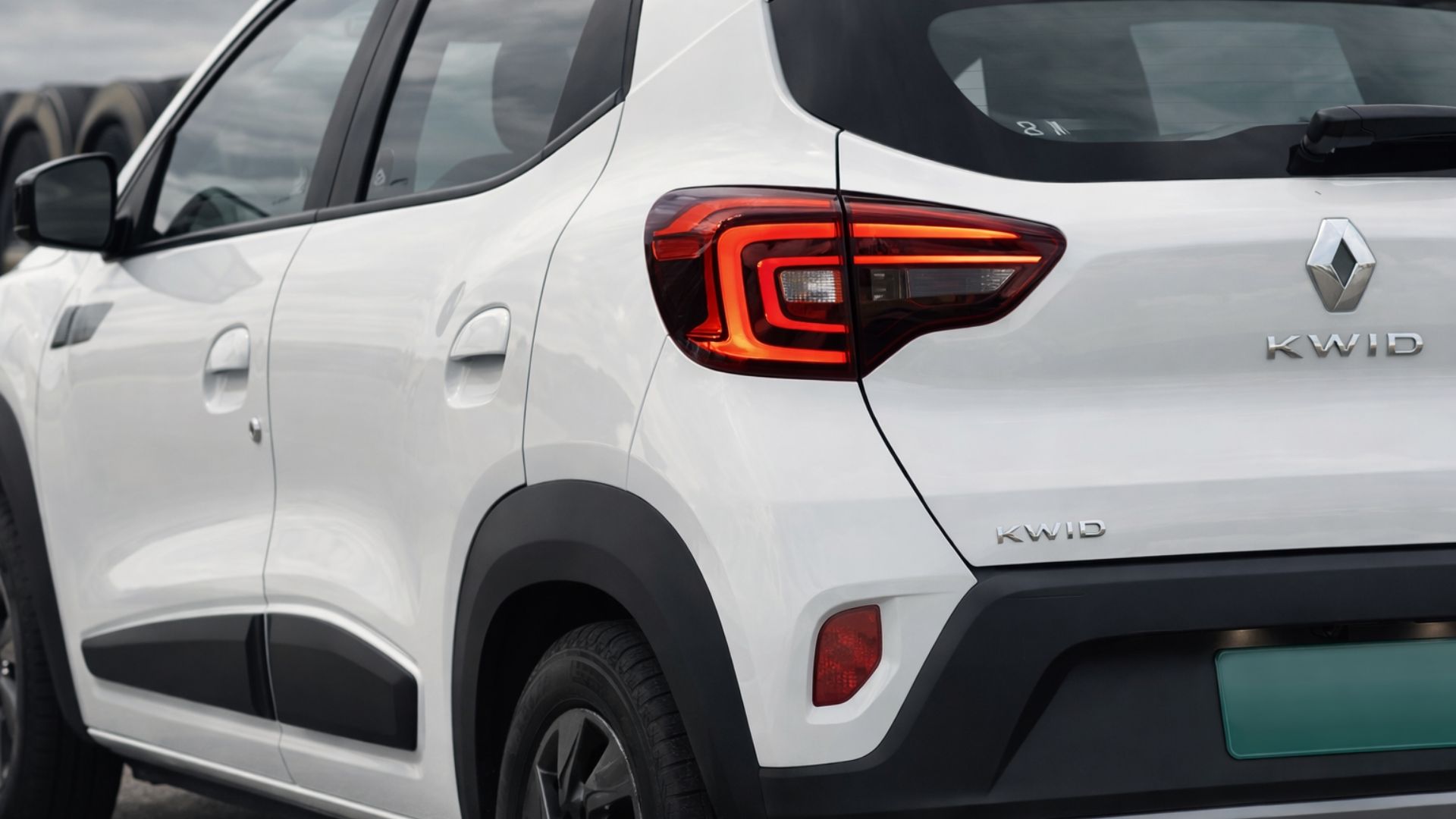


Discreet Changes on the Outside and More Visible on the Inside Mark the Next Phase of Renault’s Subcompact, with Updates in Connectivity and Finishing, a Unique Detail in the Roof, and Adjustments in the Front and Rear Design, Keeping Focus on Cost and Simplicity.
The Renault Kwid, currently sold as the cheapest new car in the Brazilian market, will undergo a makeover for the 2027 line, with production set to begin in 2026 and changes focused on connectivity, finishing, and design details.
Among the updates already pointed out by leaks and industry investigations are the replacement of the front antenna with a rear shark fin type, an updated interface multimedia center, and a redesigned cabin, without changing the engine.
Shark Fin Antenna on Kwid 2027 and the End of the Meme
The most talked-about update involves replacing the conventional antenna, currently located at the front of the roof, with a more discreet rear antenna in the shape of a “fin” or shark, following a common solution in higher-category cars.
-
Chevrolet’s Parent Company to Invest Billions in Brazil to Modernize Factories, Update Cars, and Accelerate Hybrid Launch by 2028

-
Practical Driving Tests in Brazil Surge by 23.5%, Exceeding 2.2 Million by 2026, as New Rules Make the Process Cheaper and Simpler
-
Brazil’s Lula Government Allocates $463 Million Quota for Electric Car Parts, Waives Import Tax Until December, Sparking Competition Among BYD, Automakers, and Unions as Consumers Question Impact on Prices and Local Industry

-
Thinking of Installing LED Headlights? Why Replacing Halogen Bulbs is Still Banned, the Glare Risks Authorities Worry About, and How a New Proposal Could Allow Certified, Safe Installations


With this, Renault eliminates an element that became a recurring joke on social media, associated with videos that popularized the joke “Kwid on the street, antenna to the moon,” due to its high aspect and unusual positioning.
Images of test prototypes shared by users and circulated in automotive publications indicate that the Kwid 2027 Brazilian model should be the first in the family to adopt this type of antenna, something that does not appear even in the Kwid E-Tech or the Dacia Spring.
The change, although simple, reinforces the intent to update the model’s appearance with low-cost interventions, without altering the car’s structure and without changing the focus on the entry price.
Restyling of the Kwid 2027: Grille, Bumper, and Taillights

On the outside, the restyling is expected to be restrained, maintaining the overall identity of the subcompact and preserving the logic of easily replaceable parts, but with tweaks in the grille and bumper to bring the car closer to more recent lines of the brand.
What appears in the leaks is a narrower upper grille and an enlarged lower air intake, a combination that usually seeks a more “settled” visual aspect without requiring deep stamping changes.
Another anticipated change involves halogen headlights housed in the bumper, which are expected to be slightly smaller and with more horizontal frames, while the LED daytime running lights and turn signals, at the top, tend to follow the current arrangement.
At the rear, the expectation is to maintain the shape of the taillights, with a review of the internal design and a darker finish, highlighting luminous strips, but without adopting a bar that connects the pieces.
Still under camouflage in test units, the area of the emblems suggests the adoption of the new Renault logo, aligned with the latest visual identity of the automaker, without this meaning a complete change of language, as seen in completely new projects.
Even with small finishing differences and possible changes in wheels and external details, the combustion Kwid 2027 should maintain a unique visual set, without fully replicating solutions seen in the electric version.
New Multimedia Center and Redesigned Interior
The main transformation, according to already published information and reinforced by test images, is expected to appear inside the car, with an updated dashboard and a multimedia center with a more modern interface, approaching the standard adopted in the Kardian.

This change meets a demand from the entry segment, where connectivity and ease of use have gained weight in the purchasing decision, even when the consumer prioritizes cost and economy.
In addition to the new software screen, the instrument cluster is expected to receive revised graphics, and the finishing of the central console, trims, and contact areas in the cabin is likely to undergo changes to improve the perception of quality.
The air conditioning, however, should retain manual controls, maintaining the proposal for simplicity and cost control, a characteristic that helps sustain the model’s positioning as the brand’s entry-level vehicle.
With this strategy, Renault seeks to deliver visible changes in the driver’s daily routine, as the experience behind the wheel and the use of the multimedia system weigh more in everyday life than small differences in the grille or bumper.
At the same time, the brand avoids increasing the complexity of the car too much, which could impact pricing, maintenance, and even the availability of parts, sensitive factors for the segment’s audience.
Dimensions and Trunk of the Subcompact
The dimensions are not expected to change significantly, and the Kwid should continue to measure approximately 3.73 meters in length, 1.76 m in width, 1.48 m in height, and 2.42 m in wheelbase, preserving the urban proposal.

The trunk, with 290 liters, is also expected to be maintained, as well as the ground clearance at around 18.5 cm, one of the points valued by those who drive on uneven streets and frequently encounter speed bumps.
1.0 SCe Engine with 71 hp and Manual Transmission
In the mechanical assembly, the expectation is for the continuation of the 1.0 SCe flex three-cylinder, 12-valve engine, naturally aspirated, with a power output of 71 hp on ethanol and torque around 10 kgfm, without adopting phase variation.
The transmission is expected to remain a five-speed manual, keeping the simplest and cheapest configuration, with no indication of changes to automated or automatic transmission in this specific update.
This maintenance of the powertrain indicates that the restyling aims to improve appearance, connectivity, and finishing without altering consumption, performance, and behavior already known from the current model, which sustains the reputation of an affordable and economical car.
With production projected to begin in 2026 and arrival in the market soon after, what remains to be seen is how Renault will balance the updates with the entry price — will the Kwid 2027 manage to maintain its position as the cheapest without losing ground to rivals and used cars?









Me parece muy bien aunque sea un vehículo delicado en mantenimiento, osea que debes utilizar aceite full sintético 5w40 y no el que te da la casa comercial ese 15w40, no pasarse en los límites de aceite por qué eso dañaría los empaques, tener pendiente la temperatura por ser un vehículo con una temperatura de trabajo de 90°c a los 100°c y realizar los cambios de refrigerante cada 60mil o menos, cuidando esos aspectos y utilizando gasolina premium el carro se mantiene en exelente condiciones, hay muchos mecánicos hablando de que es un exelente motor que necesita los cuidados necesarios y no dará molestias, pero si le empiezas a poner aceites minerales sin aditivos el resultado será bajar máquina tan pronto
O mais barato kkkkkkk 70 mil kkkkkkkkk
Em vez de mudarem tanto o visual, porque não arrumam a questão do motor ser fabricado sem juntas na tampa da válvula. Usam plástico como tampa e uma cola que com o tempo se desloca e causa vazamento de óleo na junta. Uma vergonha que existe desde que o carro foi criado. Azar dos proprietários e dos mecânicos, pois nem eles querem mexer nisso. O carro é muito bonito e bom de dirigir, mas a sensação é que a Renault não está nem aí para essa condição grave do motor com futuro vazamento de óleo.