Portuguese
  Spanish




Project on the Coast of Alagoas Transforms Plastic Waste Collected from Beaches into a High-Standard Residence with 450 m², 18,000 Modular Blocks, and Nine Tons of Recycled Material, Uniting Industrialized Construction, Dry Work, and a Promise of Lower Environmental Impact in 30 Days.
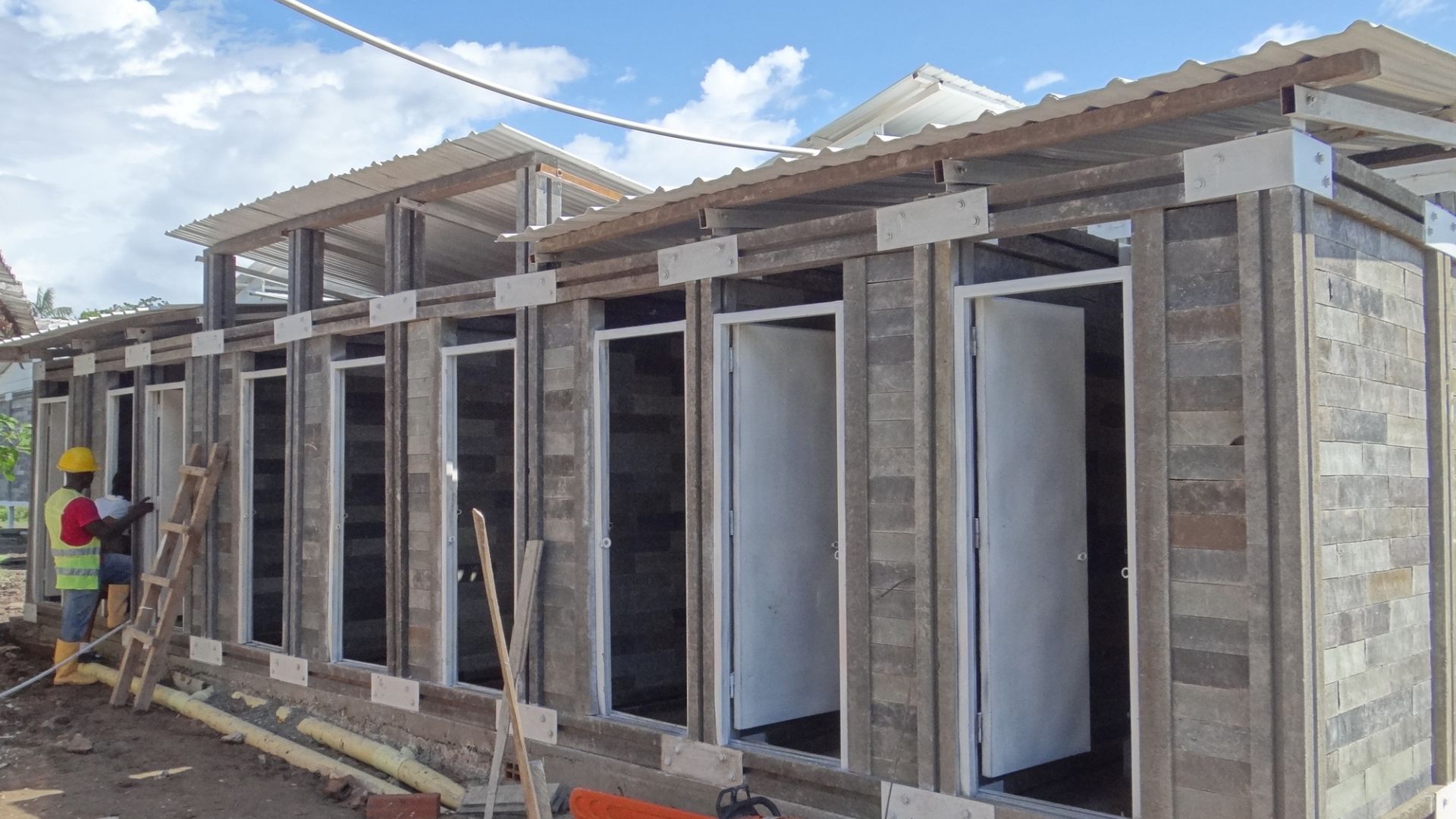
A residence of 450 m² built in São Miguel dos Milagres, on the coast of Alagoas, has gained attention for using recycled plastic collected from beaches as part of its structure, in a modular assembly system that, according to public reports, allowed for completion in about 30 business days.
Named Casa Milagres 9.0, the project reportedly employed approximately 18,000 standardized blocks and incorporated around nine tons of plastic waste, numbers echoed in industry reports and communications linked to the company responsible for the construction method.
The interest surrounding the project focuses on the combination of scale and materiality, as it involves a high-standard house with a large built area that places plastic reuse at the center of a complete residential construction.
-
Giant 3,600-ton Crane Breaks Two World Records by Installing World’s Largest Single-Piece Forged and Welded Hydrogenation Reactor, Weighing 3,037 Tons, in Chinese Petrochemical Plant in Just Six Days

-
$80 Million Bridge in Brazil Cuts Travel Time from 30 Minutes to 1 Minute, but Audit Reveals Major Flaws
-
Man Builds Stone Bed with Granite Rocks and Hand-Sawn Cedar Beams, Home Extension Garners Over 437,000 Views on Bonus Bolts Channel

-
Brazilian Researcher Develops Color-Changing Roof Tile to Reduce Air Conditioning Use by Up to 15%



Reports describe the property as a showcase for the system, in the region known as Costa dos Milagres, and point out that the assembly is based on components that arrive ready at the construction site.
In these descriptions, the method is associated with reduced debris generation, as it eliminates typical steps of conventional masonry, replacing part of the “wet” work with an industrialized assembly logic, with fitted and standardized components.

Modular Construction with Recycled Plastic in the Northeast
The authorship of the system is attributed to Fuplastic, a company that promotes construction solutions made with recycled plastic and characterizes the process as “dry work,” with the promise of schedule predictability and a more organized site than traditional methods.
In institutional content, the company claims to use “100% recycled technical polypropylene” in a line of blocks aimed at rapid assembly, indicating that the elements are produced off-site and then transported for installation by fitting.
In the coverage of Casa Milagres 9.0, the fitting is described as the main operational differential, as it brings walls and partitions to the project in the form of modules, rather than relying on constant mixing of materials and improvised cuts on-site.
Nine Tons of Waste Collected from Beaches Become Structure
The project’s narrative emphasizes the origin of the recycled input, pointing out that the material used in the construction came from waste collected on the coast, transforming a recurring environmental liability into a permanent use component.
In a report that portrayed the house as a demonstration on a real scale, the experience was defined as a “habitable prototype,” with the aim of showing how recycling could stop being just a discourse and become part of structural solutions.
The same material also states that the residence has been made available for hosting, a strategy that increases the visibility of the method by allowing visitors to see the construction from the inside, as well as observe the finishing and organization of the spaces.

30-Day Deadline and 450 m² Scale Draw Attention
The publications that covered the project report that the blocks arrived ready and were assembled on-site, and set the execution time at around 30 business days, in a process that seeks to shorten steps and reduce rework.
In the property description, architectural program data is also presented, such as the presence of six suites and the internal organization around a large central void, shown as a feature to promote natural ventilation and thermal comfort.
Although coverage treats the house as a regional landmark for the company, the case also serves a demonstrative effect by going beyond smaller prototypes, applying the modular system in a large-scale, high-standard residence.
Less Concrete and CO₂ Reduction Estimate
Among the highlighted elements, an industry report states that the pool was designed as a naturalized lagoon of 100 m², instead of a conventional concrete model, and that the decision avoided the use of more than 60 m³ of the material.
This aspect is presented as part of the strategy to reduce materials associated with emissions in the production chain, even though estimates depend on comparison criteria and inventories that vary according to project, logistics, and technical specifications adopted.
The discussion about climate impact arises with a specific estimate: a report published on January 27, 2026, states that the project would have avoided more than 18 tons of CO₂, a value compared in the text to the annual absorption of 114 mature trees.

The same approach links the reduction to a project with ready-made modules, which tends to reduce waste and movement of inputs, in contrast to site routines that generate leftovers and require a larger volume of materials mixed on-site.
Still, the consulted reports do not detail the complete methodology of the calculation, such as inventory limits, emission factors used, and which stages of construction are included in the count, which prevents independent verification based solely on the published material.
Industrialized Construction and Advancement of Dry Work in Brazil
The use of fitting modules is part of a broader movement towards industrialization in construction, where companies seek to standardize components to reduce schedule uncertainties and better organize the site, with fewer “wet” operations.
In technical and institutional texts on the topic, Fuplastic also relates its blocks to attributes such as repeatability and traceability of recycled content, as well as mentioning the possibility of integrating coatings and complementary systems according to the project.
With Casa Milagres 9.0, the argument was tied to a concrete and visitable work, which facilitates the practical assessment of aspects such as assembly, perceived performance, and finishing, without relying solely on models or isolated demonstrations.