Portuguese
  Spanish


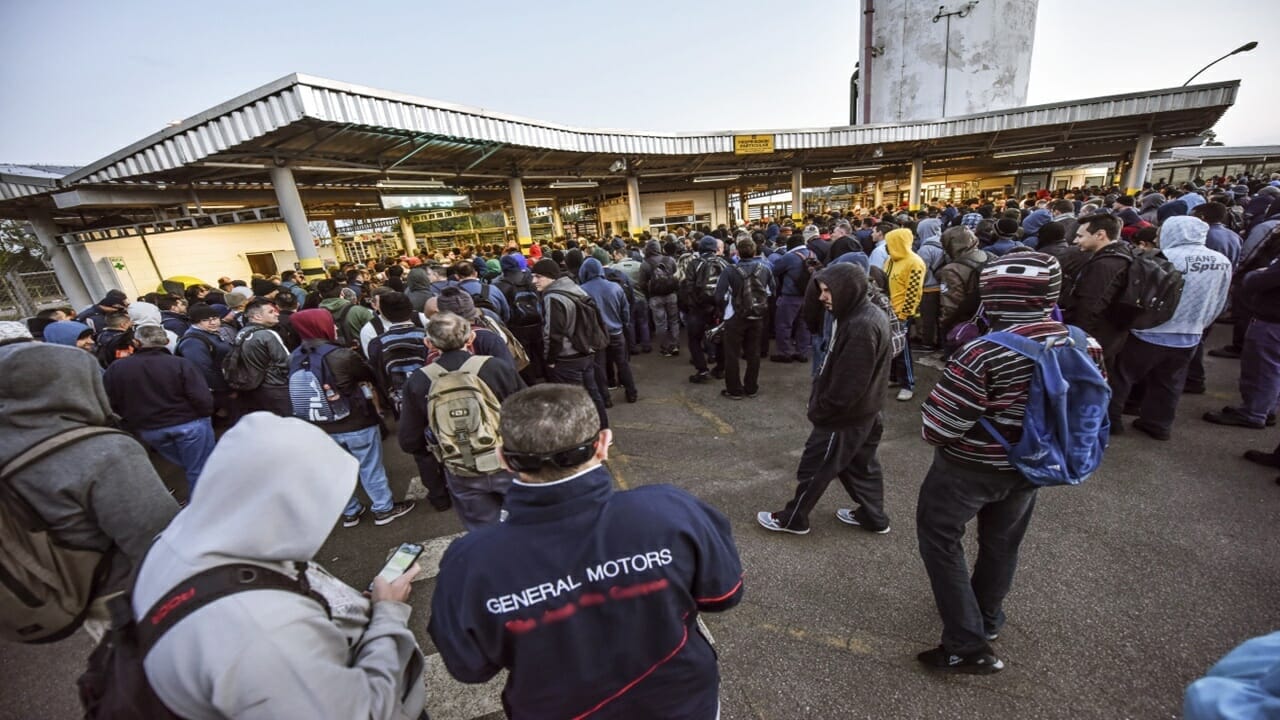

Regional Labor Court Upholds Decision Against Layoffs by General Motors in São José dos Campos
The Regional Labor Court maintained its position in a recent ruling against General Motors (GM), denying the company’s appeal and reaffirming the invalidation of the 839 layoffs made at the São José dos Campos plant, São Paulo. The rejection of the appeal, decided by Judge João Alberto Alves Machado, compels the automaker to reinstate the dismissed employees.
In the previous week, a preliminary injunction issued by the same judge had instructed GM to rehire the employees and cease new dismissals, as well as to maintain the rights and working conditions prior to the layoffs. Should GM fail to comply with the reinstatement of employees, the company is subject to a daily fine established by the court.


In response to the court decision, an assembly with the employees resulted in the continuation of a strike, persisting until the full execution of the decision by the vehicle manufacturer.
-
At 14 years old, she worked in a factory in Hong Kong, studied economics abroad, and then entered the Chinese real estate market, which helped change the landscape of Beijing.

-
While NATO secured more than $10 billion in missiles and space surveillance at a single forum, Brazil still spends 1.1% of its GDP on defense and is stalling its own anti-aircraft system.

-
Corn ethanol attracts R$ 23 billion in 21 new plants and prepares for a nearly 50% jump in Brazilian production by 2027, even with high interest rates.
-
A newly opened terminal in the middle of the Amazon has begun transporting soy and corn through Amapá, eyeing the queue of ships that is congesting the ports in the South.


Context of Layoffs at GM
- Initial Announcement: On October 21, GM announced layoffs at three of its units in São Paulo, including São José dos Campos, São Caetano do Sul, and Mogi das Cruzes.
- Method of Communication: Employees were notified via email and telegram, and the exact number of those affected was not initially disclosed by the company.
- Motivation: GM justified the layoffs by citing reduced sales and exports, claiming the need to adjust its workforce.
The layoffs caught workers and unions by surprise, who pointed out the lack of prior negotiation regarding the dismissals. In São José dos Campos, union members demanded the cancellation of the layoffs, supporting their claim based on a previously signed stability agreement.
The Workers’ Response
Workers from all three factories went on strike in protest against the measures, determined to only return to work after the layoffs were revoked. During this period, there were protests and attempts to reach an agreement, but talks between GM and the unions did not result in consensus, even with mediation from the Ministry of Labor.
Subsequent Actions
GM remained in negotiations with the workers’ representatives, and despite attempts at conciliation, such as discussing a Voluntary Dismissal Program (VDP), there was no substantial progress. As events unfold, expectations turn to upcoming meetings and possible resolutions.
This case highlights the complexity of industrial relations and the importance of compliance with labor laws, as well as the significant role of Labor Justice in mediating disputes between corporations and employees. Stakeholders continue to seek a solution that balances workers’ rights with the company’s operational needs.
After All, Does a Business Owner in Brazil Have the Right to Dismiss Anyone They Want, Provided Labor Rights Are Paid?
Yes, in Brazil, a business owner has the right to dismiss employees, as long as the rules established in the Consolidation of Labor Laws (CLT) and other relevant legislation are followed. However, there are some restrictions and specific conditions that must be observed:
- Prior Notice: The employer must notify the employee about the dismissal in advance, which varies according to the length of service, or pay the severance notice indemnity.
- Payment of Severance Pay: All due severance pays must be made, such as salary balance, accrued and proportional vacation with a 1/3 bonus, proportional 13th salary, and FGTS with a 40% penalty on the amount deposited during the employment period.
- Respect for Temporary Stabilities: There are situations where the employee cannot be laid off, such as in cases of temporary stability due to pregnancy, work-related accidents, or while being a member of the Internal Committee for Accident Prevention (CIPA).
- Motivation: Although the CLT allows dismissal without just cause, meaning without the need to specify a reason, discriminatory dismissals are prohibited and may result in the reintegration of the employee.
- Collective Negotiation: In certain situations, especially in cases of mass layoffs, negotiation with representative unions may be necessary to define conditions that can mitigate the social impact of the dismissals.
- Just Cause: When an employee is dismissed for just cause, the employer must have solid grounds and proof that the employee committed one of the acts provided for in the CLT that authorize this type of dismissal.
- Compliance with Legal Procedures: In some categories and specific situations, there are additional legal procedures that need to be followed.
The Labor Court is always open to receive labor complaints if the employee believes their rights have not been respected in the dismissal. Judicial decisions can influence the process, as in cases of decisions that suspend mass layoffs or in special situations.