






 Portuguese
  Spanish


China Reveals AI Glasses That Project Invisible Screen in Front of Eyes and Eliminate the Need for a Phone: 300,000 Sold
In February of this year, during an economic forum in China, the founder of Rokid surprised the audience with a phrase that quickly went viral on social media: “My speech is in my glasses, so I don’t need a transcription.” The remark caught attention not only for its boldness but also for the device he was wearing: the Rokid Glasses, smart augmented reality glasses that promise to be the next major technological revolution after smartphones.
Weighing only 49 grams, with a design similar to regular glasses and long-lasting battery life, the device combines artificial intelligence, virtual image projection, and real-time navigation in a single portable accessory. Rokid’s proposal stands out not only for the embedded technology but also for the way the glasses integrate seamlessly into daily life.
More Than an Accessory: A Growing Technology Platform
During the presentation, Rokid’s CEO, Zhu Mingming — known as “Misa” in the tech world in China — not only explained how the glasses work but also demonstrated live how he could switch slides using a smart ring while reading WeChat messages projected in front of his eyes. All of this without interrupting his speech or diverting his gaze from the audience.
-
China Develops Custom 140-Ton Electric Mining Truck with 770 kWh Swappable Battery, Deploys 290 Units in Xinjiang’s Largest Zinc Mine

-
Meta to Launch Arena, a New Prediction App Targeting 3.56 Billion Users, Competing with Polymarket and Kalshi

-
Scientist Challenges Famous Human Evolution Theory, Argues Homo Sapiens Evolved Gradually Over Thousands of Years
-
15-Year-Old American Builds Ocean Generator with PVC Pipe and 3D-Printed Propeller for $12, Wins National Prize, Presents at White House, and Makes Forbes 30 Under 30 List




According to Zhu, previous models of smart glasses did not succeed because they were “too large or had little capacity,” being, in practice, little more than “Bluetooth headsets with a display.” The new generation from Rokid aims to correct these shortcomings.
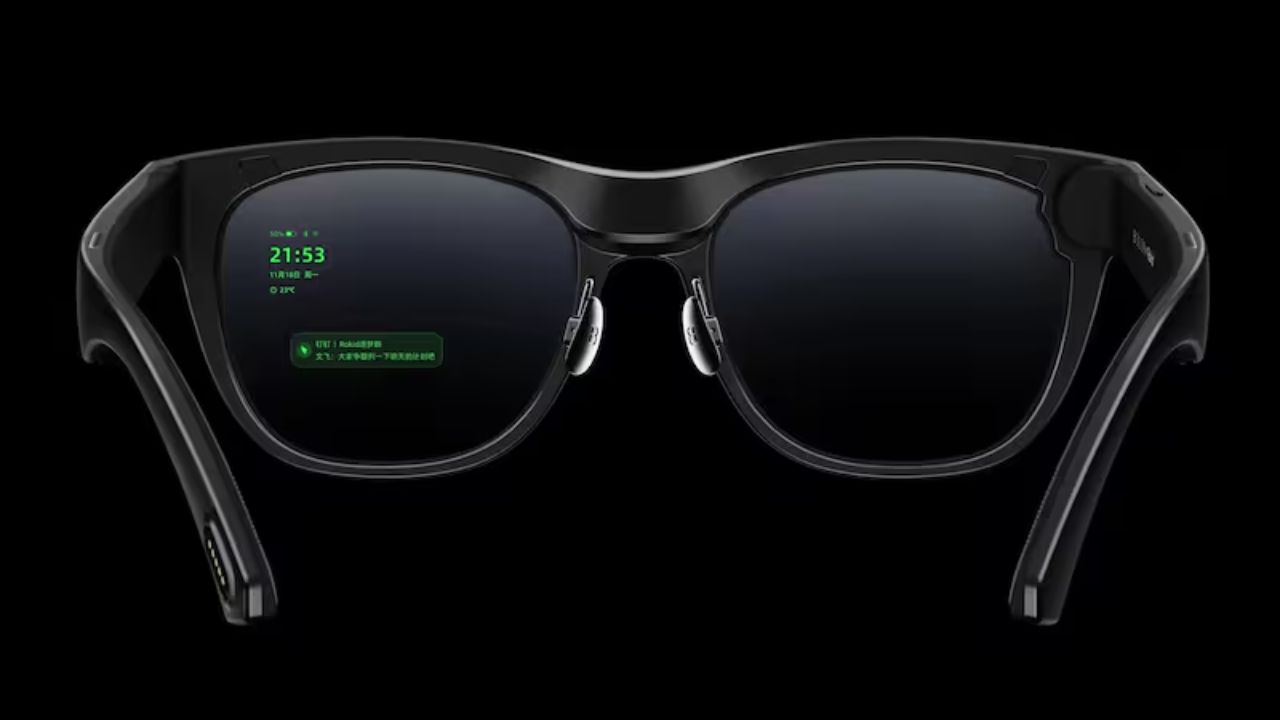
The Rokid Glasses allow users to view real-time captions, instant translations, GPS directions, and AI-generated responses directly on the lenses. All of this is made possible thanks to advanced models of artificial intelligence developed in China, such as DeepSeek and Doubao.
With simple voice commands, users can ask to identify objects, receive calls, solve equations, or browse social media and watch videos — all without taking their phone out of their pocket.
Is the End of Phones Closer Than It Seems?
Zhu claims that more than 90% of Rokid’s budget is allocated to research and development (R&D), making the company a powerhouse of innovation even compared to international standards. This investment is already paying off: after the glasses were presented at the Consumer Electronics Show (CES) in Las Vegas, global interest skyrocketed.
With an estimated price of 3,000 yuan (approximately R$ 2,250 or US$ 418), Rokid’s glasses are much more affordable than international competitors, whose prices easily exceed 10,000 yuan. This aggressive pricing strategy has been fundamental for the company to reach the milestone of 300,000 units sold in a short time — a number that even surprised Rokid itself.
“The challenge now is to manage timely deliveries,” Zhu admitted, acknowledging that the product’s success also depends on public acceptance. “Smart glasses will be the next major platform after smartphones, but the market is still being educated for that,” he explained.

From the Heart of the Chinese Optical Industry to the Future of AI
Rokid does not want to simply sell a product — it wants to transform an industry. In Yujiang, Zhu’s hometown located in Jiangxi province, where more than 260 companies in the optical sector operate, the company has entered into a strategic agreement with the local government to build a new production base.
The plan includes integrating the region’s supply chain and establishing partnerships with local universities to train a new generation of specialists in AI and precision optics. “The talent is already here,” Zhu stated. “The people of Yujiang know all about glasses. Now, we just need to teach them about smart glasses.”
The entrepreneur acknowledges that the change will take time but sees enormous potential for transformation. “If we can modernize this traditional industry and make it more innovative, that will be our greatest achievement,” he concluded.







E quem usa óculos com lente de grau?
Não e nem um pouco interessante sou mais smartphones