Portuguese
  Spanish


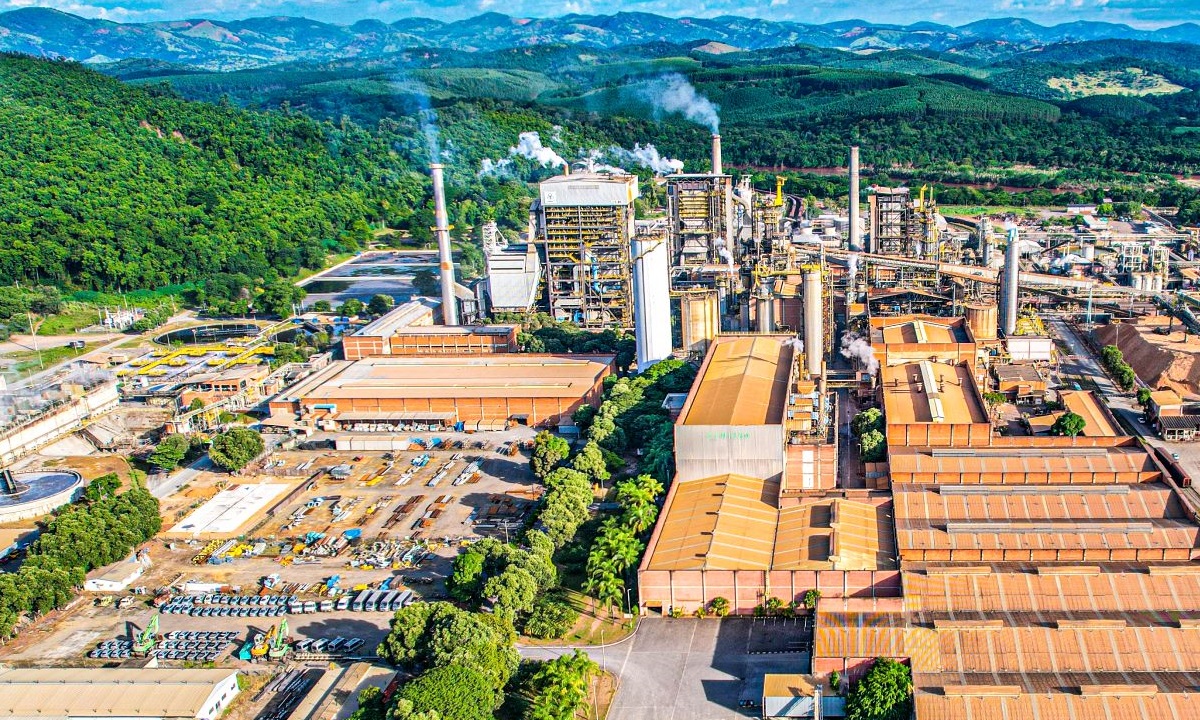

The Pulp Producer Cenibra Will Make Investments in Its Unit in the Municipality of Belo Oriente, Minas Gerais, Throughout This Year and Next Year
Cenibra, a company specialized in the production of pulp, announced an investment of R$ 300 million to modernize its unit in the municipality of Belo Oriente, Minas Gerais. According to the news outlet Diário do Aço, the information was confirmed by the company’s industrial and technical director, Júlio César Tôrres Ribeiro. The forecast is that the investments will be made throughout this year and next year.
During the opening of the 32nd edition of Expo Usipa – the largest business fair in the industry, commerce, and services sector in Minas Gerais – Júlio César stated that Cenibra began its operations in 1977, thus being a somewhat older factory.
According to the director, the company is reaching a moment where a modernization process is necessary, which is somewhat slow and will be carried out area by area. It is an investment made over the years, which for this year and 2023 will amount to approximately R$ 300 million.
-
28-meter, 156-ton titans traveled 20,000 km from China to the port of Santa Catarina: Portonave received 7 fully electric megacranes, part of a R$ 210 million package, to double container handling.

-
They exchanged the idea of a large house for a 35 m² warehouse, spent US$ 12,000 on the structure, and created a tiny house in Colorado with space to live and work.

-
A newly opened terminal in the middle of the Amazon has begun transporting soy and corn through Amapá, eyeing the queue of ships that is congesting the ports in the South.

-
Goodbye to old tiles: renovation technique without construction transforms bathrooms in a few hours, eliminates debris, and reduces costs with coverings using special paints, high-resistance adhesives, and modern finishes that completely renew the space.


Júlio César also indicated that there will not be an increase in the number of jobs due to the investments for now. However, he explained that although they will not immediately generate an expansion of job vacancies, the investments will create opportunities for new companies and new types of services that are attached to Cenibra’s industrial process in a simplified manner.
Moreover, the director also highlighted that investments in the bleaching and wood yard areas have already been made. According to his statements, the company is working on the washing and purification process of the pulp, which occurs right after cooking and before drying. Thus, the entire modernization process represents a significant challenge ahead, so that later the expansion of the factory can be promoted.
The CEO of Cenibra Assesses the Modernization Process of the Company and Says It Will Contribute to the Development of Minas Gerais
The CEO of Cenibra, Kazuhiko Kamada, also commented on the modernization process that the company is currently undergoing. Kamada stated that in September of this year, Cenibra will celebrate its 49th anniversary and that consequently, the equipment is getting old, so it is necessary to replace it with more modern and new ones.
He further added that Cenibra produces pulp through a work that begins from the planting of seedlings in the nursery. Thus, it is essential for the company to invest in all production processes, which is quite complex. The director emphasized that investments are being made throughout the entire production chain, in order to achieve a more modernized set.
Finally, Kamada noted that since the investments are multi-year, the company will experience considerable improvement, as well as the region in the state of Minas Gerais will also have its development boosted.
About Cenibra
Cenibra was founded in 1973 and is owned by Japan Brazil Paper and Pulp Resources Development – JBP, a group of Japanese companies. The company is located in the municipality of Belo Oriente, Minas Gerais, and has a production capacity of 1,200,000 tons of bleached short-fiber eucalyptus pulp. In addition, it has around 8,000 own and outsourced employees.
The pulp produced by Cenibra is distributed to major markets, such as Asia (46%), Europe (41%), North America (11%), and the domestic market (2%). The material is used for manufacturing cardboard, specialty papers, and papers for sanitary purposes. To meet its clients, the company has distribution centers and commercial and representative offices spread across Asia, Europe, and North America.