Portuguese
  Spanish


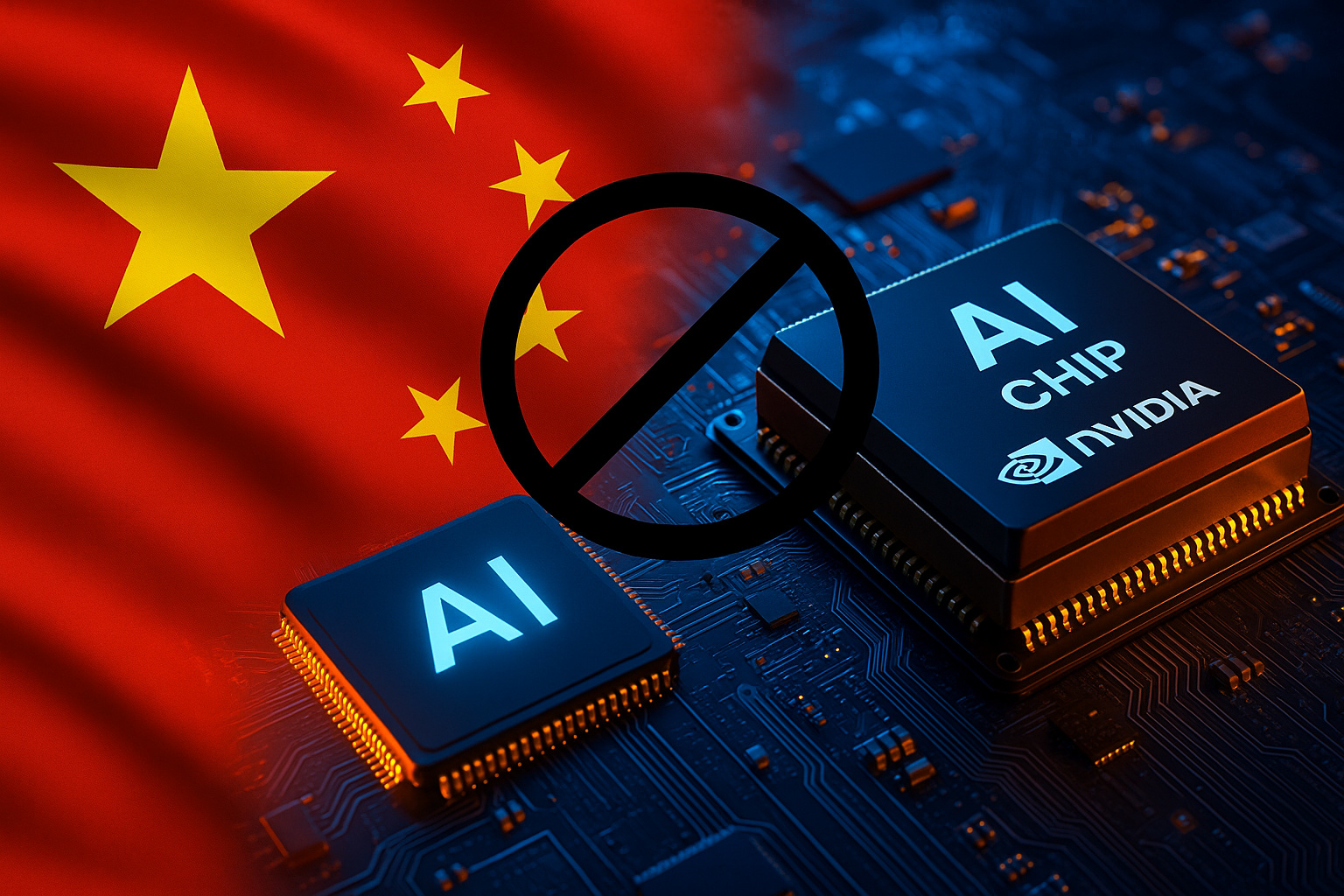

Unprecedented Ban Strengthens Technological Dispute Between the U.S. and China
The Cyberspace Administration of China (CAC) determined, on September 15, 2025, that large local companies should suspend purchases and testing of the RTX Pro 6000D chip.
The American Nvidia developed the chip exclusively for the Chinese market.
The Financial Times confirmed the measure on September 17 based on sources linked to the sector.
The decision reflects the policy of reducing reliance on foreign semiconductors.
-
Brazilian Entrepreneur Develops Device to Provide Companionship and Health Monitoring for Elderly, Alerting Families to Potential Health Issues

-
AI Customizes Burgers for Individuals and Impresses in Blind Test with Over 100 Participants, Matching or Surpassing Fast-Food Chains’ Approval Ratings

-
AI Revolutionizes Digital Entrepreneurship by Enabling Lean Startups and Rapid Scaling

-
The ‘tsunami’ of investments directed at Artificial Intelligence (AI) and semiconductor companies, which prioritize security and more predictable profits, has been a determining factor in the declining trajectory of Bitcoin.


Decision Supported by Antitrust Investigations
According to the State Administration for Market Regulation, Nvidia was found to be in violation of China’s antitrust laws.
For this reason, the company will remain subject to local investigations.
Consequently, orders for tens of thousands of units of the RTX Pro 6000D have been canceled.
Thus, companies that had already started testing had to halt their projects.
This move reinforces the Chinese government’s effort to consolidate domestic manufacturers and stimulate local supply chains.
Nvidia’s Reactions to Chinese Pressure
Nvidia’s CEO, Jensen Huang, expressed his views during a trip to the United Kingdom.
According to statements to the Financial Times, Huang intends to discuss the situation with U.S. President Donald Trump.
He stated that the company wants to remain in China but depends on political decisions between Washington and Beijing.
Thus, Nvidia reinforces its stance of strategic patience in the face of trade tensions.
The company recognizes that the dispute goes beyond the technology sector.
Context of Local Advances and New Government Guidelines
Chinese authorities indicated that the domestic semiconductor industry has already reached a level comparable to global leaders.
As such, they believe they can gradually replace the import of advanced chips.
In August 2025, Bloomberg reported that the government had recommended that companies avoid using Nvidia’s H20 processors.
The recommendation particularly applied to official applications.
Therefore, the most recent decision represents the continuation of a consolidated strategy for technological independence.
Trade Negotiations and International Impact
Nvidia had resumed shipments of H20 chips to China in July 2025.
The resumption occurred after an agreement with Washington that allowed exports conditioned on the payment of 15% of the revenue generated in the country.
The measure was accompanied by AMD, signaling a temporary easing of restrictions.
However, with the Chinese ban in September, this balance is disrupted again.
Thus, the race intensifies for China to advance its own innovation.
Meanwhile, the United States strengthens its vigilance over cutting-edge technology.