Portuguese
  Spanish



China Develops the CHSN01, an Ultra Steel That Withstands Extreme Cold and Magnetic Fields of 20 Tesla, Marking Advancement in Fusion Reactors
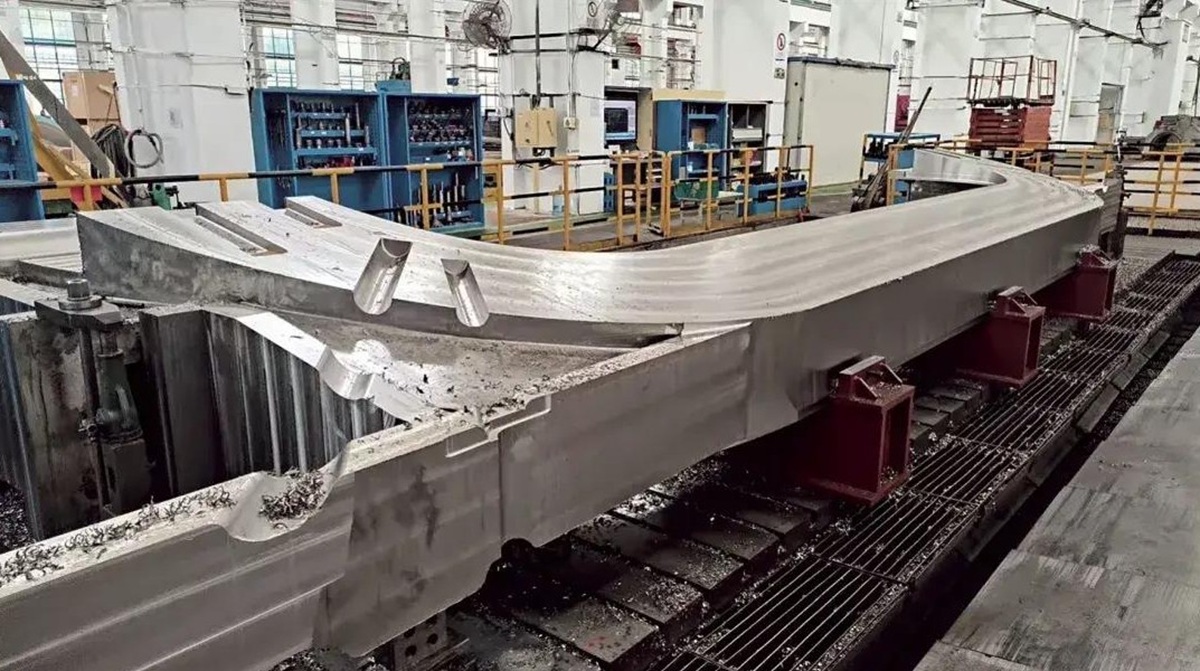
China has just taken an important step in the global race for nuclear fusion energy. Scientists from the country have developed a new type of ultra steel, called CHSN01, capable of withstanding the extreme conditions required by fusion reactors: temperatures close to absolute zero and extremely strong magnetic fields. This innovation marks a decisive advancement in materials engineering.
Historical Challenge of Nuclear Fusion
The most important aspect of fusion projects is to keep the superconducting magnets stable, even under strong thermal and magnetic stress.
This requires materials that not only resist cold but also deformation. For decades, finding a metal with these qualities seemed impossible.
-
Brazil Constructs First Japanese SABO Barrier in Nova Friburgo to Prevent Landslides, a $3 Million Concrete Trap for Rocks, Logs, and Mud

-
Brazilian Navy’s Technology Plays Strategic Role in Future of Small Modular Reactors, Boosting Nuclear Energy Capacity with Innovative Solutions for Power Generation and Industrial Applications

-
China Surpasses U.S. and Russia Combined in Submarine Production
-
Xiaomi Unveils Smart Glasses in Brazil with 12MP Camera, 4K Video, and AI Features, Challenging Ray-Ban Meta


Now, with the CHSN01, China claims to have overcome this barrier. According to local media, the material is being used in the construction of the world’s first fusion reactor aimed at energy generation, and not just for scientific testing.
Surpassing the Limits of ITER
Since 2011, Chinese researchers have been seeking alternatives to ITER — the International Thermonuclear Experimental Reactor, built in France.
Although this project is considered one of the most advanced in the world, it was designed for research, with no plans to produce electricity.
Li Laifeng, from the Chinese Academy of Sciences, warned about the limitations of ITER. He highlighted that its magnets operate up to 11.8 Tesla, but future reactors will require much more.
Therefore, China decided to follow its own path, betting on the development of an even more resistant steel.
International Skepticism and Chinese Turnaround
In 2017, Li presented his proposal in the United States during an international conference. The reception was lukewarm. Foreign experts believed that improving the 316LN steel — already used in ITER — was unnecessary. But the Chinese continued to insist.
With small changes in composition, such as the addition of vanadium and adjustments in carbon and nitrogen, results began to emerge. Even so, they still did not reach the level required for fusion. The turnaround only came with the support of Zhao Zhongxian, a renowned physicist and winner of China’s highest scientific award.
New Standard for the Future of Fusion
In 2021, China established strict standards for the materials of its fusion reactors: the steel should withstand 1,500 MPa of yield strength and have elongation above 25% in extreme cold.
The country also created a national alliance to develop the new steel, uniting institutes, companies, and specialists.
In August 2023, the CHSN01 was finally approved. It withstands magnetic fields of up to 20 Tesla and stresses of 1,300 MPa, maintaining fatigue resistance.
The material has already started to be used in the BEST reactor, whose assembly began in May 2023 and is expected to be completed by 2027.
Out of a total of 6,000 tons of reactor parts, 500 tons of conductors use CHSN01, all produced in China. The country also plans to apply this steel in other technological areas in the future.