






 Portuguese
  Spanish


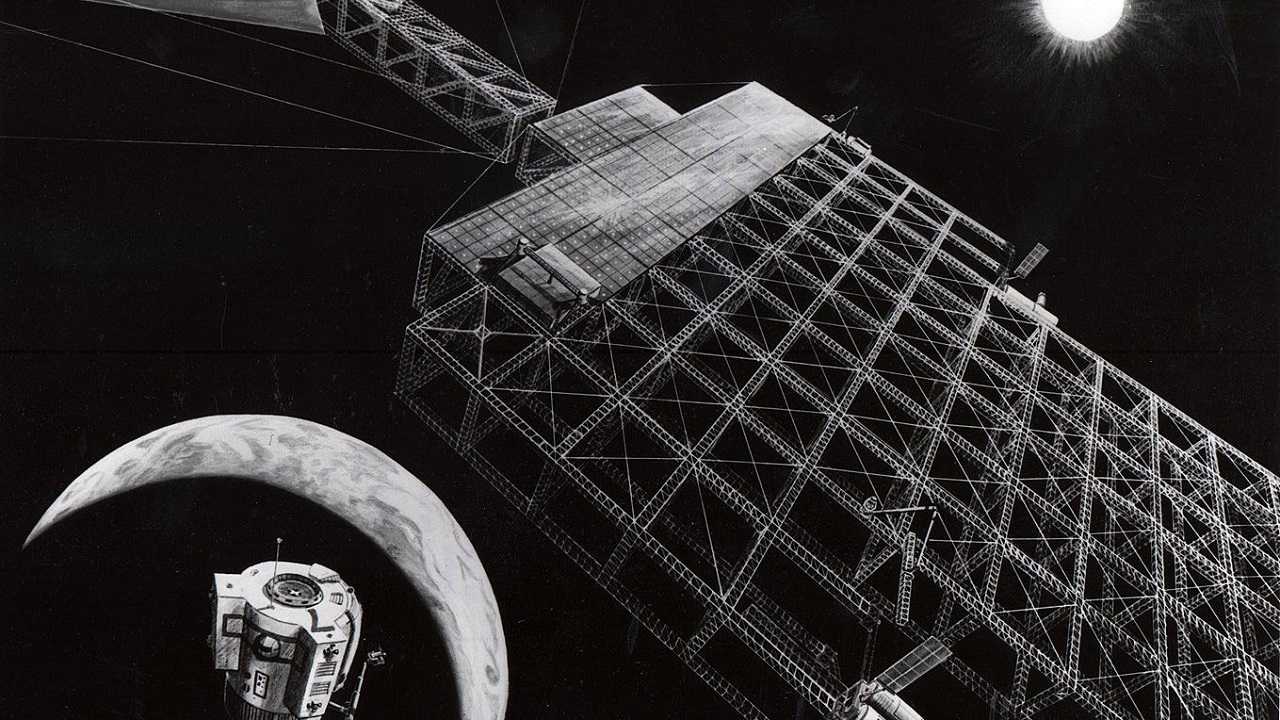

China Plans To Expand So Much In The Renewable Energy Market That Not Even Earth’s Orbit Is Out Of Its Plans. The Country Plans To Install Solar Panels In The Atmosphere By 2050 And Has Already Started Testing At Low Altitudes
China aims to dominate the renewable energy market and continues its plan to install a solar power unit in Earth’s orbit by 2050. The advantages are significant, but so are the challenges. From space, solar brightness is available all the time with no interruptions from clouds or nighttime, as occurs on the surface. Currently, China is completing the construction of its land base expected to be inaugurated by the end of this year and has already conducted some tests for energy transfer using balloons at altitudes of 300m.
Also Read
Bishan Experimental Space Solar Power Station In China Is Already In Testing Phase


The station has been named the Bishan Experimental Space Solar Power Station or can simply be called Bishan. The renewable energy station is located 45 minutes from Chongqing University, where Professor Zhong Yuanchang works.
-
Green Hydrogen Projects in Northeastern Brazil Stalled for 18 Months Awaiting Government Decree, Delaying Billions in Investments

-
Brazil Concludes Largest Energy Auction in History, Secures 18.97 GW and Mobilizes $12.8 Billion to Ensure Supply Until 2031
-
How Norway Produces More Energy Than It Consumes with Nearly 1,800 Hydropower Plants and Over 1,100 Reservoirs

-
Axia Energia Invests $280 Million in Q1, Increases Investments by 36%, and Turns Loss into $740 Million Profit


According to the professor, the unit has a somewhat complicated past. It was conceived in 2010 and stopped functioning since then due to political and financial issues, but it resumed operations in June of this year.
The first station based on the surface was built to capture solar energy from solar panels and power plants in Earth’s orbit. The greatest advantage may be the lack of weather and night, which deprives Earth of sunlight at certain times. The solar power base is aimed at large-scale testing in China, as well as integration, observation, and cultivation of this new way of harnessing renewable energy.
Electric Power Transmission Studies Are Promising
For now, the project is focused on constructing a small-scale test power plant to possibly become operational by 2030. However, for this to be possible, researchers need to evaluate renewable energy transmissions at lower altitudes before moving to altitudes greater than 2 km, transferring ultra-high voltage power until wireless energy transfer in China’s orbit is established by 2050.
In the initial tests, Chinese researchers used high-altitude balloons as a solar power platform and assessed the use of microwave power transmission at 300 m altitude.
Although it may seem new, this feat was already presented by Isaac Asimov in 1941 through his science fiction work “Reason.” As early as 1970, aerospace engineer Peter Glaser received a patent for a project that would transmit energy from satellites in orbit to the Earth’s surface via microwaves.
Other Agencies Explore Wireless Energy Transfer
NASA has also explored the concept several times, and since 1998, Japan’s space agency (JAXA) has been developing a space renewable energy system.
In addition to these entities, the U.S. Naval Research Laboratory has been conducting tests and research on this type of technology, as has Caltech. The UK Space Energy Initiative has also commissioned studies on the subject, and the International aims to send energy directly to static or mobile devices via its CASSIOPeiA transmitter.

Graduated in Journalism and Marketing, he is the author of over 20,000 articles that have reached millions of readers in Brazil and abroad. He has written for brands and media outlets such as 99, Natura, O Boticário, CPG – Click Petróleo e Gás, Agência Raccon, among others. A specialist in the Automotive Industry, Technology, Careers (employability and courses), Economy, and other topics. For contact and editorial suggestions: valdemarmedeiros4@gmail.com. We do not accept resumes!


