






 Portuguese
  Spanish


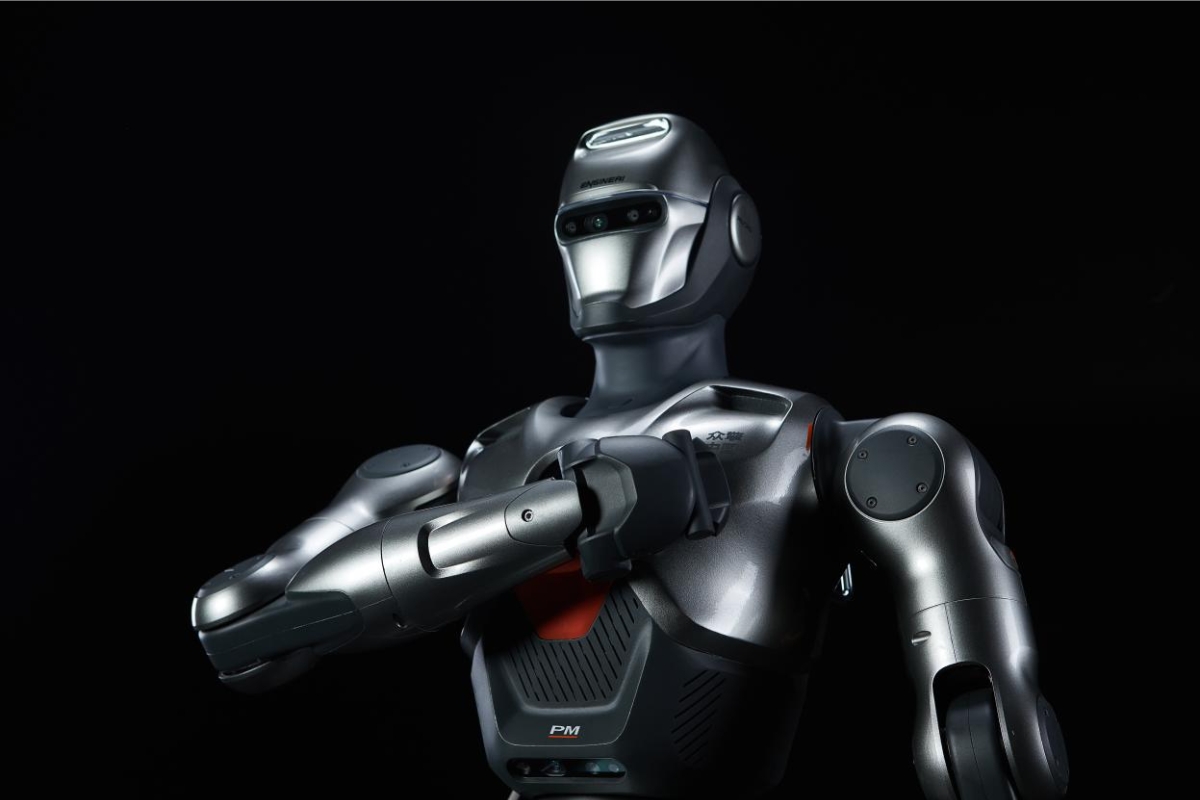


Engine AI Wants to Take the PM01 to Space from China to Execute Risky Tasks and Reduce Human Exposure in External Operations and Prolonged Monitoring
Engine AI, a Chinese manufacturer of humanoid robots, has announced plans to send a humanoid into space and attempt to create the world’s first robot astronaut.
The initiative aims at tasks that currently put people in risky situations, such as repairs, exploration, and monitoring in extreme environments.
The company, based in Shenzhen, reported a partnership with Beijing Interstellar Human Spaceflight Technology, a commercial space company, to launch the Humanoid Robot Astronaut Exploration Program.
-
Australia deploys poisoned sausages and uses traps, shooting, and fences in a battle against invasive cats that kill over 1.5 billion native animals annually, threatening more than 200 species.

-
NASA Rover Captures “Tired Face” on Mars, Highlighting Human Brain’s Tendency to See Faces in Rock Formations

-
Ancient Stone City in the Desert, Once Home to 30,000, Puzzles Scientists with Nabateans’ Water Mastery 2,000 Years Ago

-
Ancient Creature Thought Extinct Since Dinosaur Era Reappears, Baffling Scientists




The project envisions the use of the PM01 platform, described as a general-purpose intelligent system with high-precision environmental sensors, very quick motion response, and autonomous decision-making capability.
PM01 Joins the Plan as a Mission Platform with Sensors and Quick Response
The mission is set to take Engine AI’s PM01 to space, focusing on performance stability and task execution under conditions beyond Earth’s standard.
The company bets on combining environmental perception and motion control to enable operation in complex operational routines.
Space Environment Imposes Vacuum, Microgravity, and Radiation on the Robot

Engine AI evaluates that space demands more than ground applications, as it involves vacuum, microgravity, extreme temperature variations, and high radiation levels.
According to CNEVPost, a Chinese news site about electric vehicles, these factors push robotic systems beyond conventional operational limits.
Partnership Aims to Increase PM01’s Resilience and Autonomy in Complex Tasks
Engine AI reported that it will work with the commercial space company Interstellor to enhance the reliability of the PM01 in space environments.
The long-term goal is to have the robot operate independently in complex space tasks, with greater adaptability and resilience.
Use in External Maintenance and Exploration Could Reduce Risks for Crews
Engine AI argues that humanoids like the PM01 can surpass human physiological limits in specific missions and take on high-risk roles.
Examples cited include external maintenance of space stations, exploration of hazardous areas, and prolonged monitoring, reducing astronauts’ exposure to danger.
Ground Model Priced at $27,000 and Detailed Specifications
Last June, the company launched on JD.com a lightweight, highly dynamic, and open version of the robot, the PM01 JD Joy Inside, with a price of approximately $27,000.
The PM01 is described as compact for researchers, featuring an interactive central screen, bionic structure, aluminum alloy exoskeleton, and a waist that rotates up to 320 degrees.
Dimensions, Sensors, and Chips Include 1.38 Meters, Intel RealSense, and Jetson Orin
The PM01 measures 1.38 meters and weighs about 40 kilograms, being 27 centimeters shorter and 8 kilograms lighter than EngineAI’s larger humanoid SE01.
The demonstrations highlight visual perception with a Intel RealSense depth camera, as well as a dual-chip architecture with NVIDIA Jetson Orin and Intel N97 CPU to handle perception, motion control, and loads in real-time.
Interstellor also presented its route for commercial space flights at the global event Next Stop, Space, on January 22, with the CYZ1 expected for 2028 and a brief zero-gravity experience at 100 kilometers.
In the more advanced plan, the CYZ2 is designed to operate around 2032, aiming to reach 400 kilometers of orbital altitude and pave the way for actual space tourism.








Viva a China, parceira dos BRICS..
E se o robô quebrar, quem vai consertar ?