






 Portuguese
  Spanish


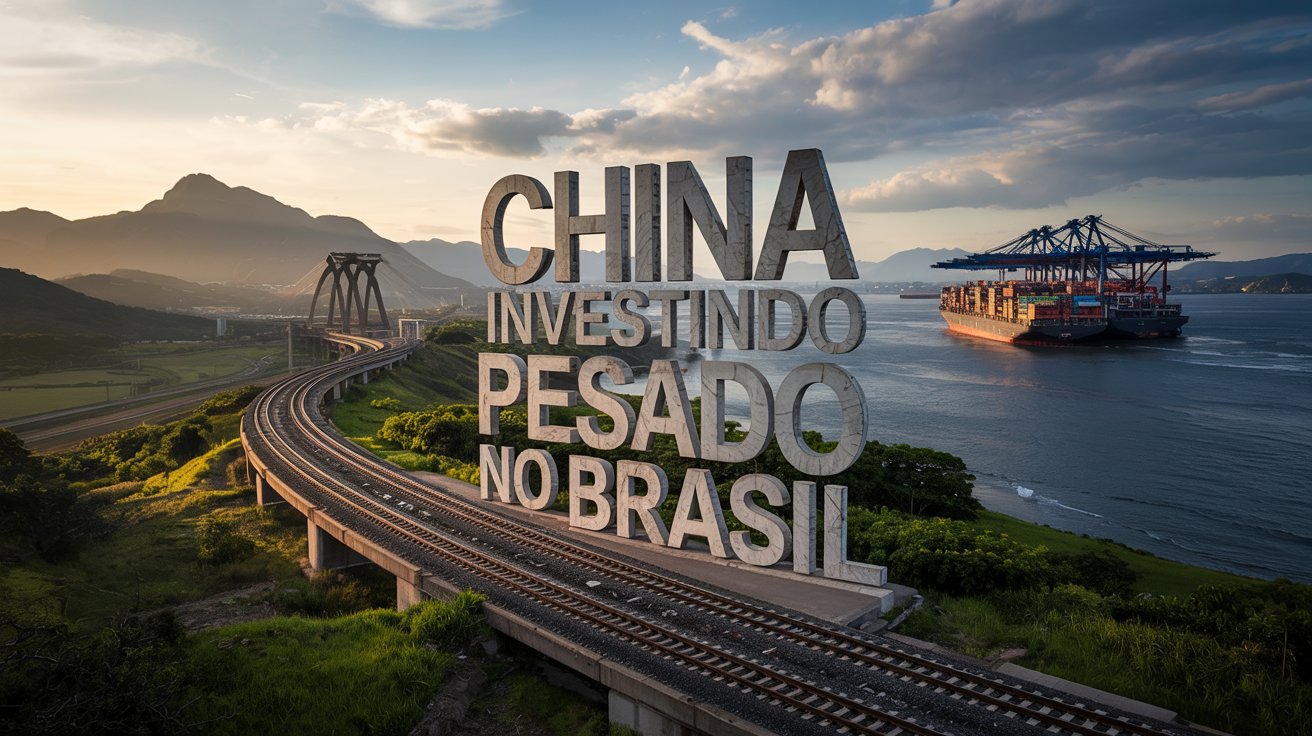


China Is Ready To Invest R$ 100 Billion In A Revolutionary Railway That Will Connect Brazil To The Pacific! The Transoceanic Promises To Be The Largest Infrastructure Project Of The Century, Facilitating Trade Between Brazil And Asia.
One of the largest railway infrastructure projects in the world may be on its way to Brazil.
The Transoceanic railway project promises to transform the logistics landscape of Latin America, directly connecting the Brazilian coast to the Pacific, passing through a new mega port in Peru.
With billion-dollar investments, China is alongside Brazil and Peru in executing this giant project that, if realized, could revolutionize trade between Latin American countries and Asia.
-
Brazilian City Makes Remarkable Leap, Becomes 4th Wealthiest in the Country with GDP of R$ 134.1 Billion

-
Controversial 6-day Workweek Elimination in Brazil Faces Economic Criticism Over Productivity Claims

-
Itaú to Refund Customers After 14 Years of Unauthorized Credit Card Charges; Agreement Includes No Interest or Adjustments, Deadline by 2028, with Potential Impact of Up to $6.5 Billion

-
Brazilian Company Grows from Bartering Soap for Food to Producing 30 Million Units Monthly, Challenges Global Giants with $100 Million Revenue and Expands into Premium Cosmetics



The railway, which was previously called EF-354, spans more than 4,400 kilometers just in Brazil.
It would start at the Port of Açu in Rio de Janeiro and cross the country until reaching the Peruvian coastline, where it would connect to the Chancay Mega Port in Lima.
The goal is to create a logistics corridor between the Atlantic and the Pacific, allowing for faster and more efficient transportation of goods between Brazil and major Asian markets, especially China.
Viable Project, But With Logistical And Financial Challenges
According to the Secretary of State for Development of Espírito Santo, Sérgio Vidigal, the construction of the Transoceanic could be a milestone for the Brazilian economy.
He emphasized that the project will create a direct link between Brazil and Asia, facilitating the flow of Brazilian products, such as soybeans, whose exports to China reach astronomical numbers, exceeding US$ 30 billion (about R$ 170 billion) per year.
“The railway will reduce costs and transportation time, making Brazilian products more competitive in the global market,” stated Vidigal.
In addition, the project still depends on private investments.
The Anchieta Branch, which connects Espírito Santo to Rio de Janeiro, will be the responsibility of the mining company Vale, which has already shown willingness to collaborate in the construction of one of the essential parts of the railway, the EF-118.
Structure Under Construction And Feasibility Studies Ready
Although the Transoceanic is an ambitious project, it is not just on paper.
Feasibility studies already exist that prove the necessity of this railway for the integration of Latin American markets with Asia.
Parts of the railway are already being constructed in Goiás, while the federal government promises to present more details about the project in the awaited National Railway Plan, which, after a delay, still has no date for disclosure.
The Chinese government, in turn, has also shown commitment to the project from the beginning, financing the section of the railway between Mara Rosa (GO) and Lima, Peru.
In 2015, an agreement was signed among the governments of Brazil, China, and Peru, with a promise of investments from China.
However, in 2024, when President Xi Jinping visited Brazil, the adherence to the Chinese “New Silk Road” program was discarded, but there was no retreat from the bilateral commitments for the construction of the Transoceanic.
Billion-Dollar Investments In Port Infrastructure In Peru
Another highlight of this international project is the Chancay Mega Port in Peru, which is already under construction.
With an estimated investment of US$ 3.4 billion (approximately R$ 20 billion), the port will serve as an entry point for Brazilian exports to Asia.
The mega port is being built by Cosco Shipping Company, a Chinese state-owned enterprise, which holds 60% of the project, while the other 40% is under the responsibility of the Peruvian company Volcan.
This port will be a fundamental link for trade between Brazil and China, creating a direct route between Shanghai and Chancay.
The expectation is that with the completion of the railway and the port, the transportation of goods such as soybeans and iron ore, essential products in Brazilian exports, will become much faster and more efficient, further boosting the trade relationship between the two countries.
Experts See Great Potential In The Transoceanic Project, But Warn Of Challenges
The coordinator of the International Relations and Foreign Trade courses at UVV, Daniel Carvalho, estimates that the total cost of the Transoceanic railway project will be R$ 100 billion.
The expert believes that the project can be a viable alternative in terms of financing, especially considering the role of the New Development Bank (NDB), also known as the BRICS Bank, in bringing the project to fruition.
“NDB financing offers more flexible conditions than those offered by the World Bank, in addition to competitive interest rates, making it attractive for new projects”, said Carvalho.
Thus, the railway can benefit from a financing model that is more accessible and aligned with Brazil’s needs.
Political And Logistical Challenges Still Need To Be Overcome
However, not everything is straightforward. The construction of part of the railway in Brazil faces political and logistical challenges.
The main obstacle, as pointed out by Fernando Otávio Campos, president of the Brazilian Hotel Industry Association in the State (Abih), is the lack of a schedule for the construction of the EF-118 stretch in Espírito Santo.
Without a defined start date for the works, the project’s feasibility could be jeopardized, potentially delaying returns on investment and regional development.
In addition, political issues, such as competition between states and municipalities, must also be overcome for the project to advance without interruptions.
The support of the private sector, especially large mining companies, will be crucial to enabling the construction of the necessary infrastructures, such as railway stations in key locations.
The Future Of The Transoceanic Railway And Its Impact On Brazil
The potential impact of the Transoceanic cannot be underestimated.
If the railway is completed, it will not only facilitate Brazil’s international trade with Asia but also enable economic development in regions of the country that have historically faced logistical difficulties.
With the construction of the railway, Brazil will have a new route for exporting its key commodities, which can ensure greater competitiveness in the global market.
However, there are still many steps to be taken before the project is realized.
Among the main challenges are financing the project, building railway infrastructure in critical sections, and overcoming political and administrative obstacles.
But if Brazil can overcome these barriers, the Transoceanic will undoubtedly be a turning point for international trade.
Do you think the Transoceanic will be able to transform Brazil into a logistics hub between Asia and Latin America? Share your opinion in the comments!






É FATO que, no Brasil, as ferrovias diminuiuram. Fosse assim, não era pra ter tantos caminhões nas estradas. Se o Brasil tivesse mantido e modernizado suas ferrovias, poderíamos ter um transporte mais barato, eficiente e sustentável. Ainda dá tempo de reverter isso, mas exige investimento e vontade política.