






 Portuguese
  Spanish


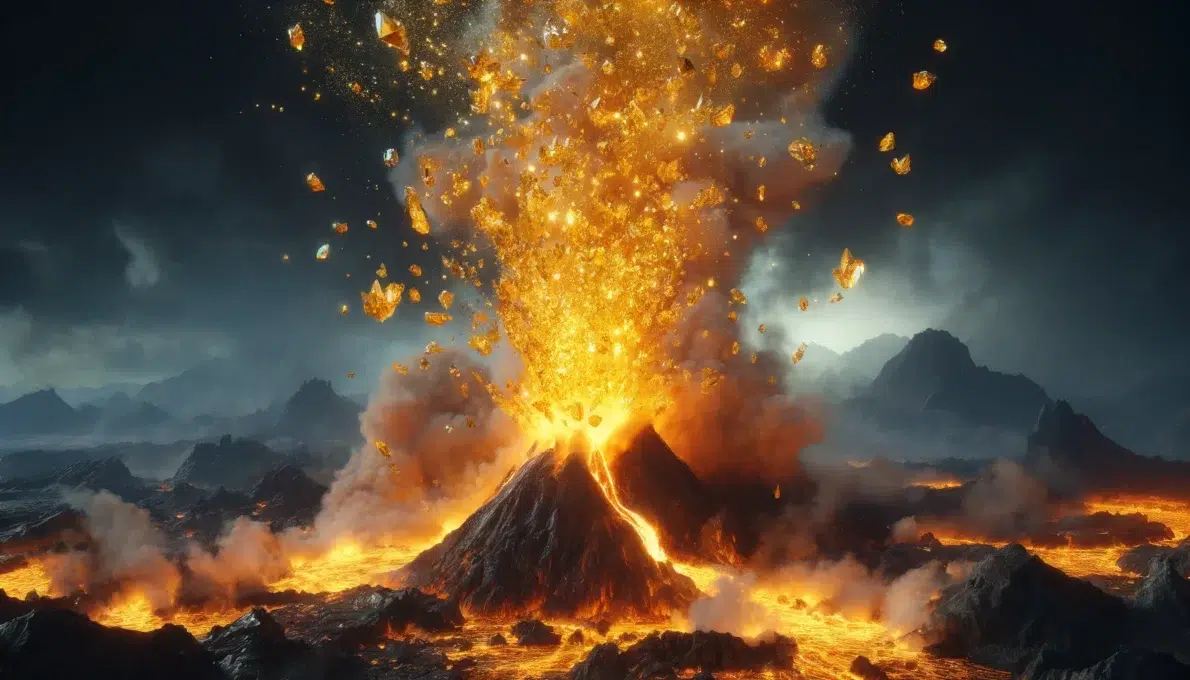

Active Volcano, Once the Site of Accidents in the Past, Is Making It Rain Gold in Antarctica Worth More Than R$ 30 Thousand. Over 80 Grams of Crystallized Gold per Day.
In Antarctica, a peculiar phenomenon has drawn the interest of specialists and treasure hunters. Mount Erebus, an active volcano located on Ross Island, is making it rain gold in Antarctica. Daily, it releases about 80 grams of crystallized gold, with an estimated value of R$ 32 thousand. Check out the details!
Active Volcano Also Emits Other Elements Besides Crystallized Gold

This unusual rain of gold in Antarctica is the result of the unique location of Mount Erebus, part of the Pacific Ring of Fire, where the Earth’s crust is thinner, allowing magma to flow easily to the surface. Gold is transported by the magma from the Earth’s interior and crystallizes as it rises. The particles of crystallized gold disperse through the air, traveling up to a thousand kilometers from the crater.
In addition to crystallized gold, Mount Erebus regularly emits columns of gas and steam, occasionally launching rocks. The continuous activity and geographical isolation make the active volcano a challenge for more in-depth research. NASA’s Earth Observatory highlights that the region suffers from a lack of consistent studies, making data collection limited.
-
Xiaomi Unveils Smart Glasses in Brazil with 12MP Camera, 4K Video, and AI Features, Challenging Ray-Ban Meta

-
Volkswagen Unveils Bold Strategy to Compete with Chinese Automakers in Brazil, Featuring 5,000 Parts, 76% Localization, and a Surprising Turnaround
-
Three Teens Win Global Prize for Low-Cost AI Microscope Diagnosing Malaria Species in Seconds for Remote Villages
-
Xiaomi Unveils Revolutionary Fridge: Eliminates Odors in 3 Minutes, Sterilizes in 2, Offers 508 Liters in Compact Design, Operates at 31 dB, and Is Smartphone-Controlled.


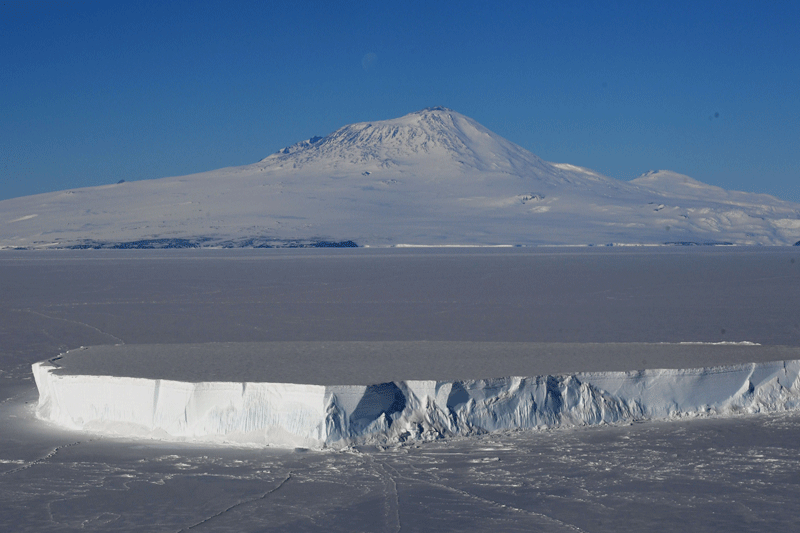
The active volcano is one of the few on Earth that has a lava lake in one of its craters, remaining in continuous eruption since 1972. The presence of this lake indicates special conditions that prevent the surface from freezing. The structure is located in Antarctica, on Ross Island, forming part of the famous Pacific Ring of Fire, where there are 1,600 active volcanoes. The structure has an elevation of 3,700 meters.
Nasa Experts Comment on Gold Rain in Antarctica
In previous episodes of its activities, Mount Erebus has ejected blocks of partially melted rock, an episode known as “volcanic bomb.” Crystallized gold, in turn, is released through gas bursts, in tiny crystals of metallic gold measuring up to 20 micrometers.
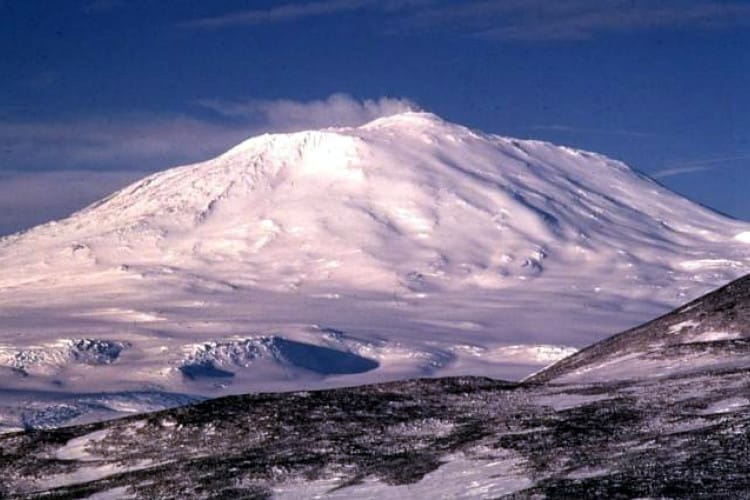
Experts from the American Space Agency (NASA), cited by the Argentine newspaper Infobae, stated that the volcano sits above a thin slice of crust, facilitating the melted rock rising from the Earth’s interior, transporting the ore to the surface and crystallizing it.
Additionally, researchers in Antarctica, according to IFL Science, found traces of crystallized gold in the air a thousand kilometers away from Mount Erebus, which, being in a remote location, is monitored via satellite.
Mount Erebus Volcano Has Already Been the Scene of Disaster in Antarctica
Despite attracting significant attention for its unusual fact, the volcano has already been the scene of disasters. On February 28, 1979, a flight collided head-on with the side of the volcano, claiming the lives of the 257 people on board.
The plane was part of a program by Air New Zealand, which allowed passengers to take a “round trip” sightseeing flight of 11 hours from Auckland, a city on New Zealand’s North Island, to Antarctica.
Near the accident site, according to the BBC, rescue teams found passengers’ cameras. In some images taken moments before impact, it was possible to observe that visibility was adequate at the time of the crash, and that the pilot was flying beneath the clouds.
Having ruled out low visibility as a hypothesis, it is believed that a “brownout” was the cause of the accident. The volcano would have been covered in ice and become “invisible” due to the light. Thus, the pilot would not have been able to assess the distance and would have assumed that the white patch ahead was ice and snow in the landscape below.


