






 Portuguese
  Spanish


How A City Became Dependent On The Most Polluting Fuel In The World And Is Now Facing An Uncertain Future With Pressure To Reduce Carbon Emissions.
“We are not bad people for not wanting the power plant to close, nor do we advocate for the planet to explode. We are not against the planet.” Thus, Gil Melo, a 34-year-old entrepreneur and cook, defends what many consider indefensible: the use of coal.
This is the fossil fuel that emits the most greenhouse gases, being one of the main villains of climate change, which has caused devastating natural disasters, such as the extreme rains that recently hit Rio Grande do Sul.
Candiota, a town in Rio Grande do Sul with 10,700 inhabitants, located almost 400 km from Porto Alegre, has its economy heavily tied to coal. “About 80% of our economy revolves around coal,” says Mayor Luiz Carlos Folador in an interview with the BBC Brazil portal, which can be read in full by clicking here.
-
Brazil’s Federal Revenue Auction: iPhone 13 for $95, PlayStation 4 for $80, and Volkswagen Jetta for $2,600 Among 232 Lots Available

-
Tech Giant Oracle Lays Off 21,000 Employees and Invests $70 Billion in Artificial Intelligence

-
Chilean Giant Acquires St. Marche, Expanding from Discount to Premium Supermarkets in São Paulo’s High-End Retail Market
-
After 60 Years of Selling Cheap Milk, Brazilian Family Invests in $4,000 Equipment to Transform Farm’s Milk into Premium Sweets, Producing 2 Tons Daily and Aiming for $6.4 Million


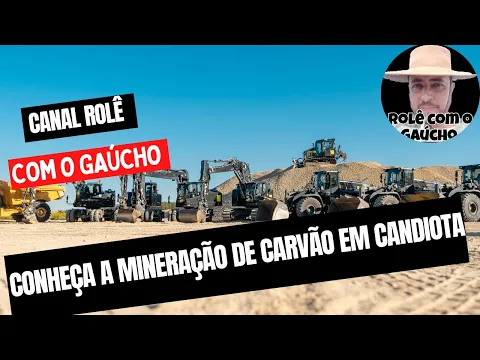
The town is home to the largest open-pit coal mine in Brazil, with estimated reserves of 1 billion tons, in addition to two coal-fired power plants. For decades, these reserves have been a source of pride and an economic engine for the city.
According to the National Mining Agency (ANM), they could supply Brazil for about a hundred years. However, the future looks uncertain. The global pressure to cut greenhouse gas emissions puts Candiota in a vulnerable position.

International Pressure And Climate Disasters
Reports from the Intergovernmental Panel on Climate Change (IPCC) call for drastic reductions in greenhouse gas emissions. In May 2022, UN Secretary-General Antonio Guterres urged the world to kick its “addiction” to fossil fuels, starting with coal, to limit global warming to 1.5ºC by 2100, as established by the Paris Agreement. Brazil has committed to achieve net-zero emissions by 2050.
The fear in Candiota is that the energy transition will occur before the city finds a new source of survival. Recently, Rio Grande do Sul suffered floods that killed more than 170 people, increasing concerns that the coal economy may become a “scapegoat” for the tragedy and that initiatives to decline coal activity may be accelerated.
The History And Wealth Of Coal In Candiota
The history of Candiota is inseparable from coal. According to a report from the cited portal, since the imperial Brazil, the region was known for its coal reserves, used to power ancient forges. The first coal-fired power plant was installed in 1961.
Currently, the two operating plants are Candiota III and Pampa Sul, owned by different economic groups, and are the main employers in the city. “Candiota is an island in terms of economic support,” says Hermelindo Ferreira, former president of the Candiota Miners Union, to the BBC Brazil website.
The coal industry has transformed Candiota into one of the most prosperous municipalities in Rio Grande do Sul, with a per capita GDP of R$ 282,000 in 2021, according to IBGE. It is estimated that at least 5,000 of the 10,700 inhabitants have direct or indirect jobs linked to the coal industry.
The Other Side Of Prosperity
Candiota’s prosperity does not come without controversies. According to the System of Estimates of Emissions and Removals of Greenhouse Gases (SEEG), only 0.4% of Brazil’s gross emissions in 2022 were produced by electricity generation from coal.
However, 74% of Brazilian emissions result from deforestation and agriculture. Furthermore, the electricity generated from coal accounts for only 1.2% of installed electrical capacity in Brazil, according to the Energy Research Company (EPE).
According to EPE, coal-fired electricity production is responsible for 48.6% of greenhouse gas emissions from all electricity production using non-renewable sources. Research indicates that the situation in Candiota is even graver, with the plants being the most inefficient and producing the most greenhouse gases per unit of energy produced in Brazil, according to reports from the Institute of Energy and Environment (IEMA).
Climate Anxiety And Economic Uncertainty
In 2017, an article in the American Psychiatric Association journal described the term “eco-anxiety” as the fear of climate catastrophes. In Candiota, residents fear both climate change and the end of the coal economy.
“There is a lot of anxiety among the people here,” said Rosaurea Castaneda Greco, 61, president of the Mother Cleci Mothers’ Club, also in an interview with the cited website. She explains that her family, like many others, depends on coal for their livelihood.
Vera Regina Azambuja Rijo, 63, whose family also works with coal, expresses sadness and concern: “I feel very sad because when I hear this, the first thing that comes to my mind is my children and my grandchildren. They all depend on coal. If coal ends, what will happen to us?”, she reported.
The Coal Dilemma
Fernando Luiz Zancan, president of the Brazilian Association of Sustainable Carbon (ABCS), argues that Brazil needs more time for the energy transition. “Brazil has made a commitment to have zero emissions by 2050. So, our deadline is 2050,” says Zancan.
He argues that an abrupt end to coal use would have a significant social impact, especially after the tragedy in Rio Grande do Sul. Moreover, he advocates for a set of technological solutions to capture the CO₂ emissions from burning coal and reinject them into the soil.
“The issue is not to end coal. It is to end its emissions,” he asserts. However, Juliano Araújo, director of the Arayara Institute, refutes these arguments, emphasizing that “there is no sustainable carbon” and that coal-fired plants can be easily replaced by cheaper and safer energy sources.
Felipe Barcellos, from IEMA, also contests the necessity of coal for Brazil’s energy security: “The percentage of generation from coal plants is very low, and we already have other alternatives that can supply this energy diversification.”
Future And Perspectives
The future of Candiota is filled with uncertainties. Without concrete plans from the Brazilian government to end coal exploration, the city remains dependent on this fuel. The immediate concern is the end of the power supply contracts for the Candiota III plant, expected in December of this year, which could create a domino effect on the local economy.
“We are in contact with the authorities in Brasília to prevent this from happening,” says Mayor Luiz Carlos Folador. “One cannot take a short, medium, and long-term measure because of a climate phenomenon.”
What do you think should be done to help the city of Candiota find a sustainable alternative to mineral coal? Leave your opinion in the comments!





E o JAPÃO reativando a maior usina nuclear do mundo, cuidado com os conceitos ambientais que estão querendo colocar na nossa mente.