Portuguese
  Spanish


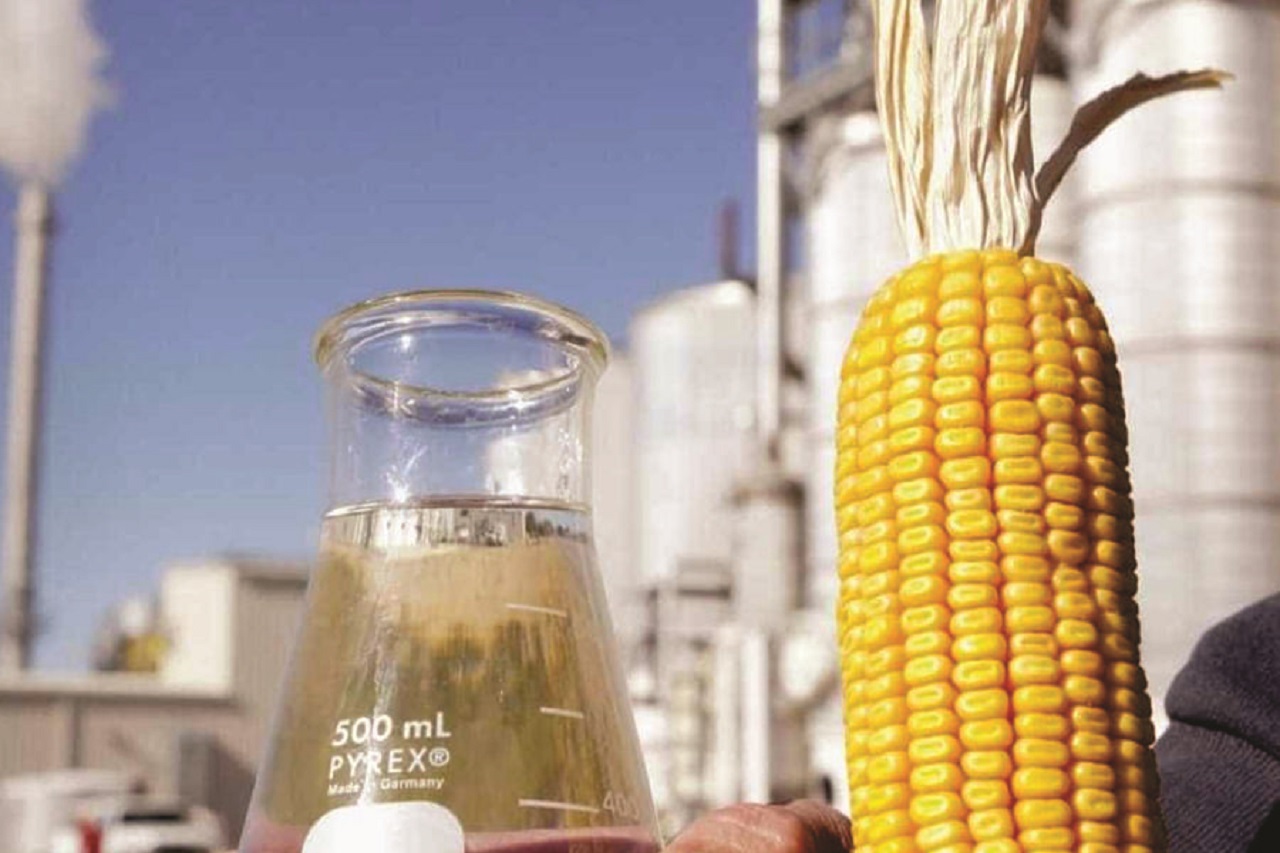

An American Scientist Is Going Against Previous Studies and Claims That Ethanol From Corn Can Emit About 24% More Pollutants Than Gasoline
The gasoline sold at American gas stations contains 10% ethanol from corn, known as gasohol. However, according to studies published this week by the National Academy of Sciences, this fuel can be more polluting than gasoline, contradicting research conducted by the U.S. Department of Agriculture, which indicates that ethanol and other biofuels are somewhat more sustainable than fossil fuel. According to Dr. Tyler Lark, a scientist at the Madison Center for Sustainability and Global Environment, ethanol from corn is not favorable to the environment.
Read Also
Ethanol From Corn Can Emit More Pollutants Than Gasoline
The scientist’s research revealed that the previous study was completely mistaken, and also stated that ethanol from corn emits about 24% more carbon than gasoline, due to emissions generated by land-use changes for corn planting, fertilizers, and other production processes.
Meanwhile, the president of the Renewable Fuels Association, Geoff Cooper, stated that the scientist’s study is distorted and fictitious, arguing that its authors handpicked the worst-case scenarios.
-
Petrobras Approves $1.2 Billion Refinery in Brazil to Produce Aviation Fuel and Diesel from Plants

-
Petrobras Secures $2.2 Billion Contract to Build and Operate Four Support Vessels for Brazil’s Offshore Oil Fields
-
Oil production grows in Rio, but reserve replacement raises a warning sign

-
Petrobras is expected to complete the drilling of the Morpho well in the Foz do Amazonas in August 2026, the first well in the Equatorial Margin, an oil frontier that the ANP estimates at more than 30 billion barrels and could redraw the map of Brazil.




Corn Cultivation Is Increased Due to U.S. Legislation
A U.S. law from 2005 requires a blend of 68 billion liters of ethanol from corn in the gasoline sold at gas stations. The aim is to reduce dependency on imported fuel and pollutant emissions, resulting in an 8.7% increase in corn cultivation and also in the area cultivated between 2008 and 2016, with changes in agricultural land use that would be deactivated or redirected to other purposes.
A 2019 study cited by the biofuels industry claims that carbon emissions from ethanol derived from corn are about 39% lower compared to gasoline, due to the carbon elimination associated with the creation of new plantings. However, according to the scientist, this research did not take the impact of emissions from land conversion seriously.
Ethanol From Corn in Brazil
The president of the National Union of Corn Ethanol (UNEM), Guilherme Nolasco, explains that the scientist’s research does not apply to Brazil because the planting conditions in the country are completely different from those in the U.S. Thus, it is impossible to compare the emissions generated here and there.
About 87% of the ethanol used in Brazil is produced from sugarcane, and only the remaining 13% is generated from corn. Out of the total 115 million tons of corn produced, only 8 million are allocated for ethanol production, 20 million are exported, and the rest is for domestic consumption.
The corn transformed into alcohol generates taxes, jobs, income, and the by-products still turn into animal feed. Guilherme’s estimates indicate an increase in the share of corn-derived ethanol from the current 13% to 20% of total production by 2030.