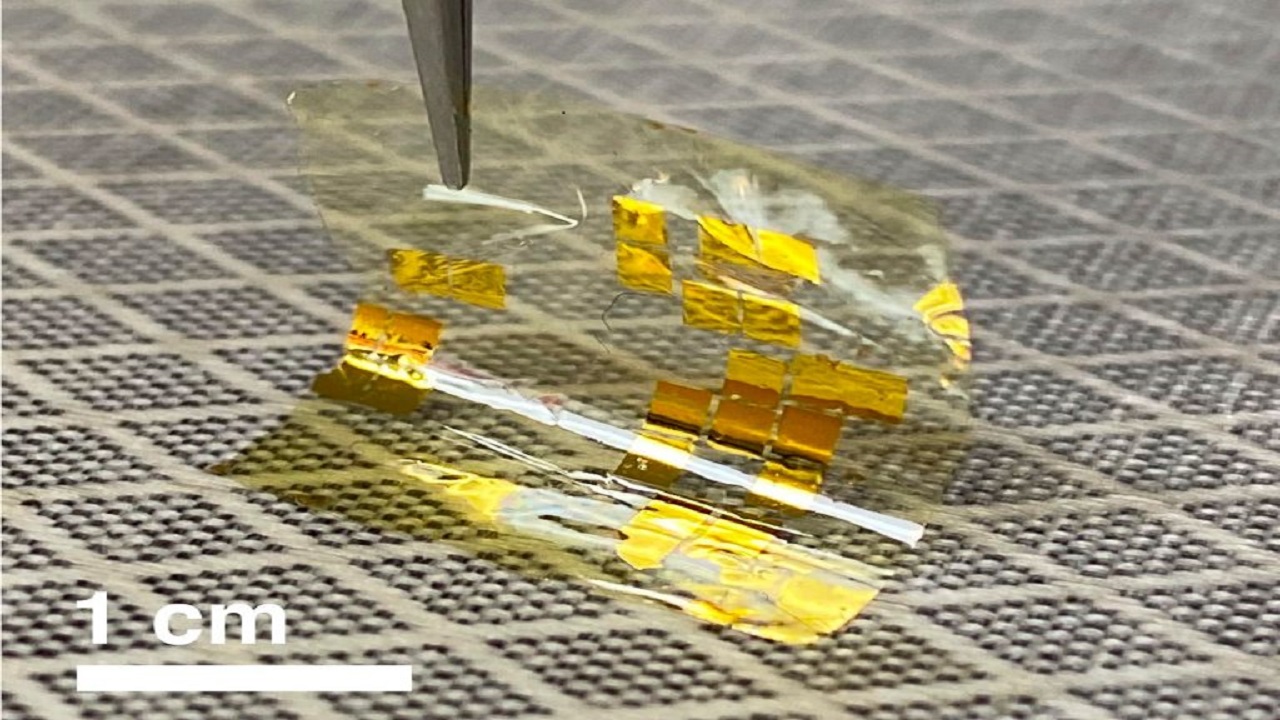
Researchers Developed a Solar Panel 15 Times Thinner Than Normal Paper. So Far, the Solar Market-Focused Prototype Managed Only 5.1% Efficiency, However, the Estimate Is That It Will Reach 27%, Capable of Revolutionizing the Renewable Energy Industry
Scientists at Stanford University, located in the U.S., developed the thinnest solar panel ever built, which promises to innovate the renewable energy sector. The active element of solar power cells is a two-dimensional material, a semiconductor that has only one atomic layer in thickness. The material, called tungsten diselenide, belongs to a class known as transition metal dichalcogenides, materials that are the basis for new computing architectures, such as electronic components, solar power cells, and new display technologies. Read also: Graphene in the Arms Market Gains Traction in Brazil and Excites Bolsonaro.
Read Other Related News
- Brazil Launches the First Niobium Battery That Along with Graphene Promises to Revolutionize the Global Heavy Loads Market
- Niobium and Graphene Exploration in Brazil Will Be Boosted: Federal Government and Japan Close Partnership
- Leading Companies in the Oil and Gas Industry Seek New Paths in Renewable Energies
- Elera Renewables Will Invest R$ 5 Billion in Solar, Wind, and Water Operations in the Coming Years
- Graphene in the Arms Market Gains Traction in Brazil and Excites Bolsonaro
New Solar Panel Achieved 5.1% Efficiency
Despite being very promising in this last case, the fact is that practical experiments conducted up to this point have not managed to achieve much more than 2% efficiency from TMD solar power cells, compared to nearly 30% for silicon-based cells. Recently, a company from Rio de Janeiro created a graphene tile capable of generating solar energy and with a lifespan of 80 years.
-
The world has bet on green hydrogen as the fuel of the future, but now faces the side effect: producing 1 kilogram requires about 9 liters of ultrapure water, and the largest projects on the planet are precisely in the driest regions of the Earth, where water is already scarce for people.
-
Africa has about 500,000 cell towers and most still burn diesel to operate, while companies rush to cover antennas with solar energy and avoid signal blackouts.
-
Farmers swapped diesel for solar panels in Pakistan, powered irrigation pumps almost cost-free, expanded rice fields, and now groundwater has become a red alert in the countryside.
-
Migrant workers left the world’s largest renewable energy park in India after extreme heat, 12-hour shifts, delayed wages, and poor accommodations at a site that still promises to supply 18 million homes.
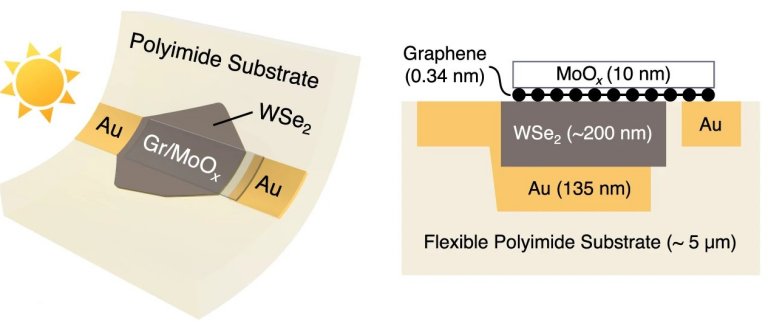
Koosha Nazif and his fellow researchers managed to achieve unprecedented optimization regarding these numbers through three innovations. Among the innovations in the new solar panel are: the use of graphene contacts, which do not block sunlight because they are transparent, the use of a molybdenite coating for doping, anti-reflection, and passivation, as well as the creation of a new technique that transfers the monoatomic layers to the transparent and flexible substrate without causing damage.
The new solar panel prototype achieved 5.1% renewable energy conversion efficiency, however, scientists estimate that, with its improvements, it is theoretically possible to reach 27% efficiency just by adjusting the processes, reaching the same level as the best and current solar panels in the renewable energy market, including silicon ones.
Thinnest Solar Panel Prototype in the World Produces 4.4 Watts Per Gram
The prototype achieved a power-to-weight ratio 100 times greater than any of its kind ever developed. This ratio is essential for mobile and portable applications, such as electric cars and drones, and for the capability of recharging on the go, by transferring renewable energy wirelessly.
In terms of specific power, the solar panel prototype generated 4.4 watts per gram, a value quite competitive with other thin-film solar cells. Scientists’ calculations also indicate that it is possible to improve significantly in this regard, reaching 46 watts per gram.
Advantages of the New Solar Panel
The greatest benefit of the new solar panel is its thinness, which not only minimizes its material cost and usage but also makes TMD solar cells lightweight, adaptable, and flexible enough to be molded into irregular shapes, such as the roof of a car, electronics, or the wing of an airplane, for example.
The thickest part of the renewable energy prototype is not the solar cells, which measure only a few hundred nanometers thick, but rather the polymer that supports them.
Graduated in Journalism and Marketing, he is the author of over 20,000 articles that have reached millions of readers in Brazil and abroad. He has written for brands and media outlets such as 99, Natura, O Boticário, CPG – Click Petróleo e Gás, Agência Raccon, among others. A specialist in the Automotive Industry, Technology, Careers (employability and courses), Economy, and other topics. For contact and editorial suggestions: valdemarmedeiros4@gmail.com. We do not accept resumes!
The world has bet on green hydrogen as the fuel of the future, but now faces the side effect: producing 1 kilogram requires about 9 liters of ultrapure water, and the largest projects on the planet are precisely in the driest regions of the Earth, where water is already scarce for people.
Valdemar Medeiros 13/06/2026 at 17:32

Be the first to react!