






 Portuguese
  Spanish


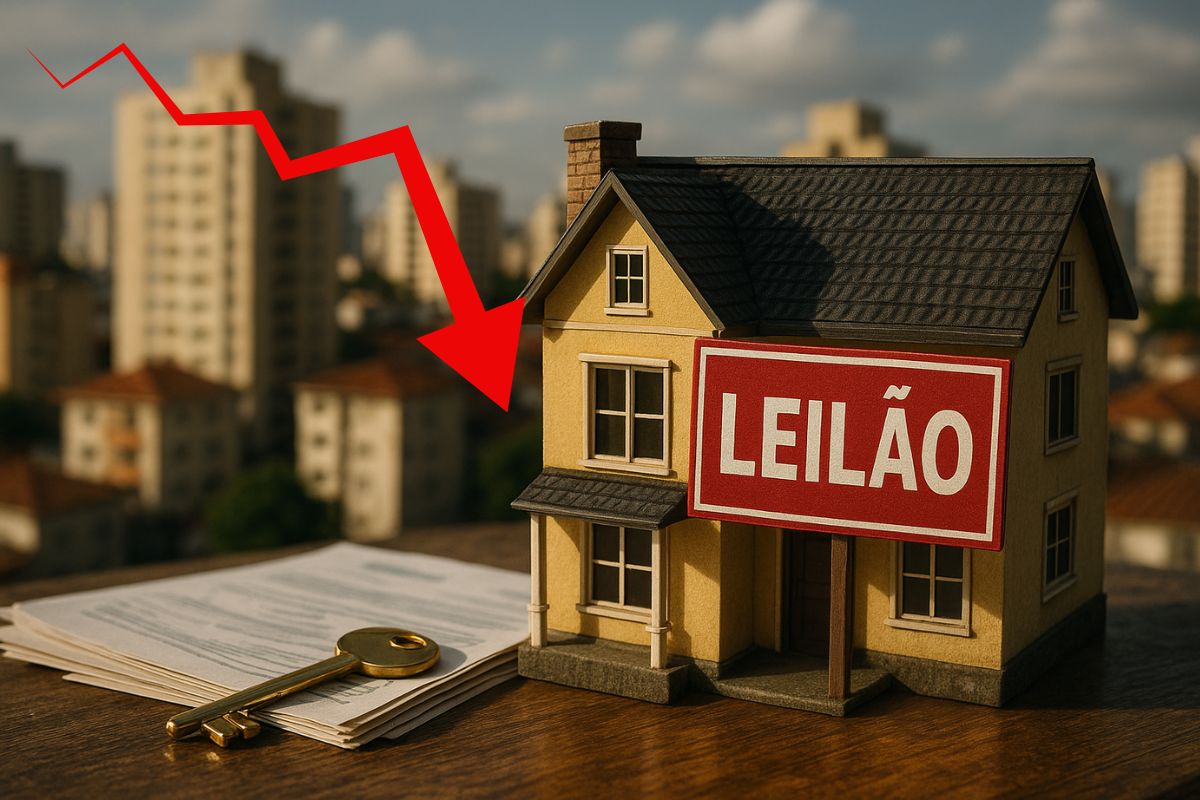


Banks Require 30% Down Payment and Thousands of Properties Go to Auction.
In 2025, the middle class faces the greatest squeeze in decades: banks began to require a 30% down payment for financing, salaries eroded do not keep up with rising prices, and the number of properties at auction is skyrocketing, revealing an alarming scenario of indebtedness and housing insecurity.
The Weight of the Minimum Down Payment
For the middle class, the requirement from banks to raise the down payment from 20% to 30% was a direct blow to the dream of home ownership. A property worth R$ 300,000, which previously required R$ 60,000 as a down payment, now requires R$ 90,000 an increase of 50% over the necessary amount.
This change, seemingly small in percentage terms, is devastating in practice, because few families can save that amount without compromising years of savings.
-
Chinese Automaker Plans Second Mega Factory in Brazil with $2 Billion Investment to Produce Electric and Hybrid Cars in Strategic Location.

-
Family Quietly Transforms Old Sawmill into $700 Million Business, Opens 25 Stores in Two Years Across 22 Brazilian States

-
Couple Sold Their Home to Save Business, Now Run Platform Handling $180 Million Monthly and Managing Over 51 Million Listings
-
Brazil’s 2026 Tax Refund: Record 9.58 Million Filers in Largest Payout Ever, But a Key Detail on Priority Recipients Draws Nationwide Attention




According to the analysis of Gêmeos Investem, this change was a consequence of the flight of resources from savings accounts, the traditional source of real estate financing.
With no available funds, banks started to raise the down payment requirement to reduce risks and limit credit granting.
High Interest Rates and Budget at the Limit


Besides the higher down payment, financing interest rates remain between 11% and 13% per year. This means that even families with a joint income of over R$ 10,000 end up compromising a large part of their budget.
According to Gêmeos Investem, in large capitals, a monthly payment of R$ 4,000 adds up to condo fees, property tax, and basic costs, making the equation unsustainable.
This situation explains the accelerated growth of property auctions: in 2024, over 47,000 properties were repossessed solely by Caixa Econômica Federal, reflecting families’ difficulties in keeping up with payments after a few missed installments.
Taxes, Salaries, and Cost of Living
Another central point is the weight of taxes. In 2025, Brazilians worked until the end of May just to pay taxes, which further reduces the saving capacity of the middle class.
The contrast is cruel: while the employer spends around R$ 3,000 on an employee, the employee receives only R$ 1,300 net, after mandatory deductions.
The result is a suffocating feeling. Salaries do not keep pace with the inflation of food, housing, and transportation, pushing families to their financial limits and leaving little room for wealth accumulation.
The Dilemma of Housing and Security
The precariousness of public security also forces families to move from houses to apartments, which further raises the monthly costs with condo fees and property tax.
A simple 70 m² apartment in São Paulo can accumulate over R$ 700 annually just in fixed fees, not counting the financing installment.
This combination of factors explains why many middle class properties end up going to auction.
It is not just about defaulting, but a sum of pressures: taxes, high interest rates, bureaucracy to build, and a real estate market dominated by few construction companies, as highlighted by Gêmeos Investem.
The Impact on Minha Casa, Minha Vida
The Minha Casa, Minha Vida program remains one of the few entry points for low-income families, with subsidies and lower interest rates. However, the middle class that exceeds the income limit cannot benefit, remaining trapped in more expensive financing.
This creates the perception that this social group is in the “worst of worlds”: without government assistance and unable to compete with the wealthy, who buy outright.
According to Gêmeos Investem, this exclusion of the middle class from housing policies reveals a structural bottleneck, which tends to increase inequality in access to housing.
The Brazilian middle class is increasingly squeezed between high interest rates, heavy taxes, and eroded salaries. Buying and maintaining a property in 2025 has ceased to be a viable dream and has become a calculated risk.
Do you believe that this situation is solely a consequence of the banks’ policies or of deeper flaws in the country’s economic management? Have you ever faced difficulties in maintaining your financing?
Leave your opinion in the comments, we want to hear from those who live this reality firsthand.





Eu concordo plenamente com o teor desta matéria, e ainda vejo um atenuante extremamente perverso que é o protecionismo dado aos bancos e empreiteiras, é sempre a classe média ou baixa que arca com tudo, juros altos, preços exorbitantes e prazos cada vez menores para negociar dividas, já que os credores estão cada vez mais empoderados para retomada do bem, até nos leões, vejam só, eles oferecem o imóvel ocupado, e quem comprar que se vire. Realmente está cada vez mais difícil.
Só lembrando para os menos inteligentes que ITPU é com.seu prefeito de estimação Ricardo Nunes e não tem nada a ver com Governo Federal.Vai lá na Prefeitura reclamar com esse escrutínio que vocês votaram e o ITPU esta um verdadeiro roubo de tão caro.
O imposto sobre as Grandes Fortunas vai liberar isso da classe.media , proporcionalmente pesa muito.
Os ricos têm que pagar imposto sim e o Governo Lula vai conseguir.
Aqui tem.muitos desinformados que só sabem xingar e não entendem enquanto ricosnao forem taxados os da classe média sofrem sim.