





 Portuguese
  English
  Spanish
  4 min of reading
  0 comments


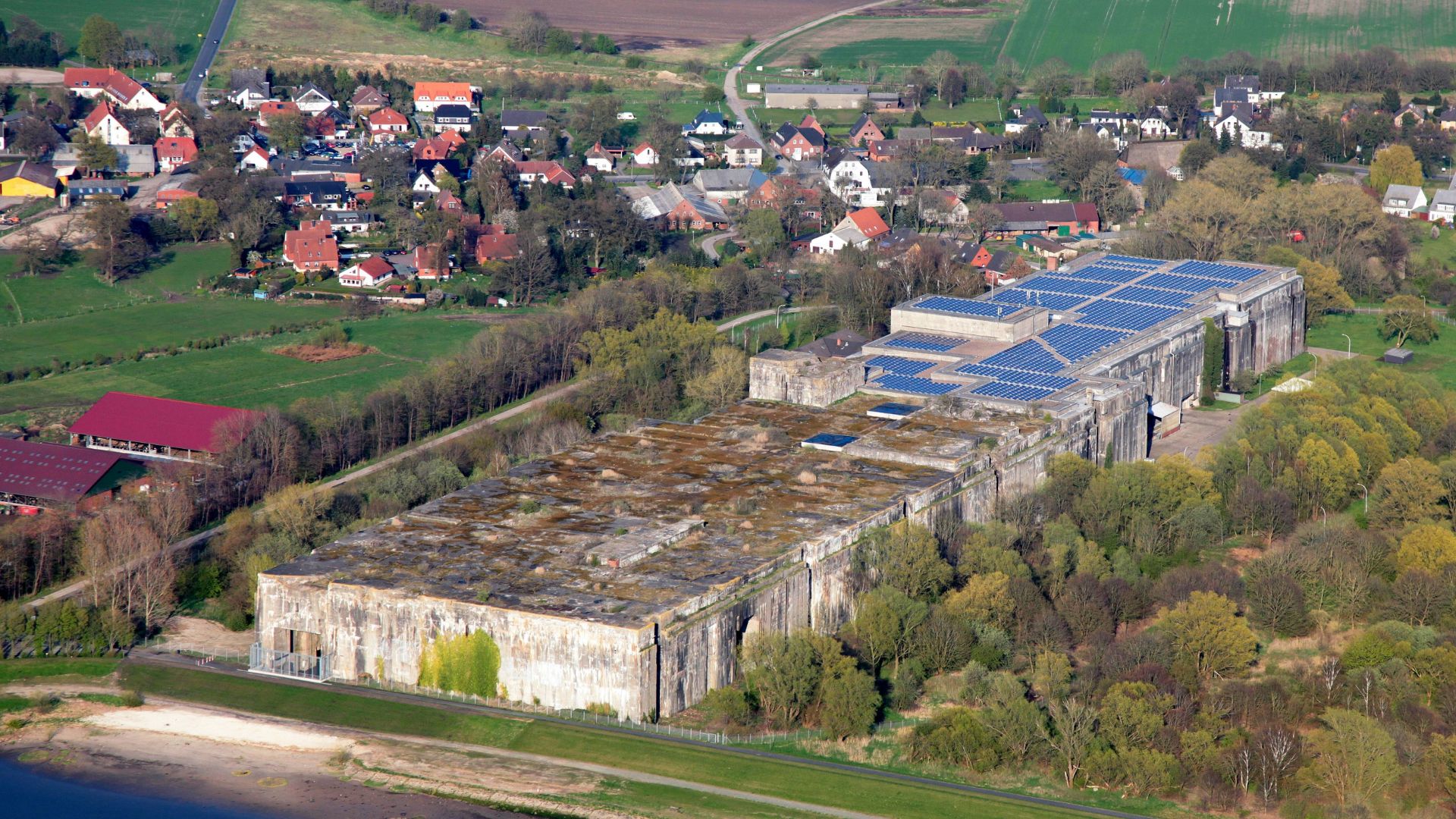
Raised on the Banks of the Weser River, Bunker Valentin Was the Largest Underground Shipyard of the Third Reich, Designed to Produce Type XXI Submarines, But Became a Memorial of Horror and Dehumanity of War
Imagine walking along a peaceful trail on the outskirts of Bremen, in northern Germany, and suddenly encountering a colossal concrete structure, nearly half a kilometer long. This is the Bunker Valentin, one of the largest and most sinister projects of World War II.
Built by the Nazi regime starting in 1943, the bunker was designed to house the assembly of Type XXI U-Boats, technically advanced vessels that promised to change the course of the war in the Atlantic.
The Birth of a Concrete Fortress
With a length of 426 meters, a width of 97 meters, and a roof of 7 meters thick, Bunker Valentin was conceived as an armored shipyard on the banks of the Weser River.
The location was strategically chosen: from there, sections of submarines could be transported by barges and launched directly into the sea.
More than 12,000 prisoners of war and forced laborers — coming from France, Poland, the Soviet Union, the Netherlands, and Ukraine — were forced to erect the concrete colossus. In inhumane conditions, they worked more than 12 hours a day, enduring extreme cold, beatings, and starvation.
According to historical records, 1,600 men died during construction, victims of exhaustion, disease, and violence.
The project was overseen by the high command of the Kriegsmarine, who saw in the Type XXI the hope of reclaiming lost naval dominance. Had it been fully operational, this new model of submarine, faster and quieter, could have reversed the course of the war.
-
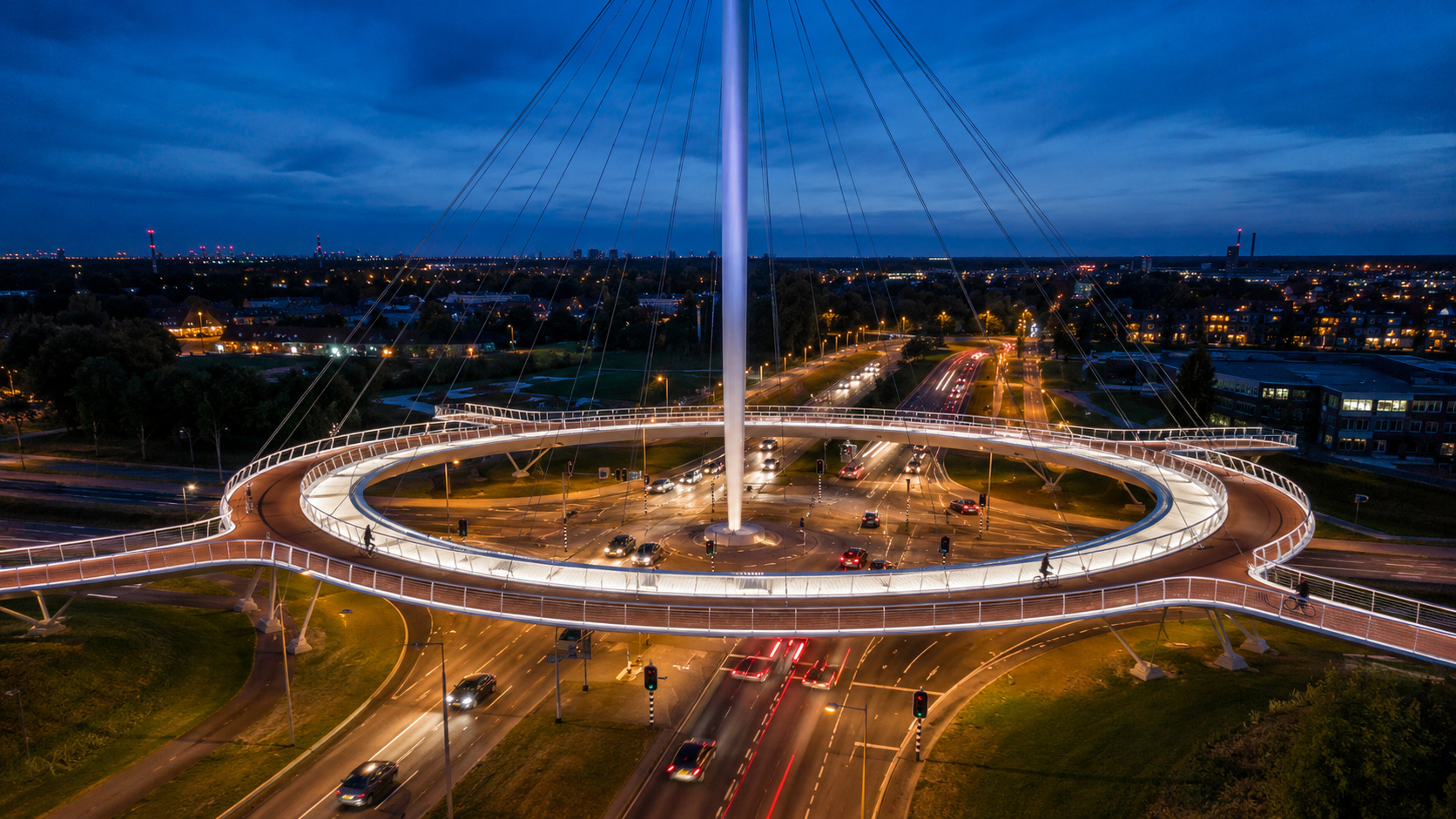
In the Netherlands, a suspended bicycle roundabout looks like a flying saucer over cars, using a 70-meter mast, 24 steel cables, and a 72-meter elevated circular track.

-
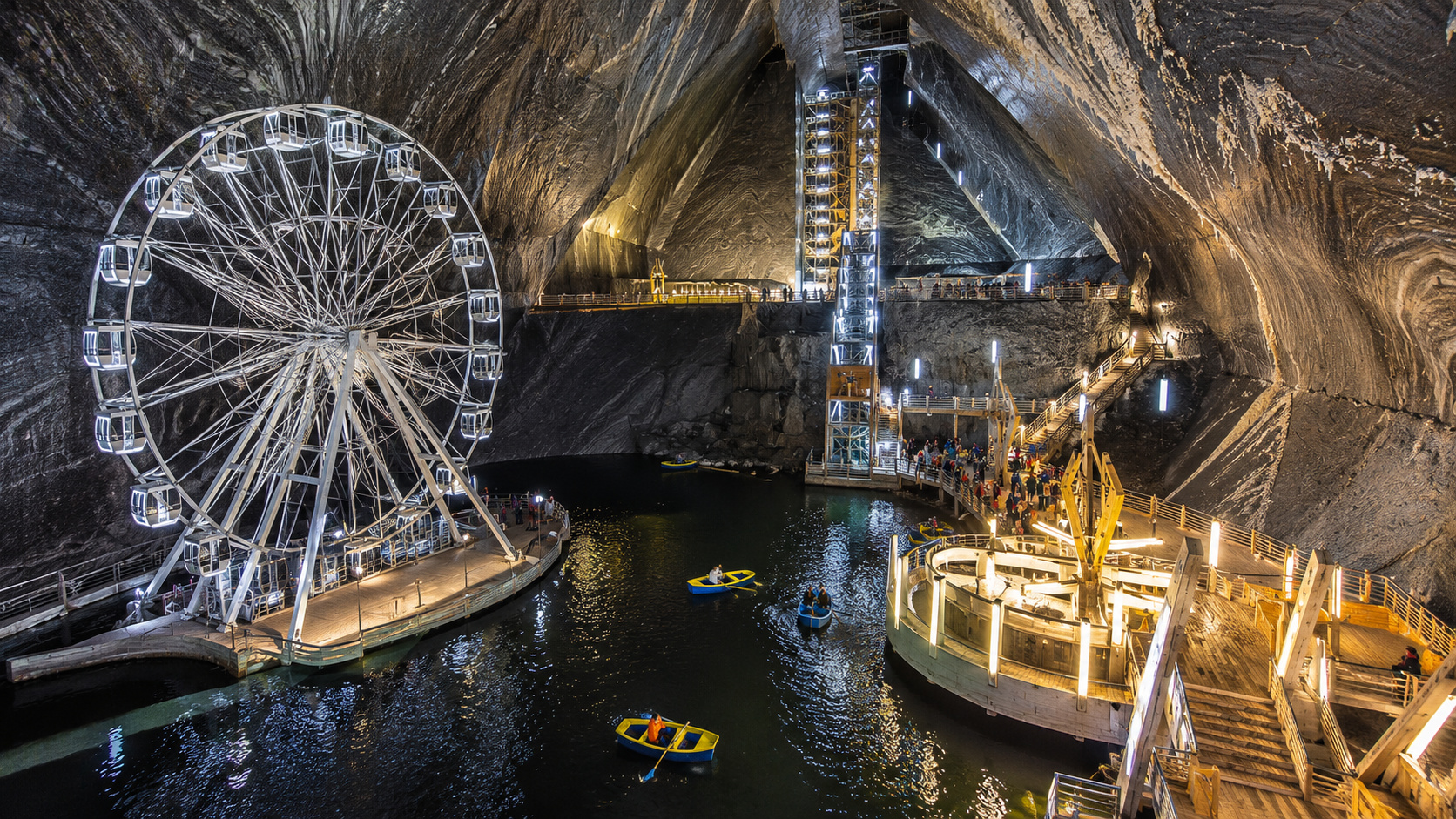
While common parks occupy open and predictable areas, in Romania an old salt mine is transformed into an underground attraction with a Ferris wheel, an internal lake, and walkways inside giant chambers opened by mining.
-
From hot showers to famous games, Brazilian inventions are hidden in everyday life and include the electric shower, clay filter, Lua language that inspired Luau used in Roblox, antivenom serum, and a test that helped diagnose tuberculosis.

-
Five animals so rare they seem to have disappeared after discovery include a whale never seen alive, a shark found only once, a venomous snake discovered by chance, and a lizard forgotten for decades in a museum.




The Power and Failure of Bunker Valentin
As Allied bombers intensified attacks on Bremen and Bremerhaven, the bunker became a priority target.
But its structure was so reinforced that no conventional bomb could penetrate the layers of steel and concrete.
It was then that the British developed a new generation of bombs: the Tallboy and Grand Slam, designed by engineer Barnes Wallis, the same creator of the bouncing bomb that destroyed the Ruhr dams.
On March 27, 1945, the legendary RAF 617 Squadron dropped its bombs on Bunker Valentin.
Even with the devastating force of the impacts, the bunker partially resisted, remaining standing — but with enormous craters in the roof and the structure rendered unusable.
The factory never managed to assemble a single submarine.
When the Allies entered Bremen, they found the site abandoned, covered with debris, unfinished rails, and tools left hastily behind.
According to an article published on the channel Viagem na História, the bunker became a symbol of Nazi industrial madness, a gigantic and expensive monument built on the suffering of the innocent.
From Oblivion to Memorial of Horror
After the end of the war, the British used the bunker for impact tests, launching projectiles without explosives against the already cracked roof.
Later, during the Cold War, the West German Navy transformed the site into a warehouse and logistics center.
For decades, Bunker Valentin remained forgotten — a silent scar that the country avoided facing.
Only in the late 1990s did the process of historical preservation begin.
In 2010, military use was definitively ended, and the space began to be managed by memory institutions.
Five years later, in November 2015, the Denkort Bunker Valentin was inaugurated, a memorial open to the public featuring exhibitions, soundscapes, and survivor testimonies.
Reflection on Dehumanity and Memory
Walking through its dark corridors is like crossing a portal in time.
The walls, marked by rusted metal, scratched numbers, and impact holes, seem to whisper the voices of those who suffered there.
In front of the bunker is a symbolic memorial, with sculptures of compressed bodies, representing the 1,600 prisoners who died during construction.
Bunker Valentin is now one of the largest preserved wartime structures in Europe.
Between the brilliance of engineering and human brutality, it stands as a physical reminder of what humanity is capable of creating — and destroying.
As the memorial curators say, “no concrete can silence the truth forever”.
Visiting Bunker Valentin is more than a journey through history: it is a dive into the depths of human consciousness.





-

1 person reacted to this.