






 Portuguese
  Spanish


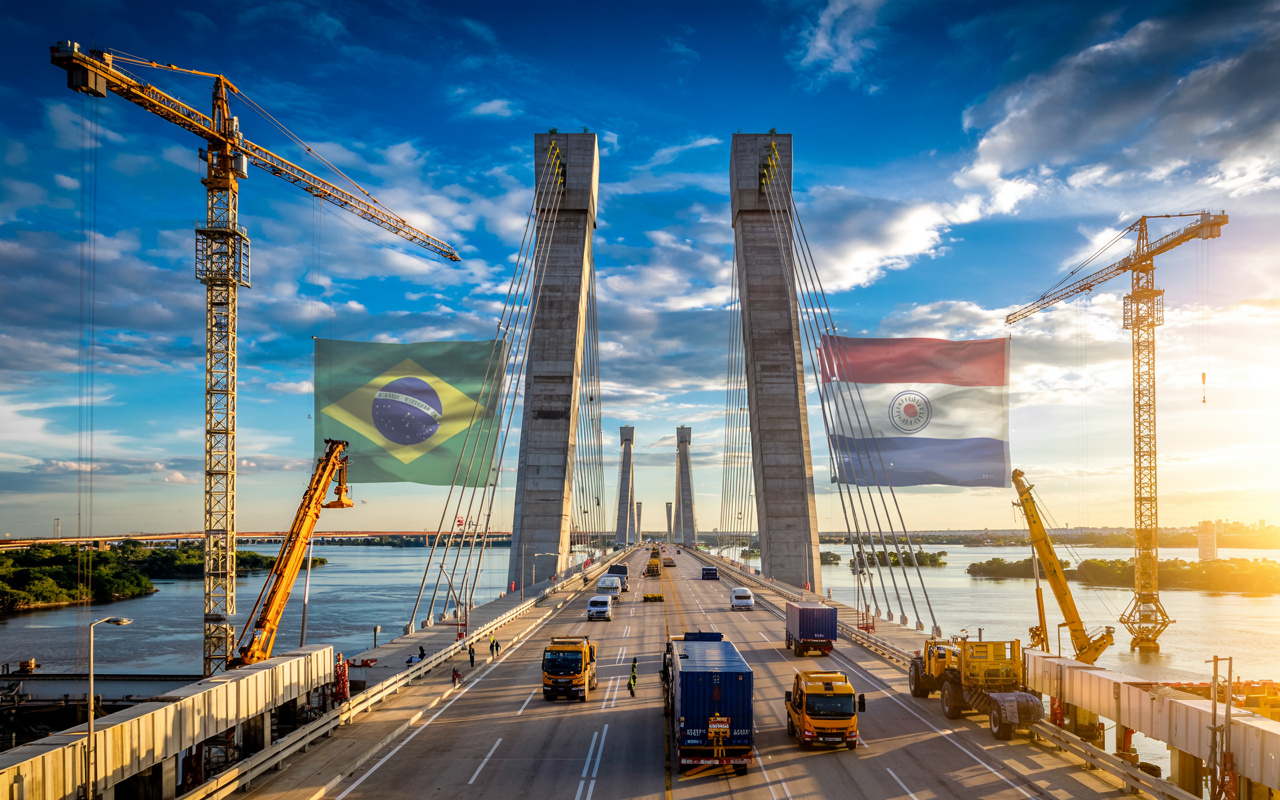


Bioceanic Route Bridge Reaches 75% Completion and Expected Delivery in 2026 to Transform the Connection Between Brazil and Paraguay
With 75% of the work completed, the International Bridge of the Bioceanic Route is closer to becoming a reality and promises to revolutionize trade between Brazil and Paraguay. The structure, connecting Porto Murtinho (MS) to Carmelo Peralta (PY), is expected to be delivered in the second half of 2026, establishing itself as one of the most strategic infrastructure projects in South America.
The bridge, measuring 1,294 meters in length and 21 meters in width, is the central axis of the so-called Bioceanic Route, a road corridor of over 2,400 km that will link the Atlantic to the Pacific, passing through Brazil, Paraguay, Argentina, and Chile. The objective is to reduce logistical costs and timelines for exports and imports, creating a shortcut to Asian markets via northern Chile’s ports, such as Antofagasta and Iquique.
Bioceanic Route Bridge: Project Reaches 75% Completion and Confirms Delivery in 2026
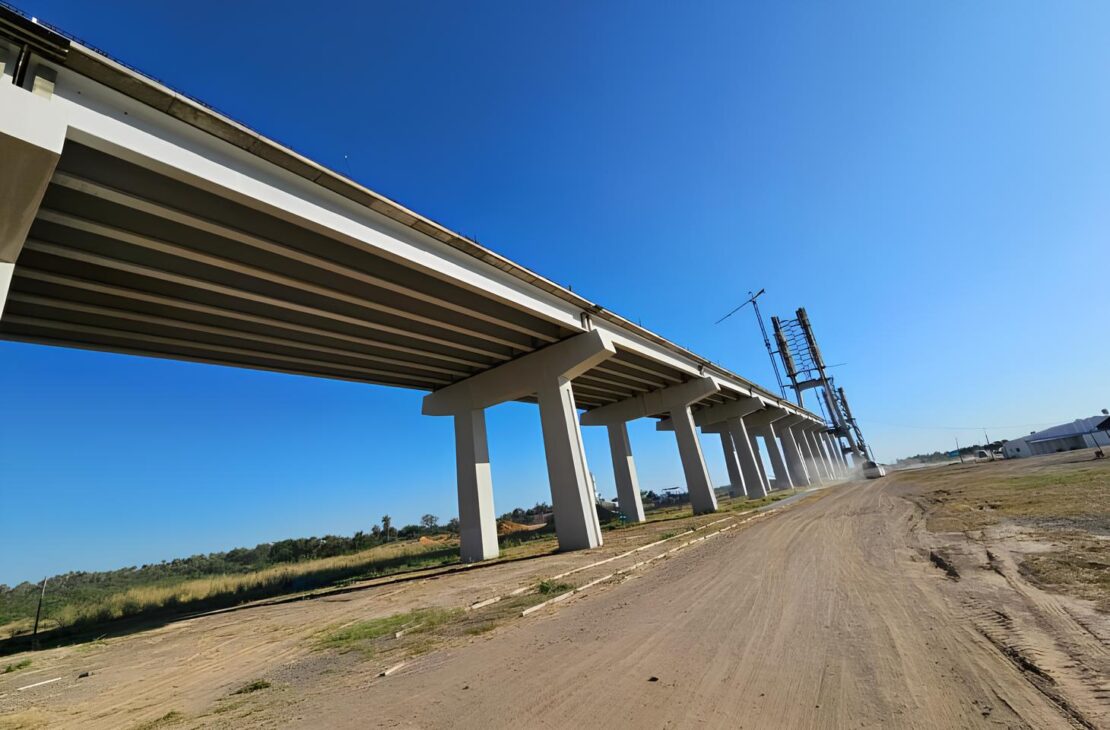
The last meeting of the Joint Commission of the Bioceanic Bridge, held in Porto Murtinho, brought essential updates about the project’s progress. In addition to the bridge, 13.1 km of road access on the Brazilian side is underway, with 17% of the work completed and includes four intermediate bridges — one of them nearly 700 meters long, necessary to cross a flooded area.
-
Facing a housing shortage, Hong Kong uses prefabricated concrete modules to construct a 12-story public building with the help of massive cranes and trucks.

-
Brazilian City Innovates Waste Collection with Underground Vacuum System
-
Amsterdam Repurposes Retired Boats and Plants to Restore Contaminated Industrial Land Instead of Removing All Polluted Soil
-
Copenhagen Builds 92 Homes Using Reclaimed Materials from Demolished Carlsberg Brewery, Highlighting Each Material’s Origin


The meeting brought together Brazilian and Paraguayan authorities, including Chancellor Daniel Falcon, Paraguayan Minister Bras Felip, and representatives from agencies such as Federal Revenue, Federal Police, Navy, Fire Department, and Itaipu Binational.
The goal was to align schedules, discuss technical adjustments, and reaffirm both governments’ commitment to completing the project by the end of 2026.
Brazil-Paraguay Connection: Strategic and Logistical Impact
The bridge is not just a physical link but a vector of economic transformation. According to estimates from the Federal Revenue, the initial flow will be 250 trucks per day, potentially increasing as the route consolidates.
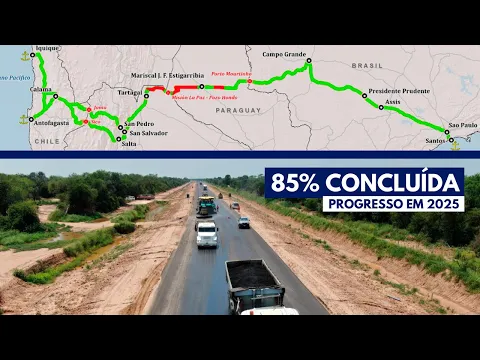

This integration is expected to boost trade between Mercosur and Asia, shortening transport time by up to 15 days compared to the traditional maritime route through the Panama Canal and reducing logistical costs by about 30%.
For the mayor of Porto Murtinho, Nelson Cintra, the municipality will become “a new gateway for Brazilian foreign trade with the Pacific.” The statement reinforces the view that the bridge will be more than just a connection between Brazil and Paraguay: it will be a pillar for continental economic integration.
Bioceanic Route: A Corridor for the Future
The Bioceanic Route is considered one of the most ambitious infrastructure projects in the region. By connecting Brazil’s Midwest to Pacific ports, it creates a logistics corridor capable of transforming the export chains of soy, corn, beef, minerals, and manufactured goods.
There are expectations that large Brazilian exporters, especially in agribusiness, will use the route to access Asian markets more swiftly. This could mean significant competitive gains for producers and industries, as well as a positive impact on the trade balance.
Customs Complexes and Dry Port: Complete Integration at the Border
During the meeting, authorities discussed the implementation of a Customs Integrated Center (ACI), in a single head model, to facilitate inspections and expedite cargo transit. Paraguay will present its infrastructure demands in the coming weeks for the Brazilian government to develop the executive project.
The possibility of a dry port in Porto Murtinho was also mentioned, should the cargo volume exceed expectations. The municipality has already indicated the donation of an area to make the project viable, highlighting the potential transformation of the city into a logistics hub.
75% Completion and New Bridges on the Radar
With 75% of the main bridge completed, work is progressing rapidly, but the meeting also brought discussions about future developments. One proposal is the construction of a new bridge over the Apa River, linking Bela Vista (MS) to Bella Vista Norte (PY), as a way to further strengthen the route’s road network.
According to Secretary Jaime Verruck of Semadesc (Secretariat of the Environment, Development, Science, Technology, and Innovation), alignment between the Brazilian and Paraguayan governments ensures that timelines are met: “We have confirmation that all works will be completed by the end of 2026, including the accesses and customs complexes. This shows the commitment of both countries to this megaproject.”
The impact of the bridge goes beyond logistics. It is expected that the project will generate more jobs, increase bilateral trade, and develop historically underexplored regions, such as the west of Mato Grosso do Sul.
For Chancellor Daniel Falcon, the project represents “progress, prosperity, and more jobs for the entire region, in addition to benefiting other countries involved in the route.”
A Milestone for Continental Integration
The Bioceanic Route Bridge is more than an engineering work — it is a symbol of Latin American integration. With 75% completion and an expected delivery in 2026, it promises to reduce costs, speed up exports, and create a logistics corridor that will change trade between Brazil, Paraguay, Argentina, Chile, and Asian markets.
In the coming months, the focus will be on completing the accesses, implementing customs structures, and defining new investments to ensure the route becomes a complete reality by the end of 2026.


Importante para desenvolvimento das relações comerciais entre países de forma bilateral e célere. Algo que é agradável pra os países do Mercosul e Brics podem crescer proporcionando, mais empregos durante as obras e mais prático e velocidade na entrega de produtos que vem e vem todos os dias.
Quando iniciou-se a construção da ponte ?½