






 Portuguese
  Spanish


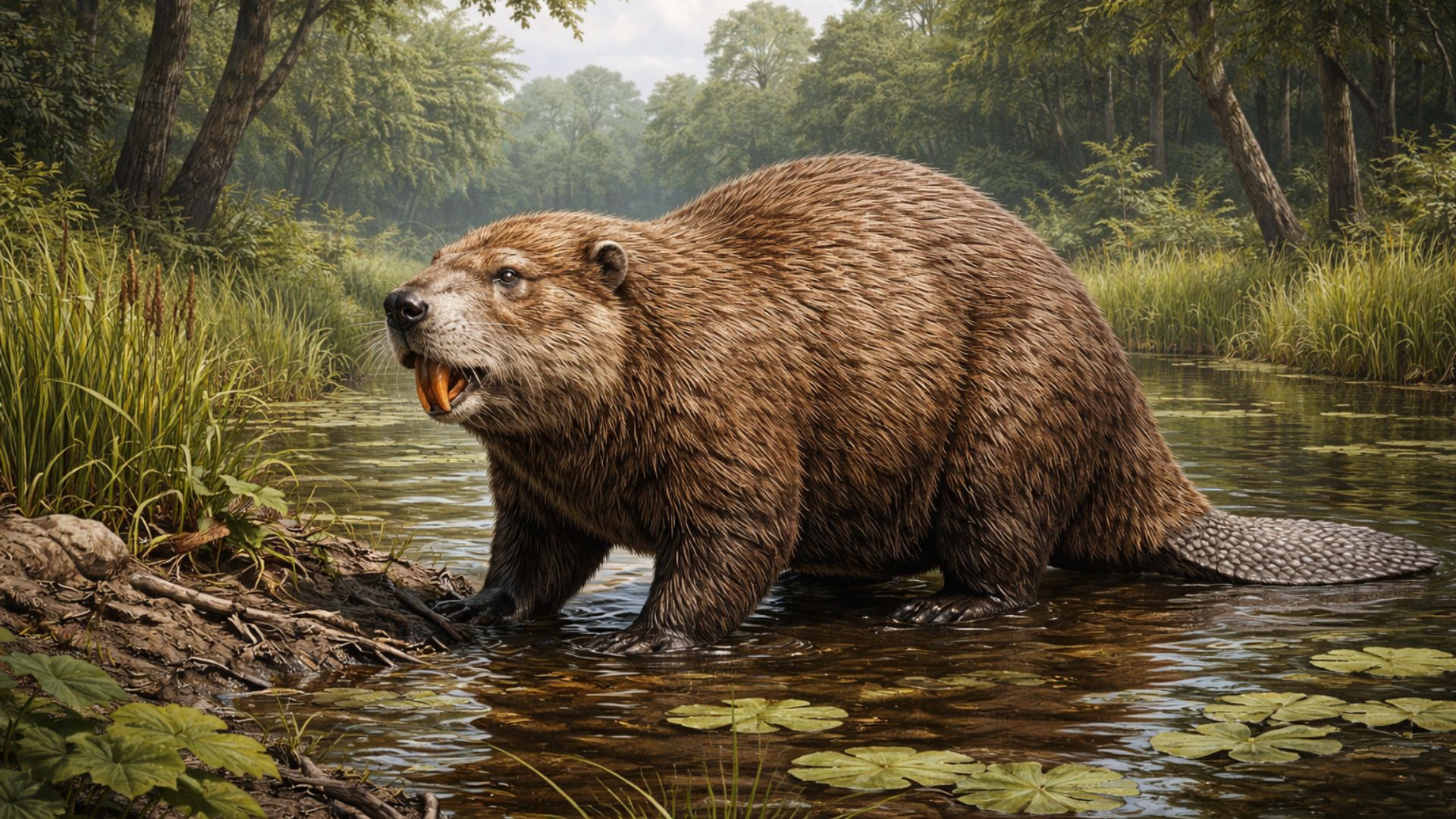


Prehistoric Rodent From The Ice Age Surprised Scientists With Extreme Size, Distinct Aquatic Habits From Modern Beavers, And Presence In Wet Areas Of North America, Becoming One Of The Most Striking Examples Of Megafauna From The Pleistocene.
A rodent comparable in size to a “black bear” lived in wet areas of North America during the Pleistocene, a period popularly associated with the Ice Age.
Known as Castoroides ohioensis, the so-called giant beaver is described by scientific and museum institutions as the largest rodent in North America during that period.
The most cited estimates indicate between 1.9 and 2.2 meters in length and 90 to 125 kilograms, dimensions well above those of a modern beaver.
-
Tokyo Scientists Create First 18cm Biohybrid Hand Using Human Muscle, Capable of Scissor Gesture and Holding a Pipette

-
Brazil Faces Norway in World Cup at Stadium Linked to Jimmy Hoffa’s Mysterious Disappearance

-
Retired Woman Leaves French Public Housing Due to Fear, Lives in Van for Weeks, Prompting Response from Local Authorities and a Priest
-
9-Year-Old Fabio Isaac Wins Gold at Copernicus Math Olympiad in Singapore, Representing Peru Against Global Young Talents



Comparison With Current Rodents Helps To Understand The Scale
The impact of these measurements becomes clearer when the comparison is made with the capybara, the largest living rodent today.
Institutional descriptions indicate that capybaras can exceed 45 kilograms, which helps to gauge why Castoroides appears as an animal out of scale, even among large rodents.
This size difference places the giant beaver in a rare position within Pleistocene megafauna.
Presence Confirmed In Swamps And Lakes Of North America

Fossil records place Castoroides among the great representatives of Pleistocene megafauna.
Scientific institutions locate its presence in swamp landscapes, lakes, and waterways, with fossils scattered across different regions.
There is consensus that the animal survived until about 10,000 years ago, shortly before the end of the Ice Age.
Geographic Distribution During The Last Glacial Period
The distribution of the giant beaver was not uniform over time.
Records indicate a greater concentration of occurrences in the central and eastern portion of the United States, particularly south of the Great Lakes.
The fossils reinforce the association of the animal with aquatic habitats, such as ponds and swampy areas.
Giant Teeth And Differences In Relation To The Modern Beaver
The impressive size is not the only point of interest about Castoroides.

There are striking anatomical differences, especially in the teeth and skull.
The front incisors were extremely large, with records approaching 15 centimeters.
The shape of these teeth would not be efficient for cutting trees as modern beavers do.
The molars and other skull features also differ, bringing the giant beaver closer to semi-aquatic rodents with distinct habits.
Did Castoroides Build Dams?
These differences fuel one of the most recurring questions about the animal.
Institutional sources state that there is no direct evidence of complex environmental engineering behaviors, such as dam or shelter construction.
The shape of the incisors, lacking the typical “chisel” edge of modern beavers, suggests limitations for gnawing wood.
No consistent evidence of food storage, a common behavior in modern beavers, has been found.
Diet Based On Aquatic Plants
The diet of Castoroides is one of the most well-documented aspects from recent studies.

Chemical analyses applied to fossils indicate that the diet was composed mainly of submerged aquatic plants.
This data reinforces the animal’s dependence on flooded environments.
The evidence does not support significant consumption of trees or woody plants.
Extinction At The End Of The Pleistocene
The disappearance of Castoroides is contextualized within the range of extinctions at the end of the Pleistocene.
Scientific materials associate its extinction with environmental changes during the period when the climate warmed and glaciers receded.
The reduction of wetland areas is often cited as a relevant factor.
The possible competition with modern beavers in transformed environments is also mentioned.
Relationship With Humans Is Still Treated With Caution
The temporal coexistence with humans is recognized by scientific institutions.

However, there is no conclusive evidence of direct hunting of the giant beaver.
There are records of proximity between remains of the animal and human artifacts, but this is not treated as proof of direct causation.
A Giant Among The Rodents Of History
Castoroides Represents An Extreme Case Of Gigantism Among North American Rodents.
The evidence includes reconstructed skeletons, skulls, preserved dentition, and modern chemical analyses.
Described in museums as “the size of a black bear”, the giant beaver remains one of the most impressive examples of Ice Age megafauna.
If a rodent of this size still existed today in swampy regions, what signs of its presence would first appear in the environment and in human daily life?






Dogs,cats even humans would be eaten as well.