






 Portuguese
  Spanish
  3 min of reading
  0 comments


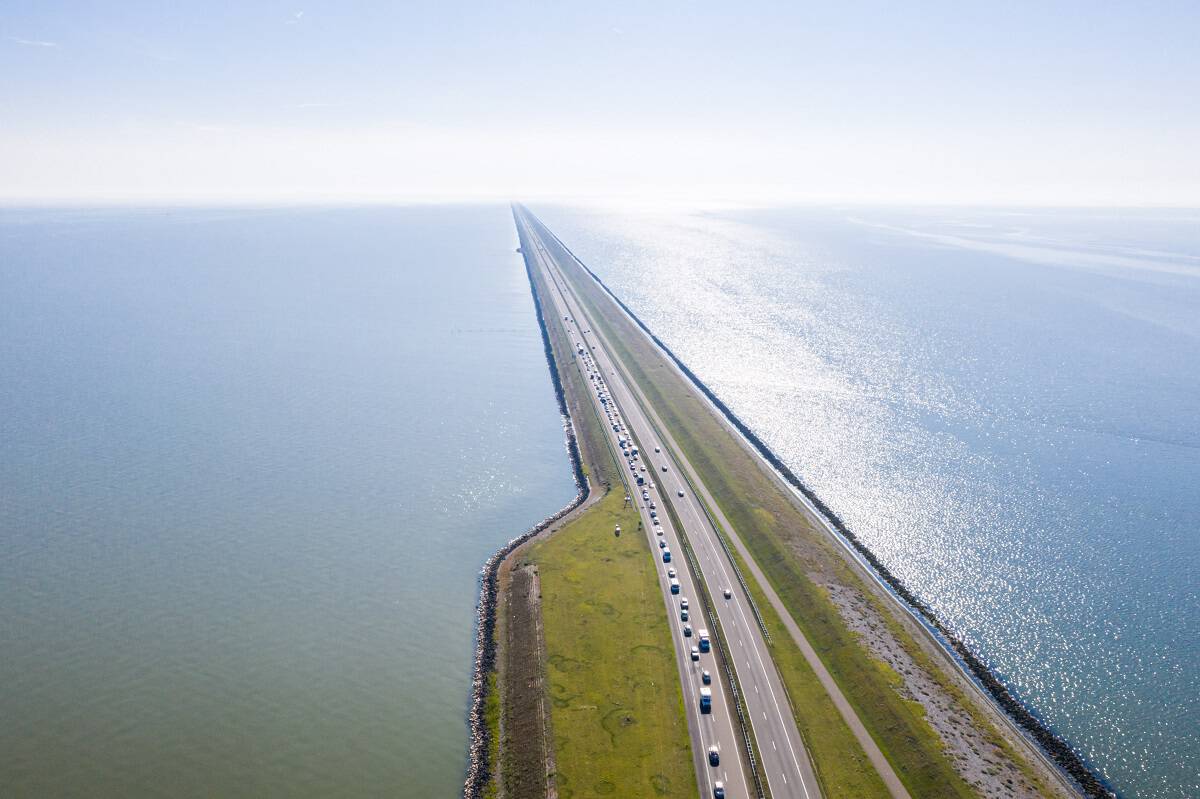
Netherlands Keeps Millions of People Below Sea Level Thanks to Over 3,500 km of Dikes and One of the Most Advanced Hydraulic Systems in the World.
In much of the world, living below sea level would mean constant risk and urban infeasibility. In this country, this condition is part of the reality for millions of people. About 26% of the national territory is below the average sea level, and approximately 21% of the population lives in these areas, protected not by natural accidents, but by heavy engineering and ongoing planning. Entire cities, productive agricultural areas, and industrial centers operate in regions that, without artificial protection, would be permanently flooded.
A Network of Over 3,500 km of Dikes in Continuous Operation
The main line of defense is a national system integrated with over 3,500 kilometers of main dikes, along with thousands of additional kilometers of secondary dikes, channels, and local barriers. These dikes vary in height according to the risk of the region, typically between 5 and 12 meters, and are constantly reinforced and monitored.
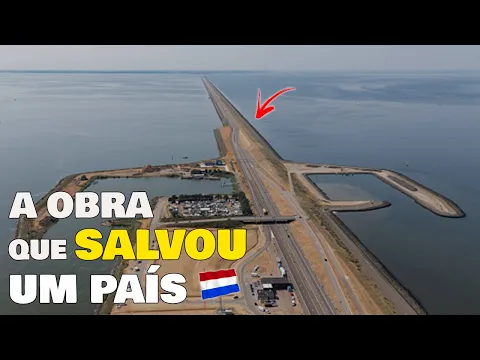

The system works not only against the sea, but also against floods from large rivers, heavy rains, and storms that push water inland.
-
To halt the advance of the Sahara, the 8,000 km Great Green Wall in the Sahel relies on reforestation to combat desertification, but by 2026 it remains far behind the goal of 100 million hectares.

-
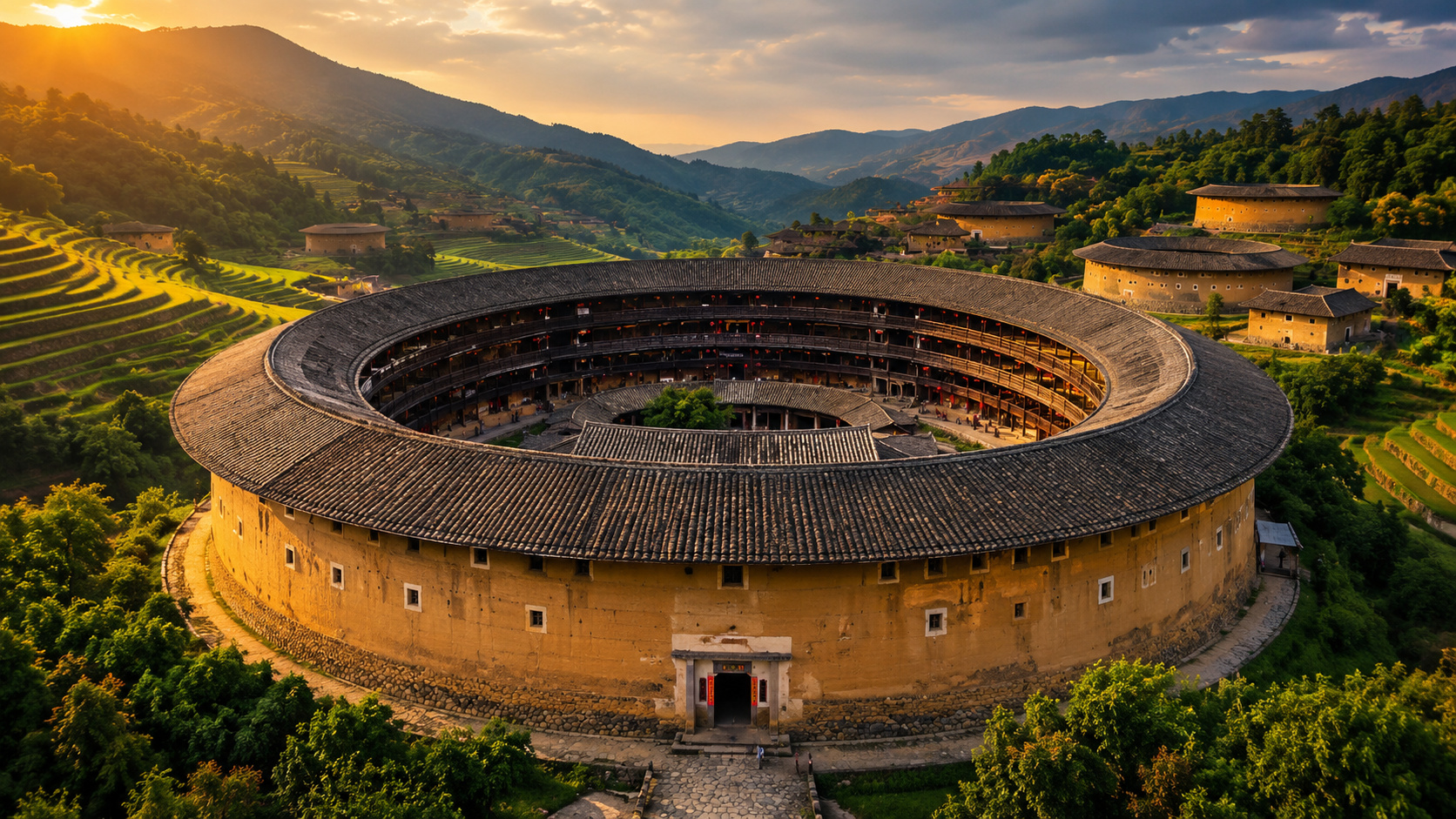
Long before sustainable construction became a trend, China built earthen fortresses with multiple floors, a central courtyard, and the capacity to house up to 800 people living in a community.

-
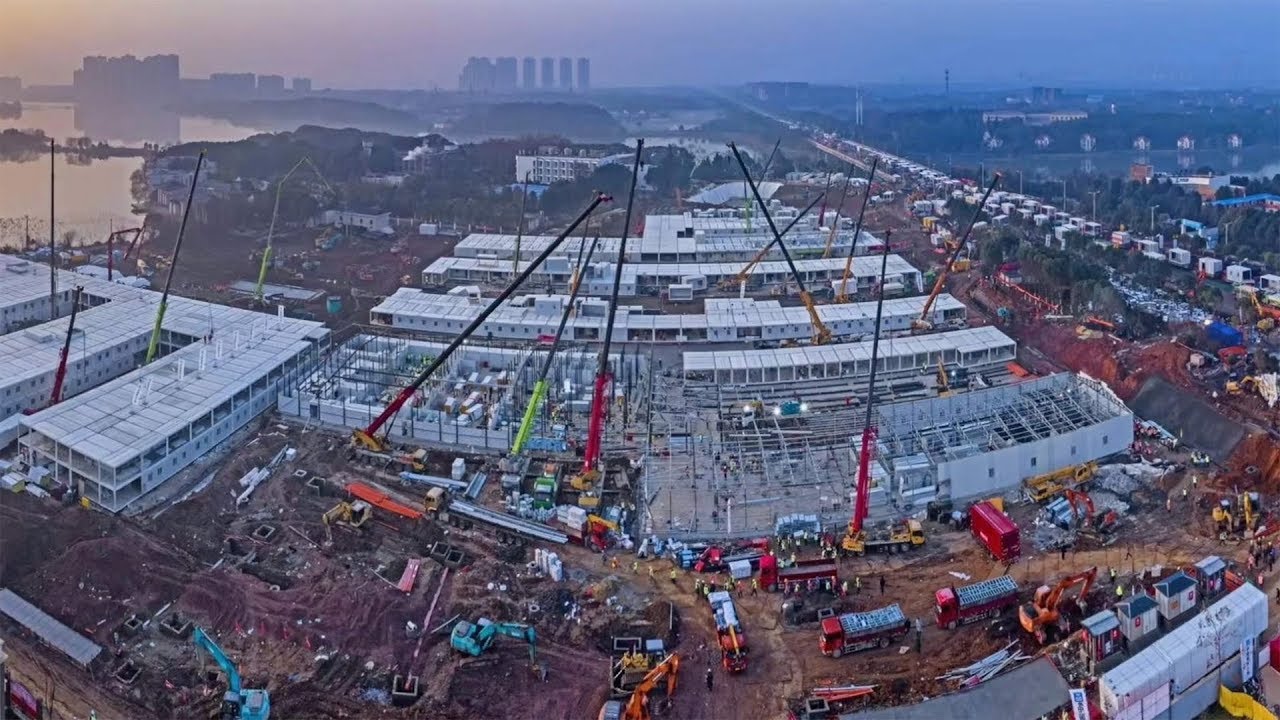
While in the rest of the world building a hospital takes years from design to inauguration, China erected the Huoshenshan Hospital from scratch in just 10 days, with 1,000 beds, foundation, structure, electrical installations, plumbing, and oxygen system ready to receive patients, mobilizing 7,000 workers.

-
Without mortar, grout, or traditional construction: the ClickBrick system assembles brick facades with ceramic pieces held by metal clips, eliminating the need for glue, speeding up installation, and even allowing everything to be dismantled later without turning the construction into expensive permanent debris.


Hydraulic Engineering at the Limit of Precision
Keeping habitable areas below sea level requires more than just dikes. The country operates a complex network of pumping stations, movable sluices, and retention reservoirs. Rainwater and river water need to be continuously drained to prevent flooding, even on days without storms.
Some regions rely on nearly continuous pumping to keep the soil dry, especially the polders, artificially drained and reclaimed areas developed over centuries.
Infrastructure Designed for Extreme Events
The primary protective structures are designed to withstand extremely rare events. In densely populated areas, the dikes and barriers are engineered to endure storms with a likelihood of occurring once every 10,000 years, one of the most rigorous safety standards in the world.

This means that the system is not only designed for the current climate but for extreme scenarios, including high tides, strong winds, and combinations of adverse climatic factors.
The Revealed Country: Netherlands
The country in question is the Netherlands, also known as Holland. Located in Northwestern Europe, the country is one of the most extreme examples of human coexistence with sea level.

Cities such as Rotterdam, Amsterdam, and The Hague have entire neighborhoods below sea level, protected by dikes, sluices, and hydraulic systems that operate in an integrated manner on a national scale.
Economy, Agriculture, and Cities Dependent on Dikes
A large part of the wealth of the Netherlands directly depends on this system. Highly productive agricultural areas exist in soils that are only cultivable because they have been artificially drained. Ports, airports, and industrial zones operate in regions that, without protection, would be submerged.
The maintenance cost is high, but the economic impact of a failure would be incomparably greater, affecting millions of people and strategic sectors of the European economy.
A Model Observed by the Entire World
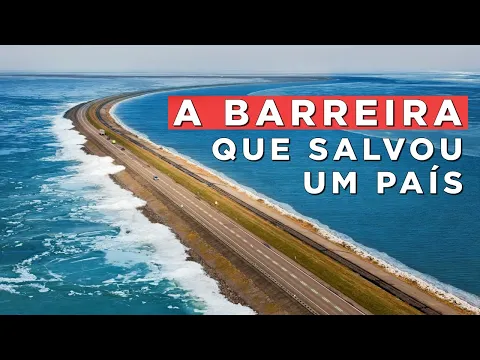
With the advancement of climate change and the gradual rise of sea levels, the Dutch model has begun to be studied by various coastal countries.
The system of the Netherlands shows that it is not enough to build isolated dikes: continuous planning, constant monitoring, and permanent investments in hydraulic engineering are necessary.
Living Below Sea Level as a Strategic Decision
In the Netherlands, living below sea level is not a historical accident but a strategic decision sustained by engineering, science, and public management.
The over 3,500 km of dikes are not just containment structures — they make the existence of the country in its current form possible.
Without this system, a significant portion of the territory would simply cease to exist as habitable space.




-

-

-

4 people reacted to this.