Portuguese
  Spanish


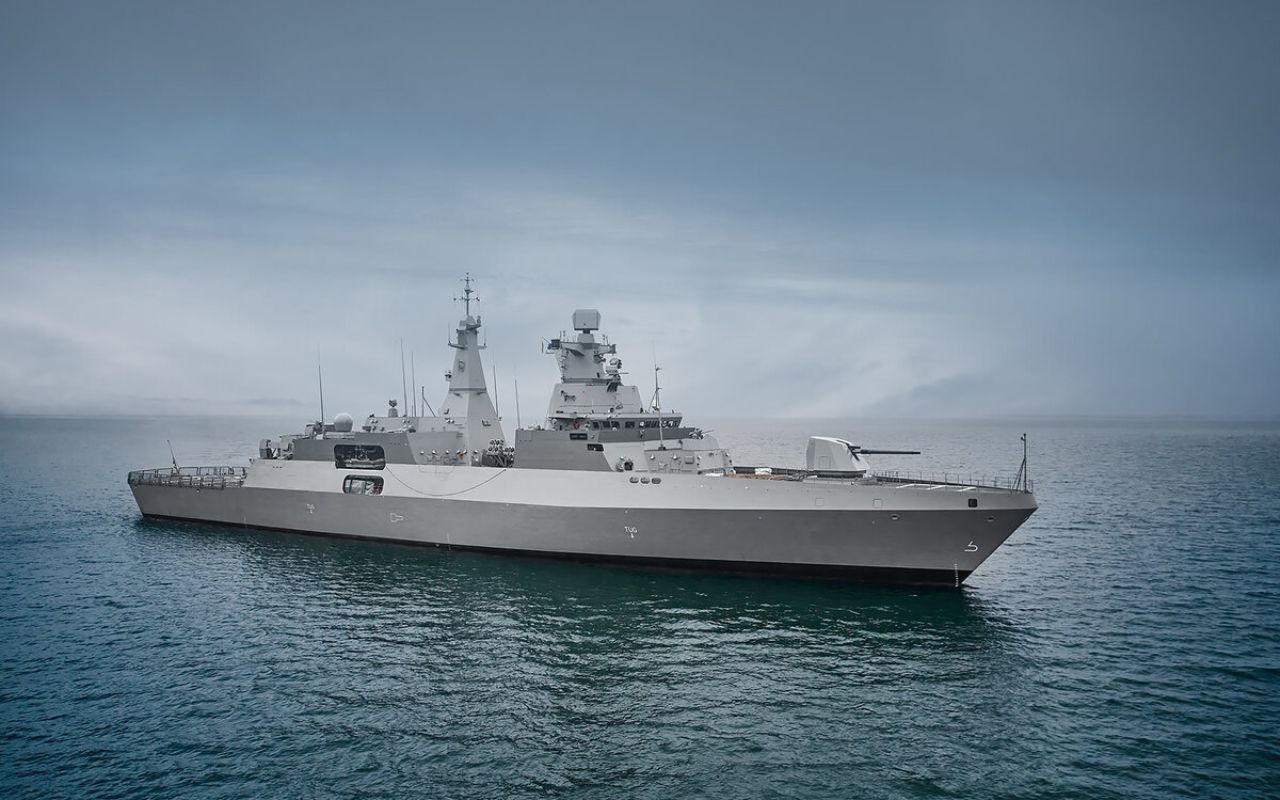


Germany Evaluates Buying MEKO A-200 Frigates to Overcome Delays in the F126 Program and Ensure Naval Capacity Starting in 2029 Amid the New European Security Scenario.
Faced with persistent delays in its main naval project, Germany has begun to consider the acquisition of MEKO A-200 frigates as a concrete solution to avoid an operational gap in the Navy.
The initiative gained traction after the German Parliament authorized initial funding to accelerate an alternative already available in the market, while the F126 program continues to face technical and industrial hurdles.
The movement became public on January 21, when the Reuters agency revealed that Berlin is preparing to order at least three MEKO A-200 frigates.
-
U.S. Navy’s Ticonderoga-class Cruiser Becomes a 9,800-Ton Missile Fortress with Advanced Aegis System Capable of Tracking Hundreds of Targets

-
France’s Charles de Gaulle: The Sole Nuclear-Powered Aircraft Carrier Outside the US, Weighing 42,500 Tons and Equipped with Two Atomic Reactors

-
The military spaceplane that almost took the Cold War into orbit: Boeing X-20 Dyna-Soar was designed to re-enter above Mach 20, fly for up to 40 hours, land like a plane, and transform Titan rockets into a gateway to a new era of orbital warfare.
-
FAB bets on national drones and increases investments to strengthen the Brazilian aerospace industry



The measure responds to the immediate need to maintain essential naval capabilities at a time of greater pressure on European security.
Decision Focuses on Timeline, Not Just Firepower
More than a mere exchange of platforms, the choice of MEKO A-200 frigates reflects a change in posture.
Instead of exclusively betting on large, complex ships, the German government opts for a leaner, modular model with predictable delivery.
To make the plan viable, the Bundestag’s budget committee released about 50 million euros intended for the initial stages of the process.
The expectation is that the first units will be available starting in 2029, a timeline considered realistic within the current capabilities of the German shipbuilding industry.
Why Has the F126 Program Been Delayed?
The F126 frigates were designed to replace the older units of the F123 class and expand the Navy’s reach in anti-submarine warfare and multinational operations.
On paper, these are highly advanced ships, with significant displacement and integrated state-of-the-art systems.
In practice, however, the program has suffered from design revisions, coordination difficulties among suppliers, and increased technical complexity.
The first delivery, initially scheduled for 2028, has become uncertain, raising concerns about the continuity of Germany’s operational capacity at sea.
To mitigate risks, Parliament had already approved a package of up to 7.8 billion euros, allowing alternatives should the delays become structural — a scenario that now seems increasingly likely.

How the MEKO A-200 Frigates Enter as a Viable Solution
The MEKO A-200 frigates stand out as a well-established project adopted by various navies around the world. This reduces technical uncertainties and significantly shortens the cycle between contract and delivery.
While the F126 exceed 10,000 tons of displacement, the MEKO A-200 operate in the range of 3,700 to 4,000 tons, resulting in smaller, cheaper, and less complex ships to build.
The estimated cost is around 1 billion euros per unit, lower than that of large frigates.
Another central point is the modularity of the MEKO project, which allows for the adaptation of sensors, armaments, and systems according to the mission, without the need for deep structural or architectural reforms.
Technical Comparison of Frigates: F126 versus MEKO A-200
In practical terms, the differences between the two projects are clear. The F126 frigates are large ships, about 166 meters long, equipped with integrated electric propulsion of the CODLAD type and focused on prolonged high-intensity operations.
They feature advanced sensor systems, vertical launchers for missiles, and expanded capabilities for specialized teams onboard.
In contrast, the MEKO A-200 frigates are approximately 121 meters long and use a CODAG-WARP propulsion system, which combines diesel engines, a gas turbine, and water jets, allowing speeds exceeding 29 knots.
Though smaller, they offer greater operational range, capable of exceeding 7,200 nautical miles at economical speed.
In terms of crew, the MEKO A-200 require more compact teams, usually between 100 and 125 military personnel, while the F126 accommodate a larger crew, as well as additional contingents for specific missions.
Both can operate helicopters, but the F126 are designed for larger aircraft, while the MEKO A-200 prioritize flexibility with medium helicopters and unmanned vehicles.
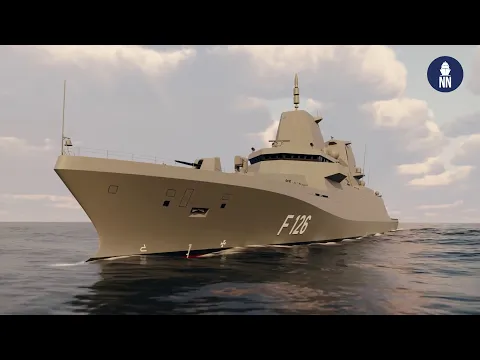

MEKO A-200 Frigates Emerge as Plan B for the German Navy Amid Industrial Delays
Another decisive factor is the ability of Thyssenkrupp Marine Systems (TKMS) to quickly initiate production of the MEKO A-200.
Since the shipyard already masters the project, industrial risks are considered lower than in entirely new programs.
The definitive contract is still under negotiation, but the German government signals that new funding may be released as the schedule progresses.
Meanwhile, the F126 program remains under review, with no formal cancellation, but increasingly pressured for concrete results.
By investing in MEKO A-200 frigates, Germany demonstrates a more pragmatic approach to its naval defense.
The strategy combines technological ambition with operational realism, ensuring continuous maritime presence while larger projects face adjustments.
More than a technical choice, the decision points to a shift in mentality: in a scenario of increasing instability, time and predictability are now valued as much as innovation.
With information from Naval Power